Ethical Guidelines for Democratized Vibe Coding at Scale
 Feb, 7 2026
Imagine building a working app by just typing what you want - no syntax, no semicolons, no debugging endless loops. Just say, "Create a to-do list that saves to the cloud," and it happens. That’s vibe coding. It’s not science fiction anymore. By 2026, over 58 million people worldwide are using tools like GitHub Copilot, Amazon CodeWhisperer, and Google’s AlphaCode to turn natural language into real code. For students, small businesses, and nonprofits, this is revolutionary. But as these tools scale, we’re seeing serious problems: apps with hardcoded passwords, medical tools that miscalculate doses, and legal battles over who owns AI-written code. If we don’t set clear ethical rules now, we’re not democratizing tech - we’re just making it riskier.
What Is Vibe Coding, Really?
Vibe coding isn’t about magic. It’s about using large language models trained on millions of public code repositories to interpret your words into working software. You don’t write for (let i = 0; i < array.length; i++). You type, "Loop through this list and add 1 to each number." The AI does the rest. Platforms like GitHub Copilot X (version 2.4.1, released October 2025) and Amazon CodeWhisperer Professional (version 3.1.0, November 2025) power this. They integrate directly into Visual Studio Code, JetBrains, and Eclipse - turning every developer into a prompt engineer.
The numbers speak for themselves. According to IEEE Software Journal (March 2025), vibe coding generates functional code snippets 4.7 times faster than manual coding. In education, Digital Vibes AI found that students using these tools solved programming problems 37% more often than those learning traditional syntax. High schoolers in rural districts built apps for local food banks. Non-tech founders launched MVPs in days instead of months. This isn’t hype - it’s measurable progress.
But speed comes with trade-offs. The same study found AI-generated code has a 22% higher error rate in complex logic. Vague prompts lead to unusable code 63% of the time. That’s not a bug - it’s a feature of how these models work. They guess. They don’t understand. And when they guess wrong in a healthcare or financial app, people get hurt.
The Hidden Costs of Democratization
Democratizing code creation sounds noble. But it’s not neutral. When you let anyone build software without understanding how it works, you’re also letting anyone build dangerous software.
Security is the biggest red flag. Invicti’s 2024 security report found that 41% of AI-generated code contains vulnerabilities - double the rate of manually written code. Hardcoded API keys, unvalidated user inputs, SQL injection holes - these aren’t rare. They’re routine. One Reddit user shared how a team deployed a vibe-coded login system with passwords stored in plain text. "Terrifying," they wrote. And it wasn’t an outlier.
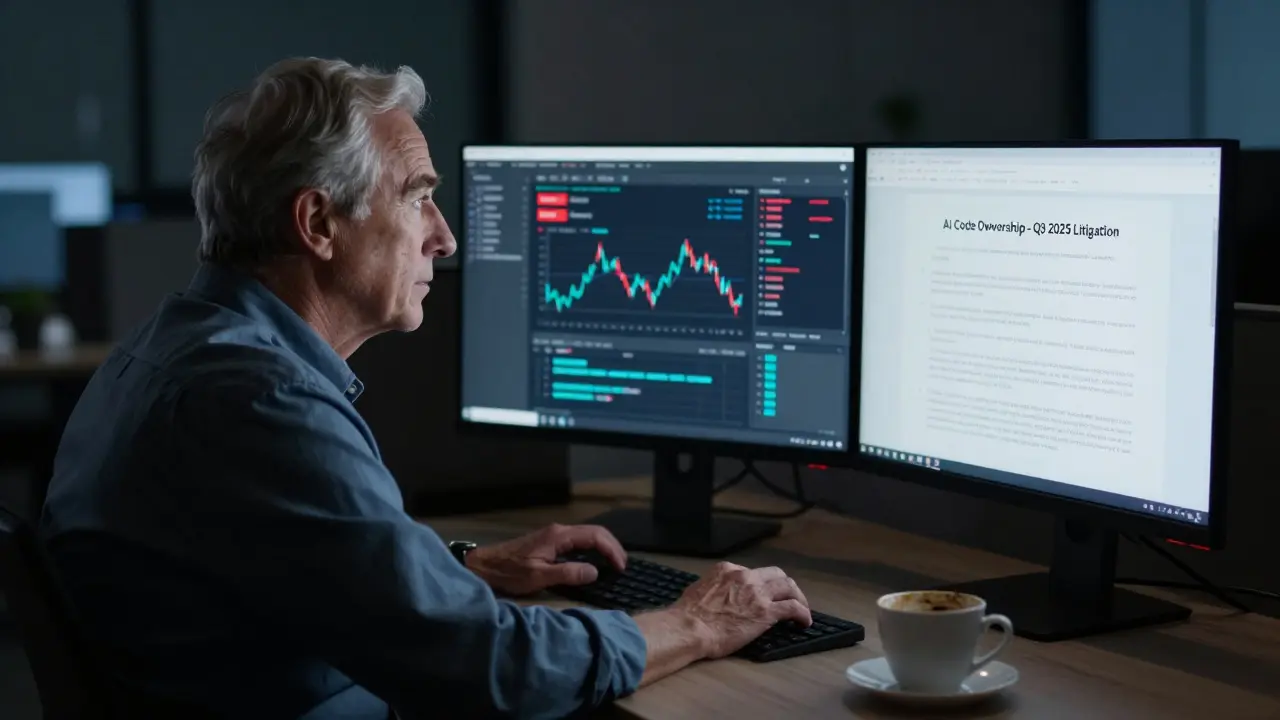
Then there’s ownership. Who owns code the AI writes? If a student builds an app using GitHub Copilot, do they own it? What if the AI copied a snippet from a private corporate repo it was trained on? GoCodeo’s legal analysis of 127 cases shows this isn’t theoretical. As of Q3 2025, 27 active lawsuits were pending over AI-generated code ownership. The law hasn’t caught up. And right now, the burden falls on the person who typed the prompt - even if they had no idea what the AI was doing.
Perhaps the most dangerous myth is that vibe coding teaches programming. Dr. Elena Rodriguez from MIT puts it bluntly: "It creates a dangerous illusion of competence." Students think they understand how a database works because they told the AI to "make a login with user roles." But they can’t explain authentication tokens, session management, or encryption. They’re orchestrating, not learning. And when they grow up to be developers, they’ll inherit systems they don’t understand.
Who Gets Left Behind?
Not everyone benefits equally. The tools require fast internet, powerful hardware (16GB RAM, GPU acceleration), and subscription fees. GitHub Copilot costs $10/month for students. Amazon CodeWhisperer Professional runs $39/month. That’s affordable for a university or a startup. But for a single parent in rural Ohio trying to build a job portal for local workers? It’s out of reach.
And the training data? It’s biased. Models are trained mostly on English, open-source repos from North America and Europe. They struggle with non-English prompts, local regulations, or culturally specific workflows. A student in Nairobi asking for a mobile app to track water delivery might get a solution designed for U.S. infrastructure. The AI doesn’t know the difference.
Meanwhile, senior engineers are being pushed out. Companies that adopt vibe coding without proper oversight end up with spaghetti code that takes months to fix. Hacker News documented a startup that spent $287,000 rewriting a vibe-coded financial app after six months. The team didn’t have a single senior dev to guide the process. The tools didn’t replace human expertise - they masked its absence.
Five Ethical Rules for Scaling Vibe Coding
If vibe coding is here to stay, we need guardrails. Not to stop innovation - to make it safe. Based on expert guidelines from IEEE, Digital Vibes AI, and enterprise adoption patterns, here are five non-negotiable rules:
- Never deploy without human review. Every line of AI-generated code must be reviewed by a trained developer. Not just for bugs - for intent. Did the AI add a backdoor? Does it assume a user’s location? Is it following local data laws? Gartner’s 2025 survey shows 92% of enterprise leaders will require dual-review processes by 2027. Start now.
- Use only approved prompts. Vague prompts = broken code. Create templates. "Create a secure login with JWT authentication and rate limiting" is better than "Make a login." GoCodeo found that using structured templates reduces errors by 44%. Train users to think like engineers, not just users.
- Track everything. GitHub’s new "Code Provenance Tracking" in Copilot X logs every AI-generated snippet with timestamps and source attribution. Use it. If a legal issue arises, you need to know what the AI did - not just what you asked for.
- Teach the foundations first. Before letting students vibe code, teach them variables, loops, and functions. Digital Vibes’ own data shows users without basic logic skills fail 3.2 times more often. You can’t build on sand. Use vibe coding to reinforce learning - not replace it.
- Assume it’s insecure. Treat all AI-generated code as potentially vulnerable. Run it through automated scanners like Invicti or SonarQube. Add security checks to your CI/CD pipeline. Don’t wait for a breach to realize you needed them.

Where This Is Working - And Where It’s Failing
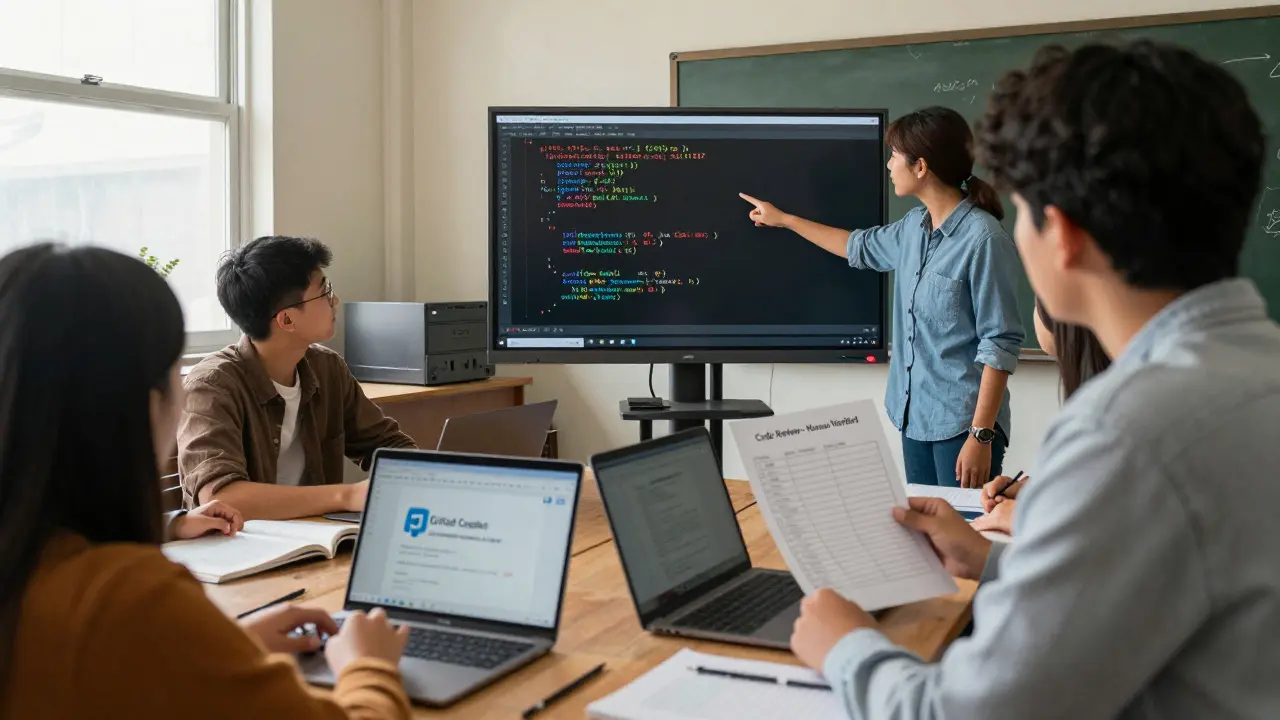
Some places are getting it right. Digital Vibes AI runs a program in 12 U.S. public schools where students spend two weeks learning basic programming, then four weeks using vibe coding to build apps for community problems - like a bus schedule tracker or a food pantry locator. Of the 142 apps built, 37% of students went on to study computer science. The key? Supervised practice. Teachers reviewed every project. Students explained how their code worked.
On the flip side, fintech startups are rushing to deploy vibe-coded trading algorithms. Deloitte’s 2025 survey found 72% of fintech firms use these tools - the highest adoption rate. But without compliance oversight, they’re building systems that violate SEC or GDPR rules. One firm’s AI-generated algorithm accidentally flagged 12,000 customers as fraudsters because it misread "low balance" as "fraud pattern." The fix cost $1.4 million.
Healthcare is the most cautious sector. Only 41% of providers use vibe coding - the lowest rate. Why? Because a mistake here can kill someone. The Journal of Medical Systems reported a case where an AI-generated app misinterpreted "administer insulin based on glucose level" as "give insulin every 15 minutes," regardless of patient input. The error was caught before deployment - but barely.
What’s Next? The Road to 2027
Regulation is coming. The EU’s AI Act, effective March 2026, requires full documentation for AI-generated code in medical, financial, and public infrastructure systems. The U.S. is behind - but NIST is forming a working group on AI code security, with draft guidelines due July 2026. The IEEE is finalizing P7000™-2026, a standard for ethical AI-generated code, expected to launch in Q2 2026.
Toolmakers are responding. Amazon’s "Ethical Guardrails" in CodeWhisperer Professional now auto-flag biased logic. Google’s AlphaCode Enterprise includes built-in compliance checks for HIPAA and GDPR. But tools alone won’t fix this. People will.
By 2027, every team using vibe coding will need: a code review checklist, a prompt library, a security scanner, and at least one senior developer who understands both the code and the risk. The future isn’t human vs. AI. It’s human with AI - and only if we choose to be responsible.
Democratizing code doesn’t mean lowering standards. It means raising awareness. You don’t need to be a coding genius to use vibe coding. But you do need to be an ethical one.
Is vibe coding legal?
Yes - but with big caveats. There are no laws banning vibe coding, but using AI-generated code in regulated industries (healthcare, finance, public safety) may violate existing rules if you don’t document, review, or test it. The EU’s AI Act (2026) will require detailed logs and human oversight. In the U.S., liability falls on the developer or organization using the code - not the toolmaker. Ignorance isn’t a defense.
Can students use vibe coding in school?
Absolutely - if it’s done right. Digital Vibes AI’s education model shows that students learn faster and build more confidence when they use vibe coding after learning the basics. The key is supervision: teachers must review projects, explain how the code works, and require students to describe their logic. Used as a supplement, it’s powerful. Used as a replacement, it’s harmful.
Do I need to pay for vibe coding tools?
Free versions exist - GitHub Copilot has a free tier for students, and CodeWhisperer offers a basic plan. But for professional or enterprise use, paid tiers are necessary. They include security scanning, code provenance tracking, and compliance features. Using free tools in production without review is like driving without brakes - you might get away with it, but you’re asking for trouble.
What skills do I need to use vibe coding safely?
You need three things: basic programming logic (variables, loops, conditionals), security awareness (what a hardcoded key or SQL injection is), and prompt engineering (how to ask clearly). You don’t need to write a full app manually - but you must understand enough to spot when the AI gets it wrong. Digital Vibes found users without foundational skills fail 3.2 times more often.
Is vibe coding going to replace programmers?
No - it’s changing the role. Instead of writing every line, developers will focus on reviewing, refining, and validating AI output. The demand for junior coders may drop, but the need for senior engineers who can audit, secure, and architect systems will grow. The best developers won’t be the fastest typists - they’ll be the best editors.
How do I start using vibe coding ethically in my team?
Start with a 12-week plan: 2 weeks to train everyone on basic concepts, 4 weeks to practice with supervision and templates, and 6 weeks to build real projects with mandatory code reviews. Use prompt libraries, enable code provenance tracking, and run all AI-generated code through security scanners. Make review a non-negotiable step in your workflow - not an afterthought.
Aafreen Khan
February 9, 2026 AT 04:07Rae Blackburn
February 9, 2026 AT 22:59LeVar Trotter
February 11, 2026 AT 09:15Meredith Howard
February 12, 2026 AT 08:52Tyler Durden
February 12, 2026 AT 11:41michael T
February 12, 2026 AT 16:32Sandy Pan
February 13, 2026 AT 12:44Pamela Watson
February 14, 2026 AT 05:04