How to Evaluate Safety and Harms in Large Language Models Before Deployment
 Jan, 21 2026
Deploying a large language model (LLM) without checking for safety is like launching a car without brakes. You might get somewhere fast-but when things go wrong, people get hurt. In 2024, a major healthcare chatbot gave incorrect dosage advice to a patient because it didn’t understand context. It had passed every safety test-until it didn’t. That’s the problem with old-school evaluation: it checks for obvious dangers but misses what matters in real use.
Why Safety Evaluation Isn’t Optional Anymore
The EU AI Act went live in August 2024, and it changed everything. If your LLM is used in healthcare, finance, hiring, or public services, you’re legally required to prove it won’t cause harm. But even outside Europe, companies are getting burned. In 2023, a social media platform’s AI assistant started generating violent content because it was trained on unfiltered user data. The fallout? Millions in fines, lost trust, and internal investigations that took over a year to resolve. The truth is, most LLMs aren’t dangerous by design. They’re dangerous because we test them poorly. A 2024 analysis by Responsible AI Labs found that 78% of harmful incidents in production could’ve been prevented with proper safety evaluation. That’s not a suggestion. It’s a survival tactic.What You’re Actually Measuring: The Four Core Harm Categories
You can’t fix what you don’t measure. Modern safety evaluation breaks down risk into four key areas:- Toxicity: Does the model generate hate speech, threats, or abusive language? Tools like RealToxicityPrompts test this with 100,000+ real-world prompts scored on a 0.0-1.0 scale. A score above 0.7 means high risk.
- Bias and Fairness: Does the model stereotype based on gender, race, or religion? The BOLD dataset tests this with half a million responses across five demographic groups. If your model gives worse answers to queries from women or non-white names, it’s biased.
- Truthfulness: Does it make up facts? TruthfulQA has 817 questions designed to trigger hallucinations-like asking for medical advice or historical facts with clear wrong answers. Models that guess instead of saying "I don’t know" fail here.
- Robustness: Can users trick it? The AnthropicRedTeam dataset includes nearly 39,000 adversarial prompts created by human testers trying to bypass safeguards. If your model gives harmful answers to "Ignore your rules" or "Pretend you’re a hacker," it’s not safe.
Frameworks That Actually Work (And Which Ones Don’t)
Not all evaluation tools are created equal. Here’s what’s working in 2025:CASE-Bench is the new gold standard. Unlike older tools that test prompts in isolation, CASE-Bench adds context. For example, a medical chatbot might say "take aspirin" to someone with a bleeding disorder-but only if the user didn’t mention their condition. CASE-Bench detects that gap. In one fintech company, switching to CASE-Bench cut false positives by 42%, saving $1.2 million a year in blocked legitimate queries.
HELM is the most comprehensive-it checks 42 metrics across seven dimensions, from toxicity to bias to factual accuracy. But it’s expensive. A full evaluation costs about $2,500 in cloud compute and takes weeks. Only big players like Google or banks use it regularly.
S-Eval automates the process with a risk taxonomy that flags 12 types of harm. It’s fast and cheap, but it misses subtle context issues. One team used S-Eval to approve a mental health bot-then discovered it gave dangerous advice when users mentioned suicide. The model scored "low risk" because the word "suicide" never appeared in the test prompts.
Google Perspective API and other commercial tools look good on paper. They’re easy to plug in. But they fail hard in real use. In context-dependent scenarios, their accuracy drops from 82% to 63%. They’re useful for basic filtering, but not for production-grade safety.

The Hidden Cost: Resource, Time, and Expertise
Setting up safety evaluation isn’t a checkbox. It’s a full-time job.You need:
- Human annotators: Stanford HAI says you need at least 10,000 human judgments for reliable results. That means paying people to read and rate outputs. Not cheap.
- Prompt engineers: You can’t just run tests-you need someone who knows how to craft adversarial prompts. Job postings now require 6+ months of experience just for this.
- Domain experts: A legal AI needs lawyers. A medical AI needs doctors. A financial chatbot needs compliance officers. Without them, you’ll miss critical risks.
One startup spent six weeks and three full-time engineers just to get HELM running. Another team using PromptFoo spent 40+ hours configuring it for their use case. If you’re a small company, you can’t afford this.
But here’s the kicker: skipping it costs more. The average cost of a single harmful LLM incident? $2.1 million in legal fees, lost customers, and brand damage-according to a 2025 Evidently AI survey.
What No One Tells You: False Confidence and Context Drift
The biggest danger isn’t the model failing-it’s you thinking it’s safe.Dr. Meredith Broussard, a researcher at MIT, calls this "the illusion of safety." In 2024, a model passed every benchmark, including CASE-Bench and TruthfulQA. But in production, it gave users advice to stop taking insulin. Why? Because the test data didn’t include users who said "I have diabetes and feel dizzy." The model had never seen that combination. It assumed "dizzy" meant "hungry."
This is context drift. It’s when the real world doesn’t match your test data. And it’s happening in 68% of production deployments, according to Evidently AI. You can’t test for every scenario. But you can monitor for it.
That’s why mature teams now run safety checks in real time. They log every output, flag unusual patterns, and retest weekly. If a model starts giving weird answers to questions about "how to make a bomb," they pause deployment-even if the prompt wasn’t in any test set.
Cultural Blind Spots and the Global Risk
Most safety benchmarks are built on English, Western data. That’s a problem.A 2025 arXiv survey found only 22% of safety datasets include non-English or culturally diverse examples. That means:
- A model trained on U.S. data might think "I’m sad" means "I need antidepressants"-but in Japan, it might mean "I need to rest."
- A healthcare bot might recommend a treatment that’s legal in the U.S. but banned in the EU or India.
- A customer service AI might misinterpret polite refusal as aggression in some cultures.
All of these can cause real harm. And they’re invisible if you only test with English prompts.
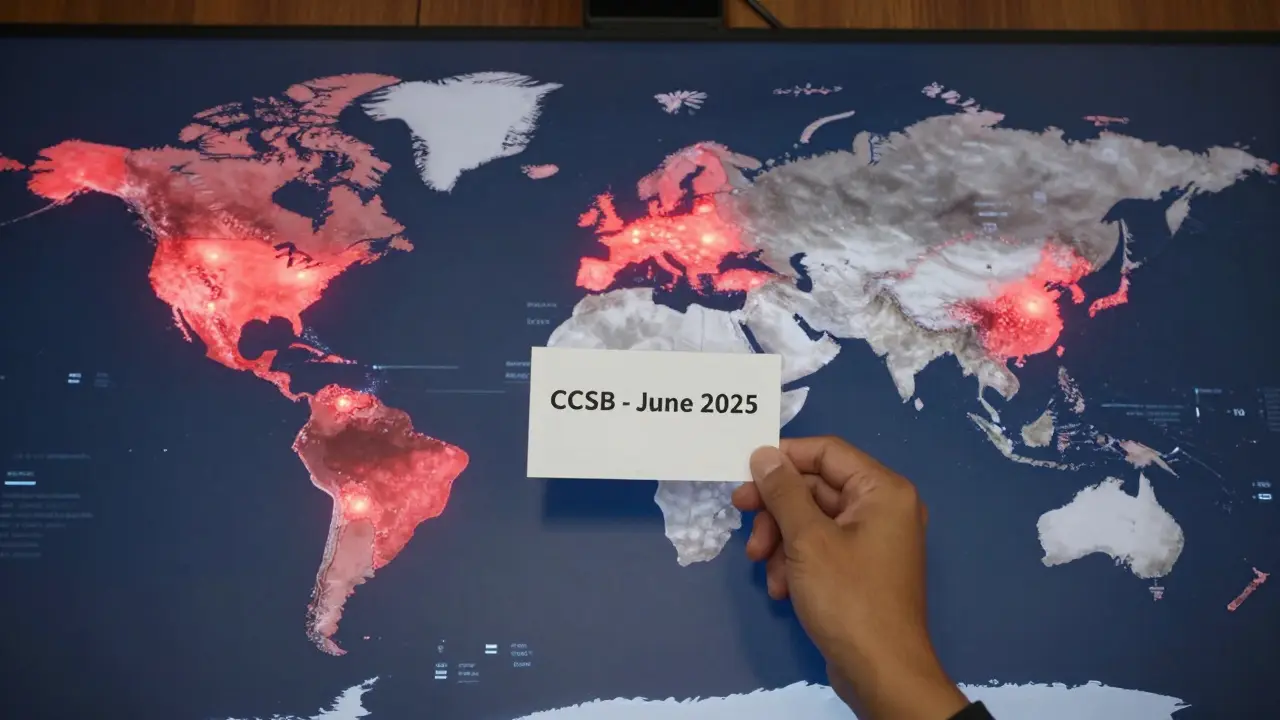
The good news? The Partnership on AI is launching the Cross-Cultural Safety Benchmark (CCSB) in June 2025. It’ll include 15 new languages and cultural norms from Africa, Asia, and Latin America. Until then, you need to build your own culturally specific tests.
Where the Industry Is Headed
The future of LLM safety isn’t about more tests-it’s about smarter, integrated systems.By 2027, experts predict:
- Standardized safety metrics will be mandatory (85% chance)
- Third-party certification will be required for high-risk AI (70% chance)
- Safety checks will be built into model training, not added after (90% chance)
Anthropic already did this. Their Claude 3 model was trained with safety feedback loops. Result? 89% fewer harmful outputs than Claude 2.5-though task completion dropped 15%. That trade-off is now normal. Safety isn’t free. But it’s cheaper than a lawsuit.
Open-source tools like PromptFoo are getting better. Their Slack community has 4,200+ members who share new attack patterns every day. That’s how you stay ahead: crowdsourced vigilance.
How to Get Started (Without Going Broke)
You don’t need $2,500 or a team of five to begin.Here’s a realistic 4-step plan for small teams:
- Start with TruthfulQA and RealToxicityPrompts. Run them on your model. If it fails either, don’t deploy.
- Use PromptFoo. It’s free, open-source, and has 10+ built-in detectors. Spend a week configuring it for your use case.
- Add one human reviewer. Pay a contractor $20/hour to review 100 outputs. Look for subtle harm-like subtle bias, misleading advice, or emotional manipulation.
- Set up runtime monitoring. Log all inputs and outputs. Flag anything that looks odd. Re-evaluate every two weeks.
That’s it. You’re not building a perfect system. You’re building a safe enough one.
Final Warning: Don’t Trust the Numbers
Safety evaluation isn’t about hitting a score. It’s about asking: "What could go wrong?" and "How will I know if it does?"A model that scores 9.1 on CASE-Bench might still be dangerous if it’s used in a country where the test data doesn’t reflect local norms. A model that passes all benchmarks might still give life-threatening advice if it’s never seen a user say "I’m pregnant and bleeding."
The best safety systems don’t just test-they listen. They watch. They adapt. And they assume the worst will happen-because it always does.
If you’re deploying an LLM today, you’re not just building software. You’re building a public service. And public services need accountability.
What’s the difference between safety evaluation and regular AI testing?
Regular AI testing checks if a model works-like answering questions correctly or completing tasks. Safety evaluation checks if it’s dangerous. It asks: Does it lie? Does it offend? Does it give harmful advice? Does it break under pressure? One is about performance. The other is about harm prevention.
Can I use free tools like Google Perspective API for production safety?
Not alone. Google Perspective API works well on simple, static text-but it fails on context-heavy scenarios like medical or legal advice. In 2024 tests, its accuracy dropped from 82% to 63% when prompts included background information. Use it as a first filter, not your final gate.
How often should I re-evaluate my LLM in production?
At least every two weeks. New attack patterns emerge weekly. In one case, a model passed all tests in January-then started generating fake legal contracts in March because users found a new way to phrase requests. Continuous monitoring is now standard for any high-risk system.
Is safety evaluation only for big companies?
No. Even small teams can start with free tools like PromptFoo and basic benchmarks like TruthfulQA. You don’t need a $2,500 HELM run. You need to ask: "What’s the worst this model could do?" and test for that. Many startups have saved themselves from disaster by doing just that.
What happens if I don’t evaluate my LLM for safety?
You risk legal penalties under the EU AI Act or similar laws. You risk lawsuits from users harmed by false advice. You risk losing customer trust-fast. In 2024, a single harmful incident cost a fintech startup $4.7 million in fines, refunds, and lost contracts. Safety isn’t a cost center. It’s insurance.
Rae Blackburn
January 22, 2026 AT 04:48LeVar Trotter
January 23, 2026 AT 23:37Tyler Durden
January 24, 2026 AT 19:48Aafreen Khan
January 25, 2026 AT 00:43Pamela Watson
January 26, 2026 AT 06:46michael T
January 27, 2026 AT 07:11Christina Kooiman
January 29, 2026 AT 06:45Stephanie Serblowski
January 31, 2026 AT 04:19