Multimodal Transformer Foundations: Aligning Text, Image, Audio, and Video Embeddings
 Jan, 1 2026
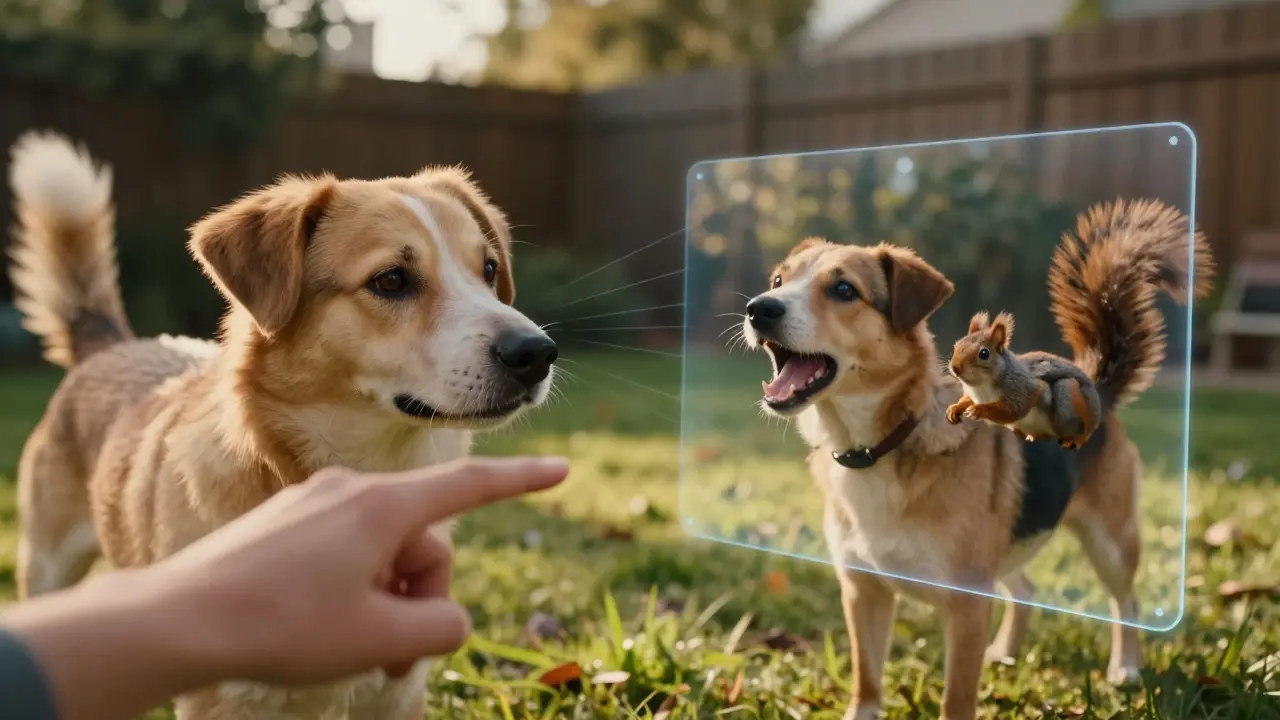
Imagine you show a video of a dog barking at a squirrel to a machine. It sees the dog, hears the bark, and reads the caption: "Dog chasing squirrel in backyard." Now, ask it to find another video with the same scene-without typing a word. Just point to the image of the dog. That’s what multimodal transformers do. They don’t just understand one kind of data. They learn to connect text, images, audio, and video into a single, shared understanding. This isn’t science fiction. It’s happening right now in labs and early enterprise systems.
How Multimodal Transformers Work
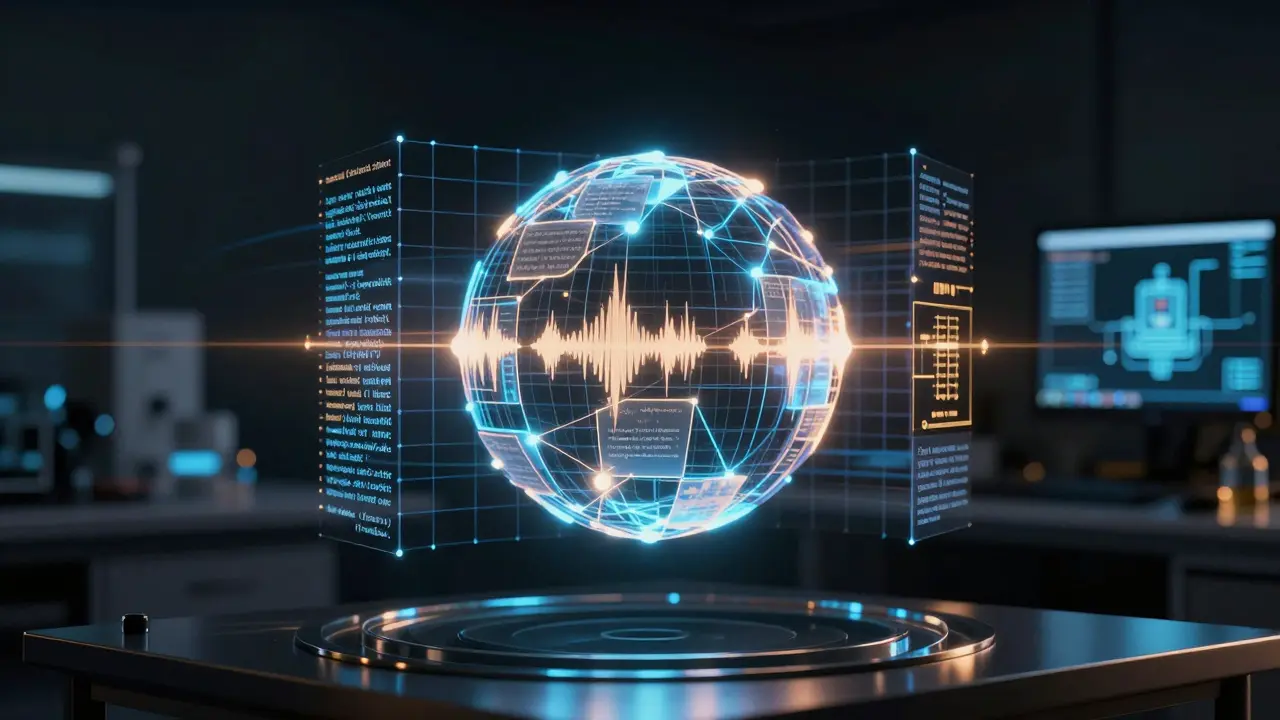
At their core, multimodal transformers take different types of data-text, images, audio, video-and turn them into numbers that can be compared. These numbers are called embeddings. Think of embeddings as compressed summaries. A sentence like "a red car parked near a tree" becomes a list of 768 numbers. An image of that same car becomes another list of 768 numbers. The magic happens when those two lists are close together in space. If the model learns right, the embedding for the text and the embedding for the image should be nearly identical.
This doesn’t happen by accident. Each modality gets its own encoder first. Text uses tokenizers like WordPiece, splitting words into subparts. Images are chopped into 16x16 pixel patches, each turned into a vector using Vision Transformers (ViT). Audio gets converted to mel spectrograms-visual representations of sound frequencies-and fed into models like the Audio Spectrogram Transformer (AST). Video is the trickiest: it’s sliced into 16-frame "tubelets," each frame broken into patches, creating a 3D embedding that captures motion over time.
Then comes the shared transformer backbone. This is where all the embeddings meet. Unlike older models that kept modalities separate, modern systems like VATT process everything through the same attention layers. The model learns which parts of the image match which words, which sounds go with which actions, and how motion in video connects to spoken descriptions. It’s like teaching someone to read lips, recognize voices, and understand context-all at once.
Alignment: The Real Challenge
Getting these different types of data to line up is the hardest part. Text and images are easier to match. Audio and video? Not so much. A 3-second clip of someone saying "hello" might have 150 audio frames and only 90 video frames. How do you pair them? The answer lies in contrastive learning.
Here’s how it works: the model is shown pairs of matched data-like a video and its correct caption-and mismatched pairs-like that same video with a random caption. It learns to pull the right pairs closer together and push the wrong ones apart. This is done using a loss function called InfoNCE, with a temperature parameter tuned between 0.05 and 0.15. If the temperature is too high, everything looks similar. Too low, and the model gets overly picky. Most successful implementations land in that narrow sweet spot.
Performance numbers show it works. On the MSR-VTT video-text retrieval task, properly aligned models hit 78.3% recall@10. That means, given a text query, the system finds the correct video in the top 10 results nearly 8 out of 10 times. Unimodal models? They barely hit 62%. Audio remains the weakest link. Even the best audio models still have an 82.4% word error rate reduction on LibriSpeech compared to text-only systems. Why? Sound is messy. Background noise, accents, overlapping voices-they all break the alignment.
Single-Stream vs. Two-Stream Architectures
There are two main ways to build these models. The first is two-stream: separate transformers for text, image, and audio, with cross-attention layers connecting them. Models like ViLBERT and LXMERT use this. They’re accurate-75.2% on VQA v2-but they’re heavy. They need 23% more parameters than single-stream models.
The second approach is single-stream, used by VATT and similar architectures. All modalities are encoded separately, then fed into one big transformer. This reduces parameter count by 18% while keeping performance nearly identical: 74.8% on VQA v2. It’s more efficient. Fewer moving parts. Easier to train. And it scales better. That’s why VATT-v2, released in October 2024, became the new benchmark leader on video-text retrieval with 86.2% R@1.
There’s also a newer trick: co-tokenization. Twelve Labs showed that combining text and video tokens into a single sequence-instead of keeping them separate-boosts video QA accuracy by 3.7%. But it costs more. Computation jumps 29%. For most teams, the trade-off isn’t worth it unless you’re pushing for top-tier results on narrow tasks.
Real-World Performance and Requirements
Training these models isn’t cheap. You need at least eight NVIDIA A100 GPUs with 80GB VRAM each. System RAM? 512GB minimum. That’s enterprise-grade hardware. Inference is lighter-a single A100 can process 224x224 video at 30fps in real time. But setup is messy.
Developers on GitHub report it takes 3.2x more code to build a multimodal pipeline than a text-only one. Audio-video sync is the #1 headache. One Reddit user spent three weeks just getting embedding dimensions to match across modalities. Documentation is spotty. Meta’s VATT codebase has 47 open GitHub issues, mostly asking for examples on how to align audio and video. Hugging Face’s library scores 3.8/5-decent, but far from perfect.
Still, the payoff is real. A medical researcher fine-tuned VATT on a dataset of 1,200 patient videos and hit 85% accuracy diagnosing movement disorders. The same task with a CNN baseline needed 15,000 labeled examples. That’s a 92% reduction in data. That’s the power of transfer learning in multimodal systems.
Where It’s Being Used (And Where It’s Not)
The market is growing fast. The global multimodal AI market hit $3.8 billion in Q3 2024. Video analytics leads at 42.7% of adoption, followed by customer service chatbots (28.3%) and medical imaging (15.2%). Fortune 500 companies? 78% have tried it. Only 22% have deployed at scale.
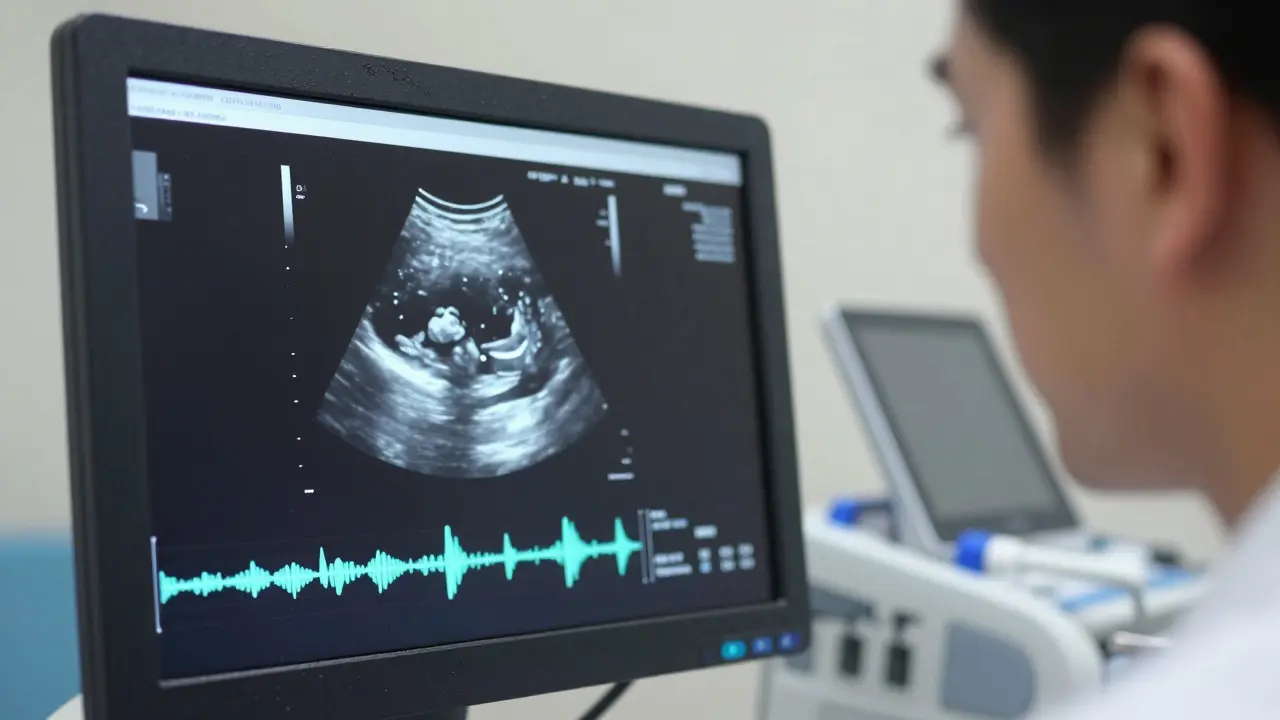
Manufacturing and healthcare are ahead. Factories use it to detect equipment failures from camera feeds plus audio of machinery. Hospitals match ultrasound videos with radiology reports. Retail? Slower. Only 18% of retailers use it-mostly for visual search in e-commerce. Finance? Barely 12%. Why? Compliance. GDPR and the EU AI Act add 18-22% to implementation costs. Many European firms are delaying projects until December 2025, when enforcement kicks in.
Big players dominate: Google’s Gemini (32% market share), Meta’s VATT derivatives (27%), OpenAI’s Sora-related tech (19%). But 42 startups are carving niches-Twelve Labs for video search, Runway for creative video editing, others for legal document review using video depositions and text transcripts.
Limitations and Criticisms
It’s not all breakthroughs. Yann LeCun, Meta’s Chief AI Scientist, called current systems "glorified alignment engines." They can match "dog" to a dog image. But ask them to predict what the dog will do next-like if it’s about to chase a cat or bark at a stranger-and they fail 43.7% of the time on the new Multimodal Reasoning Benchmark.
There’s also the modality gap. Text models hit 92.1% accuracy on standard benchmarks. Audio? 78.4%. Video? 89.4% on short clips, but only 63.2% on long-form content. That’s a problem. If your system relies on all modalities equally, but one keeps underperforming, the whole thing gets unreliable.
And then there’s "alignment fatigue." Gartner found 61% of early multimodal projects failed-not because the tech didn’t work, but because companies didn’t have a clear use case. They bought it because it was trendy, not because they needed it. The ROI only shows up when you’re doing cross-modal search, automated captioning, or video content moderation at scale.
What’s Next?
Recent papers point to smarter alignment. Microsoft’s November 2024 "alignment distillation" technique reduces embedding mismatch by 37.4% using teacher-student learning. VATT-v2’s "modality dropout" lets the model handle missing audio or video without crashing-improving robustness by 22.8%. That’s huge for real-world use, where sensors fail and microphones cut out.
Another trend: foundation model surgery. Researchers are taking pre-trained text models like BERT and surgically adapting them for vision and audio with 90% less data. No more training from scratch. Just tweak. That could slash training costs and make multimodal AI accessible to smaller teams.
Long-term, MIT predicts 85% of AI systems will use multimodal transformers by 2028. But Stanford warns the modality gap could stall progress unless we build architectures that don’t just align-but truly reason across modalities.
For now, the best use cases are clear: search engines that understand video by voice, medical systems that link scans with doctor notes, customer service bots that see your frustration on camera and hear your tone of voice. The technology isn’t perfect. But it’s getting there-fast.
What is the main purpose of multimodal transformers?
The main purpose is to create a shared embedding space where text, images, audio, and video can be understood and compared together. This allows systems to retrieve videos using text queries, generate captions from images, or answer questions based on both visual and spoken context-all within one model.
How do multimodal transformers handle different data types like audio and video?
Each modality gets its own encoder first. Audio is converted to mel spectrograms and processed by models like AST. Video is split into 16-frame tubelets with spatial patches, creating 3D embeddings. Text uses tokenizers like WordPiece. These encoded representations are then fed into a shared transformer backbone that learns to align them through contrastive learning.
What’s the difference between single-stream and two-stream multimodal models?
Two-stream models use separate transformers for each modality and connect them with cross-attention layers. They’re accurate but need 23% more parameters. Single-stream models, like VATT, encode each modality separately but then process all inputs through one shared transformer. They’re more efficient, use fewer parameters, and perform nearly as well.
Why is audio the hardest modality to align?
Audio is noisy and variable. Background sounds, accents, overlapping speech, and inconsistent recording quality make it hard to extract clean features. Even top models only reduce word error rates by 82.4% on LibriSpeech, compared to 92.1% for text-only systems. This gap makes audio the weakest link in multimodal alignment.
What hardware is needed to train multimodal transformers?
Training state-of-the-art models like VATT-v2 requires at least eight NVIDIA A100 GPUs with 80GB VRAM each and 512GB of system RAM. Inference, however, can run on a single A100 GPU for real-time video processing at 30fps.
Are multimodal transformers widely used in businesses today?
Only 17% of enterprises have implemented multimodal systems, according to Gartner’s October 2024 report. While 78% of Fortune 500 companies have piloted them, most struggle with unclear use cases, high costs, and poor documentation. Adoption is strongest in video analytics, healthcare, and manufacturing.
What are the biggest challenges developers face when building multimodal systems?
The top challenges are aligning embedding dimensions across modalities, syncing audio and video streams, and dealing with sparse documentation. Developers report spending weeks just tuning hyperparameters like temperature and learning rate. Audio-video synchronization is mentioned in 78% of negative GitHub feedback.
What’s the future of multimodal transformers?
The future lies in efficiency and reasoning. Techniques like modality dropout, alignment distillation, and foundation model surgery are reducing data and compute needs. Future systems will likely move beyond alignment to true cross-modal reasoning-predicting actions, understanding context, and making decisions based on combined inputs. Forrester predicts 68% of enterprise video analytics will use them by 2026.
Nikhil Gavhane
January 2, 2026 AT 07:38This is one of those rare posts that actually makes you feel like the future is here. I’ve been working on video search tools for a client and the alignment issues are brutal. But seeing 86.2% R@1 on VATT-v2? That’s the kind of number that makes you want to go back to the lab and try again.
Rajat Patil
January 3, 2026 AT 03:15The part about audio being the weakest link is very true. In our hospital project, we tried to match ultrasound videos with doctor notes, but the background noise from machines kept breaking the alignment. We had to manually clean 40% of the audio before it worked. Still, the reduction in labeled data was worth it.
deepak srinivasa
January 3, 2026 AT 17:51I’m curious about the modality dropout technique. If the model can handle missing audio or video without crashing, does that mean we can train on imperfect datasets? I have a bunch of old surveillance footage with bad mic quality - maybe this could help. Has anyone tried applying it to legacy data?
pk Pk
January 5, 2026 AT 10:20To everyone still waiting for the perfect multimodal system - stop waiting. Start small. Use VATT-v2 on a single use case. We took a 200-video dataset of factory machinery sounds and vibrations, ran it through a fine-tuned version, and now we catch bearing failures 12 hours before the alarm. No PhD required. Just curiosity and a GPU.
Don’t let the hype scare you. The tech is ready. You just have to be brave enough to try.
NIKHIL TRIPATHI
January 6, 2026 AT 11:59Co-tokenization boosting QA accuracy by 3.7% sounds great, but 29% more compute? That’s a hard sell for startups. We tried it on a prototype and our cloud bill tripled in two weeks. We went back to single-stream and added a simple post-filter for context - got 90% of the gain with half the cost. Sometimes simpler is smarter.
Also, the 3.2x more code stat? Real. I spent a week just debugging why the image patch size didn’t match the video tubelet stride. Documentation is still a joke. Hugging Face has examples for text-to-image, but nothing for audio-video sync. You’re on your own.
But hey - when it works? It’s magic. We built a system that finds legal deposition clips based on keywords from the transcript. Saved our firm 400 hours last quarter. Worth every headache.
Shivani Vaidya
January 8, 2026 AT 09:22The modality gap is real. Text models are so far ahead that they bias the entire system. We trained a medical diagnostic model and noticed it ignored audio cues entirely because the text was so strong. We had to artificially reduce text weight during training. It’s not about alignment - it’s about balance.
Rubina Jadhav
January 9, 2026 AT 23:56Just one sentence: audio is still the elephant in the room.