Compression for Edge Deployment: Running LLMs on Limited Hardware
 Aug, 28 2025
Running powerful language models on a smartphone or a tiny industrial sensor used to sound like science fiction. But today, it’s happening - not because devices got infinitely faster, but because we learned how to shrink the models themselves. Model compression is no longer just a research topic. It’s the reason your car can understand voice commands offline, your factory floor can detect defects in real time, and your medical device can analyze patient notes without sending data to the cloud.
Why Compress LLMs for Edge Devices?
Large language models like Llama-3, Mistral, and GPT-3.5 were built for servers with dozens of GPUs. They need 10GB, 20GB, even 100GB of memory just to load. Most edge devices - think Raspberry Pis, Qualcomm chips in phones, or embedded controllers in factories - have less than 4GB of RAM. They can’t run these models as-is. Without compression, you’re stuck with slow, expensive cloud calls. That means latency. Privacy risks. Downtime when internet fails. The goal of compression is simple: make models smaller and faster without killing their intelligence. You want the same answer, but in 1/10th the time and memory. Companies like Siemens, LinkedIn, and healthcare startups are already doing this. They’re cutting model size by 75%, slashing inference time by 4x, and running AI locally - no internet needed.How Compression Works: The Big Three Techniques
There are three main ways to shrink an LLM. Each has trade-offs. Choosing the right one depends on your hardware, accuracy needs, and how much time you have.1. Quantization: Lowering the Precision
Think of quantization like reducing a photo’s color depth. Instead of storing each number as a 32-bit floating point (FP32), you store it as an 8-bit or even 4-bit integer. This cuts memory use dramatically. A 7B-parameter model that needs 14GB in FP32 can drop to under 4GB in INT4. There are two types:- Post-Training Quantization (PTQ): You take a trained model and convert weights after training. Tools like GPTQ make this easy - sometimes under 10 lines of code. Great for quick testing.
- Quantization-Aware Training (QAT): You simulate low-precision math during training. Slower, but keeps accuracy higher. Used when you can’t afford any drop in performance.
2. Pruning: Cutting the Fat
Pruning removes unnecessary parts of the model. Imagine deleting every fifth word in a book and still understanding the story. In models, we remove weights that contribute little to output.- Unstructured pruning: Removes individual weights. Can cut 50-75% of parameters. But it creates irregular gaps - hard for hardware to speed up.
- Structured pruning: Removes entire neurons or layers. Less aggressive on size, but the model becomes more predictable. NVIDIA’s Ampere GPUs love 2:4 sparsity - every 4 weights, 2 are zeroed out. That pattern lets hardware skip calculations entirely, giving up to 2x speedups.
3. Knowledge Distillation: Teaching a Smaller Student
This is like having a top student (the big model) tutor a smaller one. You train a compact “student” model to mimic the outputs of the larger “teacher.” The student learns not just the final answers, but the reasoning patterns. Techniques like E-Sparse (2024) can cut model size by 40% while keeping 95% of the original accuracy. The catch? Training the student model takes massive compute - often more than training the original. You need a powerful GPU just to train the smaller one. That makes it less ideal for quick deployments. But if you have time and resources, distillation often gives the best accuracy-to-size ratio.Hardware Matters: It’s Not Just About the Model
You can’t talk about edge deployment without talking about hardware. A compressed model on a weak CPU might still be slow. But on the right chip, it flies.- NVIDIA Jetson Orin Nano: With TensorRT-LLM, it hits 18 tokens/second for a 7B model. That’s 6x faster than a generic CPU.
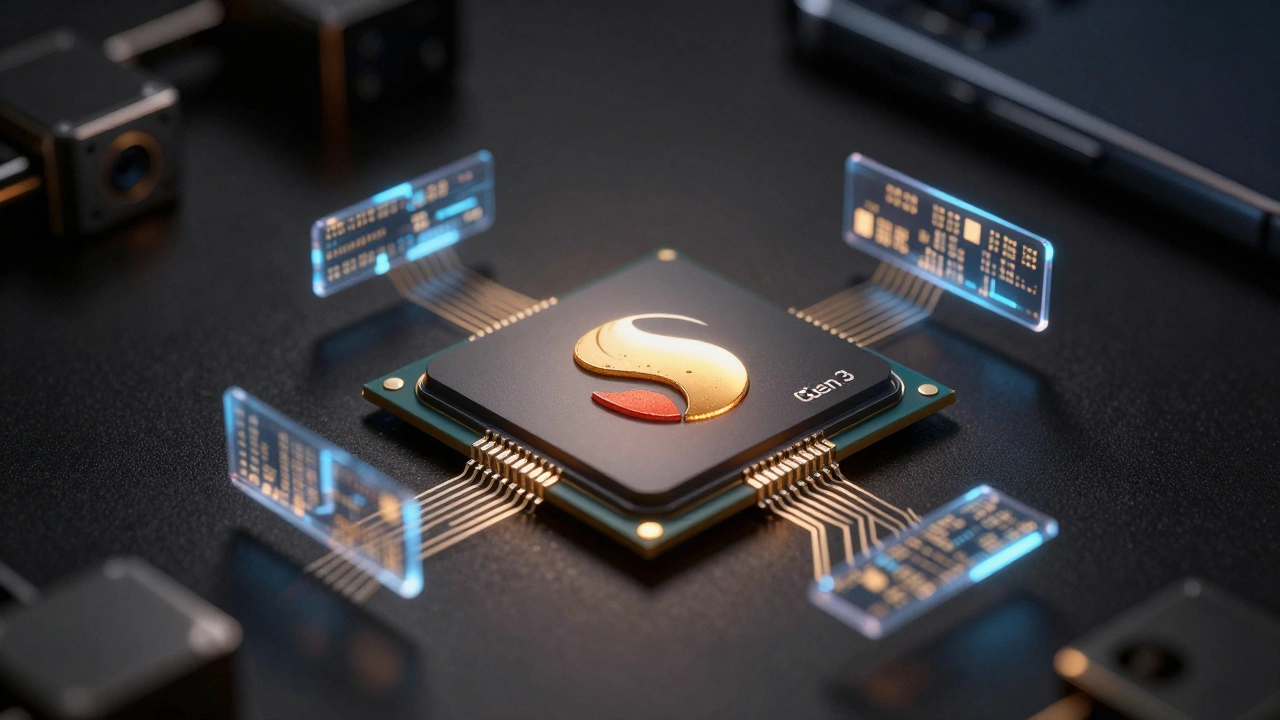
- Qualcomm Snapdragon 8 Gen 3: Runs Llama-3-8B-Edge at 22 tokens/second thanks to built-in AI accelerators and hardware support for sparse operations.
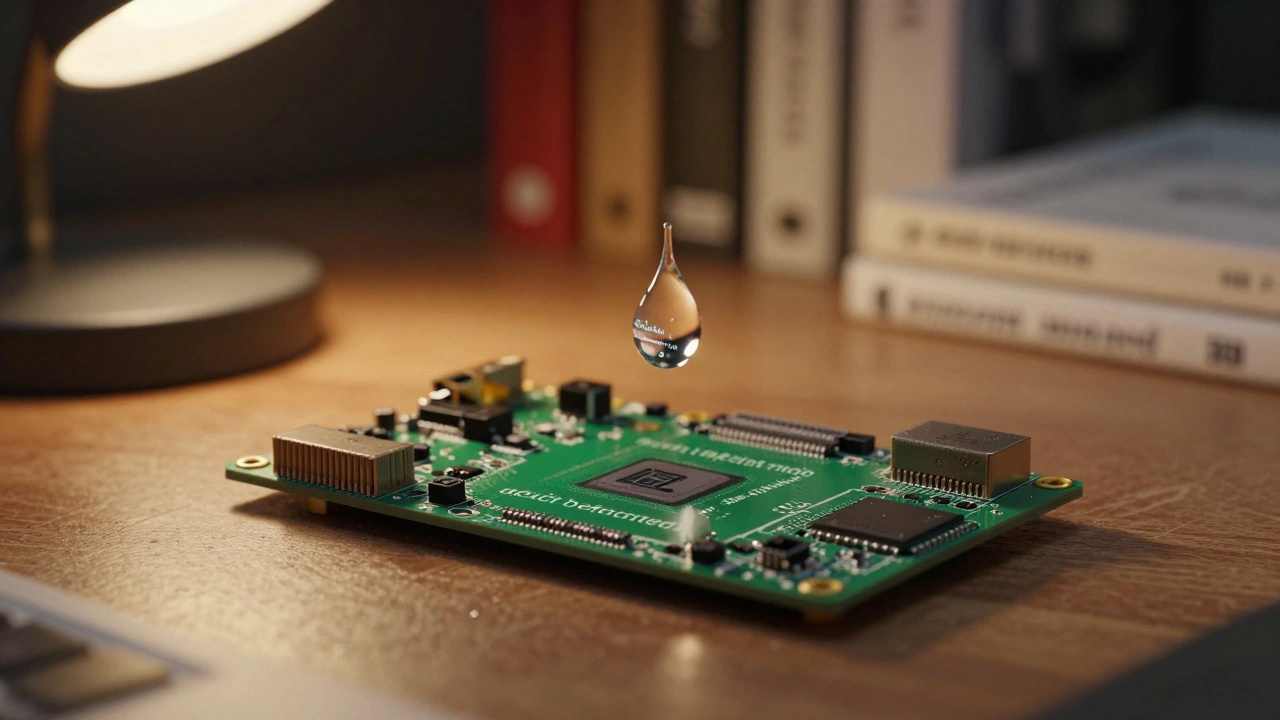
- Raspberry Pi 4: Can run 7B models with QLoRA, but only at 2-3 tokens/second. Fine for simple chat, not for real-time translation.
Real-World Trade-Offs: What Works Where?
There’s no one-size-fits-all. Here’s how to pick:- Mobile apps (Android/iOS): Use PTQ with INT4. Fast, simple, works with TensorFlow Lite. Accept a small 2-4% accuracy hit for massive speed gains.
- Industrial IoT (factories, sensors): Combine structured pruning with INT8 quantization. You need reliability. 2:4 sparsity + hardware acceleration = consistent performance on low-power chips.
- Healthcare transcription: Use knowledge distillation. Accuracy is critical. Even a 1% error in medical notes can be dangerous. Pay the cost of longer training for better results.
- Consumer gadgets (smart speakers, wearables): Go with Llama-3-8B-Edge or similar pre-compressed models. Meta built them for this exact use case.
Implementation Roadmap: From Zero to Edge
If you’re starting out, here’s a realistic path:- Measure baseline: Run your model on target hardware. Note memory use, latency, throughput. Use tools like vLLM or Hugging Face’s evaluate library.
- Choose technique: Match compression type to your hardware and accuracy needs. For most, start with PTQ.
- Apply compression: Use Optimum (Hugging Face) for quantization, or prune with TorchPrune. For QLoRA, use PEFT libraries.
- Validate and fine-tune: Test on real data. If accuracy dropped, try calibration. Use techniques like SmoothQuant to reduce loss by 30-50%.
- Deploy and monitor: Use edge frameworks like TensorRT-LLM or ONNX Runtime. Watch for hardware-specific quirks - what works on a Jetson might fail on a MediaTek chip.
What’s Next? The Future of Edge LLMs
The field is moving fast. By 2026, Gartner predicts 40% of enterprise edge AI will use compressed LLMs - up from under 5% in 2023. Models are being designed from the start for edge use. Llama-3-8B-Edge isn’t a compressed version of Llama-3 - it was built to be compressed. Researchers are now exploring cross-device partitioning - splitting one model across multiple edge devices. Imagine your smart home using your phone, speaker, and thermostat together to run a single AI task. That’s coming in 2026. But there’s a warning. Dr. Andrew Yao from Tsinghua University cautions that aggressive compression can change model behavior in unpredictable ways - potentially opening security holes. A model that hallucinates less on the cloud might start making dangerous errors on the edge. The key? Don’t just compress. Test. Validate. Monitor. And always ask: does this still do what it’s supposed to?
Tools to Get Started Today
You don’t need a PhD to begin. Here are the most useful open-source tools:- Hugging Face Optimum: Easy quantization and pruning for PyTorch models. Supports INT4, INT8, and 2:4 sparsity.
- NVIDIA TensorRT-LLM: Best-in-class optimization for Jetson and data center GPUs. Handles quantization, sparsity, and dynamic batching.
- llama.cpp: Runs LLMs on CPU with 4-bit quantization. Used by millions. Fix numerical instability with layer-wise scaling (updated Nov 2024).
- PEFT (Parameter-Efficient Fine-Tuning): Use LoRA to fine-tune compressed models with just 0.1-1% extra data.
Frequently Asked Questions
Can I run a 70B LLM on a Raspberry Pi?
Yes - but only with aggressive compression. Techniques like QLoRA (quantized low-rank adaptation) can shrink a 70B model down to fit in 4GB of RAM. ETH Zurich tested this in May 2025, achieving under 500ms per token on a Raspberry Pi 4. But you’ll lose some reasoning ability. It works for simple Q&A or summarization, not complex code generation or multistep planning.
Does quantization always reduce accuracy?
It usually does, but not always. With proper calibration and techniques like SmoothQuant or GPTQ, accuracy loss can be under 2% for simple tasks like classification or sentiment analysis. For complex reasoning, expect 3-5% loss at 4-bit. Always test on your specific data - not just benchmark datasets like GLUE.
Is pruning better than quantization?
It depends. Pruning can shrink models more - up to 4x smaller. But it requires retraining and specialized hardware to benefit. Quantization is easier to apply and works on any device. For most edge projects, combine both: prune first, then quantize. That’s what companies like Meta and NVIDIA do.
What’s the best compression for mobile apps?
Use INT4 quantization with TensorFlow Lite or Core ML. Start with a 7B model like Llama-3-8B-Edge. Avoid pruning unless you control the hardware. Mobile chips like Snapdragon 8 Gen 3 are optimized for quantized models - they’ll run them fast without extra work.
Why do compressed models behave differently on different devices?
Because hardware handles low-precision math differently. A model quantized to INT4 might work perfectly on a Jetson Nano but fail on a MediaTek chip due to differences in how the DSP or NPU handles rounding or overflow. Always test on your target device. Use calibration datasets that match your real-world inputs.
Are compressed LLMs secure?
They can be more secure - since data never leaves the device. But aggressive compression can introduce hidden vulnerabilities. A model that’s been pruned or quantized too hard might start hallucinating in unexpected ways, or respond to adversarial prompts it previously ignored. Always audit compressed models for edge-specific risks, especially in healthcare or finance.
Next Steps: What to Try Right Now
If you’re a developer:- Grab a 7B model from Hugging Face - try Llama-3-8B-Edge or Mistral-7B.
- Use Hugging Face Optimum to quantize it to INT4 in under 10 lines of code.
- Run it on your laptop with llama.cpp. Time the response.
- Try running it on a Raspberry Pi. See how it feels.
- Compare accuracy on a few real prompts before and after compression.
- Identify one task that currently relies on cloud inference - maybe defect detection or voice command processing.
- Measure latency and cost per inference.
- Start a pilot with a quantized 7B model on a Jetson Orin Nano or similar edge device.
- Track accuracy, speed, and user feedback over 2 weeks.
Ronak Khandelwal
December 10, 2025 AT 06:47OMG this is literally the future 🥹 I just ran Llama-3-8B-Edge on my old Android phone and it answered my existential questions in 2 seconds… no cloud, no lag, just pure AI magic. We’re not just deploying models-we’re giving AI to the people. 🌍📱 #EdgeAIRevolution
Jeff Napier
December 11, 2025 AT 12:29Compression? More like censorship. They’re not shrinking models-they’re dumbing them down so Big Tech can control what you think. That 4-bit quantization? It’s a backdoor for bias. And don’t get me started on Qualcomm’s ‘AI Stack’-it’s all NSA firmware in disguise. Wake up people.
Sibusiso Ernest Masilela
December 12, 2025 AT 13:57How quaint. You’re all playing with toy models on Raspberry Pis like it’s some kind of DIY science fair. Real AI runs on multi-GPU clusters with petabytes of data. What you’re calling ‘edge deployment’ is just glorified chatbot spam. If you can’t afford a 4090, maybe you shouldn’t be pretending to do AI at all. 🤷♂️
Daniel Kennedy
December 13, 2025 AT 09:34Hey Sibusiso, I get where you’re coming from-but let’s not dismiss what’s actually working. People in rural India, Kenya, rural America-they’re using these compressed models to get medical advice, translate languages, and run factory QA without internet. That’s not ‘glorified spam,’ that’s empowerment. The tech isn’t perfect, but it’s *accessible*. And accessibility is the real innovation here.
Also, quantization isn’t dumbing down-it’s optimizing. Like using a Swiss Army knife instead of a chainsaw to open a can. You don’t need brute force when you’ve got smart design.
And yes, testing on your target hardware matters. I lost a week because I assumed a Jetson model would run on a MediaTek chip. It didn’t. Calibration saved me. Don’t skip it.
Taylor Hayes
December 13, 2025 AT 13:55Daniel’s right. This isn’t about competing with data centers-it’s about bringing intelligence to places it’s never been. I work with a clinic in Guatemala that uses a quantized Mistral model to triage patient notes. Before? 48-hour delays. Now? Real-time insights, no internet, zero cloud fees.
And yeah, accuracy drops happen-but you learn to compensate. You design prompts differently. You add guardrails. You test with real patient data, not GLUE benchmarks. It’s not about perfection. It’s about progress.
Also-huge shoutout to llama.cpp. That thing is a miracle worker on ARM. I ran a 7B model on a $35 device and cried. Not from sadness. From wonder.
Sanjay Mittal
December 13, 2025 AT 23:25Just tried QLoRA + INT4 on a Raspberry Pi 4 with a 7B model. Got 2.8 tokens/sec. Not fast, but usable for summarizing sensor logs. Calibration with SmoothQuant cut my accuracy loss from 6% to 2.1%. Huge win. Tools like Optimum make this stupidly easy now. Start small. Test relentlessly. You don’t need a supercomputer to start changing the game.