Knowledge Sharing for Vibe-Coded Projects: Internal Wikis and Demos That Actually Stick
 Dec, 29 2025
Most teams document code, deadlines, and ticket statuses. But what about the vibe-the unspoken energy that makes a project click or collapse? If your team has ever said, “I know how to fix this, but no one told me why we did it this way”, you’re missing something critical. Vibe-coded knowledge sharing isn’t fluff. It’s the difference between a new hire taking eight weeks to get up to speed and doing it in eleven days. It’s why some teams innovate nonstop while others burn out quietly.
What Exactly Is a Vibe-Coded Project?
A vibe-coded project isn’t just about writing better docs. It’s about capturing the emotional and cultural context behind every decision. That means recording not just what was built, but how it felt to build it. Was there a moment when the whole team lit up after solving a stubborn bug? That’s a #collaborative-breakthrough tag. Did a late-night call with a client change the entire direction of the project? That’s an audio clip, not a bullet point.Companies like Spotify and Box started doing this around 2019-not because it was trendy, but because they kept losing institutional knowledge when people left. One engineer at Box told their team: “I didn’t need the architecture diagram. I needed to hear how we argued over the API design for three days and why we picked the slower, more readable option.” That’s vibe coding.
It’s not about performance reviews or forced positivity. It’s about preserving the real, messy, human moments that make a project unique. According to Connecteam’s 2023 survey, teams using vibe documentation saw 37% faster onboarding and 42% higher retention. Why? Because people don’t leave because of salary. They leave because they feel lost.
Why Traditional Wikis Fail Teams
Most internal wikis are digital graveyards. They’re full of outdated specs, corporate jargon, and sterile process diagrams. They look professional. They feel dead.Confluence, for example, dominates the market with 48% adoption among enterprises. But G2 reviews show 28% of negative feedback cites “too formal for capturing team energy.” Teams use it to log Jira links and requirements, but not to explain why the lead dev refuses to use Docker in this project-or how they finally convinced the product manager to drop a feature that was killing morale.
Think about it: if your wiki can’t answer “Who do I talk to when things get stressful?” or “What did we learn when the last sprint went sideways?”, then it’s not helping. It’s just storage.
And here’s the kicker: engineers hate it. Not because they’re resistant to change. Because they’ve seen this before. Another “culture initiative” that turned into another checkbox. That’s why 41% of early adopters abandoned vibe docs within three months, according to Harvard’s Ethan Bernstein. They called it “vibe-washing.”
The Right Tools for the Job
Not all wiki platforms are built for vibe. You need tools that handle more than text.ProofHub (updated Jan 2025) lets teams attach video snippets, voice memos, and emoji sentiment tags directly to project timelines. Their users report 39% higher adoption in teams under 30 people. Why? Because it doesn’t feel like work. You record a 90-second clip saying, “This refactor felt like climbing a mountain, but we did it because the team trusted each other to fix the edge cases.” That’s worth more than five pages of notes.
ThoughtFarmer (at $12/user/month as of Jan 2025) goes deeper. Its Vibe Analytics dashboard tracks 12 cultural metrics across projects-things like psychological safety scores, decision-making speed, and emotional energy peaks. It doesn’t just store vibe; it shows you where it’s fading. That’s how Box identified a 29% drop in team cohesion during their Q3 migration-and fixed it before people quit.
Nulab’s Backlog (v8.3, June 2025) introduced “vibe tags” like #stress-mitigation and #hot-tips. Teams using them saw 73% better understanding of why decisions were made. One dev wrote: “I found a tag #why-we-chose-this that explained a legacy decision I’d been afraid to touch. Saved me three days of guesswork.”
And then there’s the Slack integration. Box didn’t build a new wiki. They made vibe documentation part of their existing Slack channel flow. When someone asked, “Why does this endpoint return 404?”, the answer wasn’t a doc link. It was a voice note from the original dev, saying, “We did this because the client’s auth system was garbage. Don’t touch it unless you have coffee and a backup plan.” Contributions jumped 63%.

Demos Over Documents
Text is slow. Video is human.ProProfs’ 2025 analysis found that wikis with video demos had 63% higher usage than text-only ones. But not just any videos. The best ones are short-90 to 120 seconds-and show real moments: a pair programming session, a whiteboard meltdown turned breakthrough, a team celebrating a bug fix with pizza.
At Doctolib, developers post “vibe snippets” tagged #hot-tips. These get 3.2x more engagement than standard docs. Why? Because they’re not lectures. They’re whispers across the room: “Here’s how I fixed that weird race condition. You’ll hate it, but it works.”
And here’s the secret: these demos don’t need to be polished. In fact, the more raw, the better. A shaky phone video of someone muttering through a debugging session is more valuable than a studio-quality walkthrough. Authenticity beats production value every time.
How to Start Without Making It a Chore
Don’t roll this out company-wide. Don’t mandate it. Don’t tie it to KPIs yet.Start with one pilot team. Pick the one with the highest psychological safety score (use Google’s re:Work framework). Give them 6-8 weeks. Don’t assign a “vibe doc owner.” Assign a “vibe champion”-someone who naturally shares stories, asks good questions, and isn’t afraid to say, “I don’t know, but let’s figure it out.”
Train them for 8 hours. Not on software. On listening. On asking: “What did this feel like?” instead of “What did you do?”
Use ProofHub or Backlog. Embed it in Slack. Let people record a quick voice note after a standup. Tag it #confused, #aha, #exhausted. Don’t correct grammar. Don’t demand structure. Just capture the feeling.
At the end of eight weeks, ask: “Did you find something here that saved you time?” Not “Did you complete your documentation?” That’s the difference between compliance and culture.
What Happens When It Goes Wrong
It doesn’t always work. In fact, most attempts fail.A fintech startup with 200 people tried vibe docs during a company-wide restructuring. Employees saw it as performative. They thought leadership was trying to gaslight them into believing things were fine. Abandonment rate: 78%.
Another team made it mandatory. Every sprint, you had to submit one vibe tag. People started writing: “#positive #teamwork #greatday.” Empty. Meaningless. The system became a joke.
That’s vibe-washing. And it’s worse than no documentation at all. It erodes trust.
Dr. Linda Hill from Harvard puts it bluntly: “Teams documenting their creative process with emotional context achieve 27% higher innovation output-but only when it feels real.” If it feels like a compliance form, it’s poison.
The Future Is Already Here
The market for internal wikis hit $3.8 billion in 2025, with vibe features driving 38% of new sales. Gartner predicts 70% of high-performing teams will use structured vibe documentation by 2027.But the real innovation isn’t in the tech. It’s in the standard. In November 2025, the Knowledge Management Consortium released the first Vibe Documentation Standard-7 core elements, including emotional context markers, decision-making atmosphere tags, and psychological safety indicators. For the first time, there’s a baseline for what good looks like.
Some vendors are going further. Axero is building blockchain-verified vibe logs for Q2 2026-so no one can fake it. ProProfs is testing VR demos so you can “walk through” a past team’s problem-solving session.
But here’s the truth: no tool fixes a broken culture. No AI can replace a teammate who says, “Hey, I remember when we did this. It sucked, but we learned something.”
That’s the real knowledge. Not in the wiki. In the people.
Final Thought: Don’t Document Culture. Capture It.
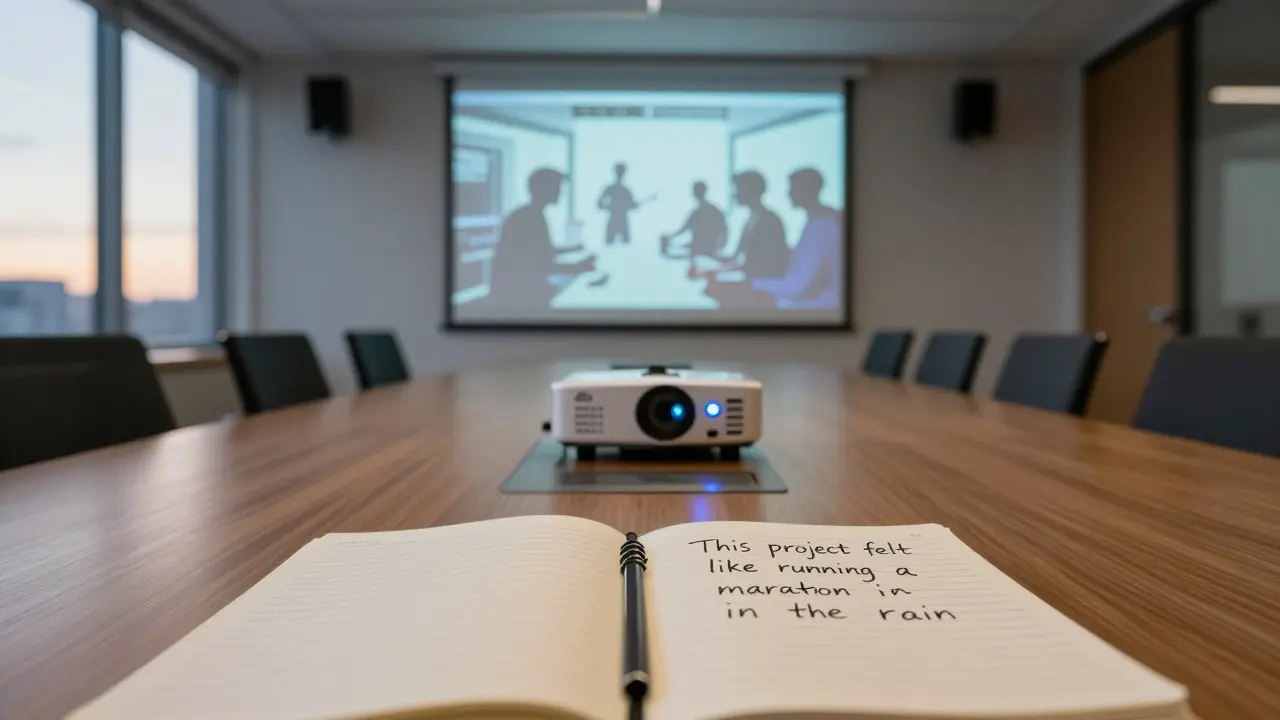
You can’t force a vibe. You can’t measure it with a survey. But you can create space for it to show up.Start small. Be honest. Let people record their frustrations, their wins, their weird little rituals. Let them say, “This project felt like running a marathon in the rain-exhausting, but we kept going because we believed in it.”
That’s not documentation. That’s legacy.
What’s the difference between a regular wiki and a vibe-coded wiki?
A regular wiki documents what was done: features, code, deadlines. A vibe-coded wiki documents how it felt to do it: the tension, the breakthroughs, the inside jokes, the late-night calls. It answers not just ‘how’ but ‘why’ and ‘what it was like.’
Do I need special software to do vibe coding?
You don’t need special software, but you’ll struggle without it. Tools like ProofHub, Backlog, and ThoughtFarmer let you embed video, audio, and emotional tags directly into your docs. Standard wikis like Confluence can work if you customize templates-but most teams find them too rigid for authentic sharing.
Is vibe documentation just another corporate fad?
It can be-if it’s forced, monitored, or treated like compliance. But when it’s organic, unpolished, and driven by team members themselves, it’s one of the most powerful tools for retaining knowledge and building trust. The data shows teams that do it well have higher retention, faster onboarding, and more innovation.
How do I get engineers to participate?
Don’t ask them to write essays. Ask them to record a 90-second voice note after a tough bug is fixed. Or tag a Slack message with #hot-tip. Make it part of their existing workflow-not an extra task. Box did this by embedding vibe snippets into their Q&A channels. Contributions jumped 63%.
Can vibe documentation be measured?
Yes, but not with traditional metrics. Look at usage: Are people watching the videos? Are they searching the tags? Are new hires referencing the docs? ThoughtFarmer’s Vibe Analytics tracks emotional energy trends across projects. But the best signal is simple: do people say, “I found this and it saved me weeks”?
Is vibe documentation GDPR-compliant?
Yes, but only if you treat emotional data as personal information. After the EU’s June 2025 clarification, teams must get consent before recording voice notes or video clips that include identifiable team members. Anonymize where possible. Don’t store audio without permission. Deloitte found 42% of European implementations had to adjust their policies after this ruling.
What’s the biggest mistake teams make?
Trying to make it perfect. Vibe coding fails when it becomes a polished, mandatory performance. The moment it feels like a task instead of a conversation, people stop contributing. Authenticity beats professionalism every time.
sonny dirgantara
December 30, 2025 AT 20:12lol i just recorded a voice note after fixing a dumb bug and tagged it #hot-tip. no one cared. but i felt better.
Gina Grub
January 1, 2026 AT 12:43Let’s be real - vibe coding is just corporate therapy with a SaaS price tag. You’re not preserving culture, you’re commodifying vulnerability. And now we’re supposed to record emotional state changes like they’re KPIs? Please. The moment you instrument feeling, you kill it. This isn’t documentation. It’s emotional surveillance with emoji.
Lauren Saunders
January 2, 2026 AT 10:16Oh please. You’re romanticizing chaos. Vibe coding sounds like a TED Talk written by a startup founder who’s never actually shipped code. Real engineering is about clarity, consistency, and scalable systems - not voice memos about ‘late-night calls’ and ‘whiteboard meltdowns.’ If your team needs a 90-second audio clip to understand why a decision was made, you’ve already failed at documentation. This isn’t innovation - it’s performative navel-gazing dressed up as culture.
And don’t get me started on ‘vibe tags.’ #exhausted? #aha? Are we documenting software or a college dorm room at 3 AM? If your architecture requires emotional context to be comprehensible, it’s poorly designed. Fix the code, not the feelings.
Also, blockchain-verified vibe logs? That’s not the future. That’s a punchline. The only thing being stored here is delusion. The market hit $3.8 billion? That’s not growth - that’s a bubble fueled by consultants selling snake oil to managers who don’t understand engineering.
And don’t cite ‘Harvard’ like it’s gospel. Ethan Bernstein? He studies organizational behavior, not code. Dr. Linda Hill? She’s brilliant - but she didn’t say ‘vibe docs increase innovation.’ She said *authentic* storytelling does. There’s a difference. You can’t outsource authenticity to a Slack bot.
Real knowledge transfer happens in pair programming, in code reviews, in hallway conversations - not in a polished video where someone pretends they’re not exhausted. If your team needs a ‘vibe champion’ to tell them why the API is broken, you’ve got a leadership problem, not a documentation problem.
Stop mistaking emotional noise for institutional memory. The real legacy isn’t in the voice note. It’s in the commit history. And the pull requests. And the comments that say ‘this is terrible but we’re stuck with it.’ That’s truth. Not #collaborative-breakthrough.
Also, GDPR compliance for voice notes? Please. You’re creating legal liability for something that should never have been recorded in the first place. What’s next - mandatory vulnerability diaries? Emotional consent forms before merging?
Fix your culture. Don’t monetize it.
Kendall Storey
January 4, 2026 AT 04:19Look, I get the skepticism - I used to be the guy rolling my eyes at ‘culture initiatives.’ But we tried this on my team last quarter. No mandates. No KPIs. Just one guy recorded a 60-second clip after we finally fixed that cursed race condition that had been haunting us for months. He said, ‘This was the most frustrating thing I’ve ever done… but I’m proud we didn’t quit.’
Three new hires watched it. One of them said, ‘I didn’t know we could feel this way about code.’ That’s the magic. Not the tool. Not the tag. The humanity.
It’s not about making it pretty. It’s about making it real. The shaky video? The rambling voice note? The typo-ridden tag? That’s the stuff that sticks. Not the Confluence page no one reads.
And yeah, some people tried to game it with #positive #teamwork. We just ignored them. No one got in trouble. No one was punished. And guess what? They stopped. Because authenticity has a smell. You can’t fake it.
Tools like Backlog and ProofHub just make it easier. But the real win? When someone finds a #why-we-chose-this tag and saves three days of guesswork. That’s the ROI. Not some dashboard.
Don’t over-engineer it. Just let people talk. The vibe will show up.
Andrew Nashaat
January 5, 2026 AT 13:14Oh my god. This is the most ridiculous thing I’ve read since the ‘emotional intelligence training’ fiasco at my last job. You’re telling me that engineers are now required to record their ‘emotional energy peaks’ like they’re on a reality show? What’s next? Mandatory ‘vibe selfies’ before standups? ‘Tag your frustration with #stress-mitigation’?!
And let’s not forget the ‘vibe-washing’ - that’s not a typo, that’s a crime against common sense. You’re turning human experience into a corporate KPI. You’re not preserving culture - you’re turning it into a compliance checklist. And then you wonder why people quit?
Also, ‘blockchain-verified vibe logs’? Are you serious? Are we now storing emotional context on a decentralized ledger? What’s the gas fee for recording a voice note that says, ‘I hate this code’?!
And who gave these tools permission to track ‘psychological safety scores’? Are we going to start getting ‘vibe performance reviews’? ‘Your emotional energy dropped 12% this sprint - here’s your improvement plan.’
Let me tell you something: engineers don’t need more tools. They need fewer meetings, better pay, and less BS. If your codebase is so confusing that you need a voice memo to explain it - fix the code. Not the culture. Not the tags. Not the ‘vibe champion.’
And don’t cite ‘Harvard’ like it’s a stamp of approval. That’s just marketing fluff. The real truth? People leave because they’re overworked, underpaid, and sick of being told to ‘share their feelings’ while their manager ignores their actual problems.
This isn’t innovation. It’s capitalism trying to sell therapy as a SaaS product. And I’m not buying it.
Janiss McCamish
January 6, 2026 AT 08:55My team tried this. No pressure. Just a Slack channel where people drop a 30-second voice note after a win or a mess-up. One guy recorded: ‘I spent 12 hours on this bug. I almost quit. Then I realized the problem was a missing comma. I cried. Then I laughed. Don’t overthink it.’
Two weeks later, a new hire found it. Saved her 3 days. That’s it. That’s the whole thing.
Don’t make it a project. Make it a habit.
Ashton Strong
January 6, 2026 AT 10:58While I appreciate the enthusiasm behind this initiative, I must respectfully caution against conflating emotional expression with institutional knowledge. Documentation, by its very nature, must remain objective, structured, and verifiable to ensure fidelity across time and personnel. While anecdotal narratives may provide contextual richness, they are inherently subjective and susceptible to distortion, bias, and attrition.
Moreover, the integration of audio and video media into enterprise documentation systems introduces significant challenges regarding data integrity, accessibility, compliance, and long-term archival. The notion that ‘raw’ or ‘unpolished’ content holds greater value than clear, concise, and well-organized textual documentation is, in my professional judgment, a dangerous fallacy.
That said, I do acknowledge that human factors play a critical role in team cohesion and knowledge retention. Perhaps a complementary approach - where structured documentation is supplemented with optional, anonymized, and time-limited personal reflections - could offer a balanced middle ground. But let us not mistake sentiment for substance.
True knowledge preservation lies in clarity, not catharsis.
Richard H
January 8, 2026 AT 00:50Why are we letting tech bros turn engineering into a therapy session? We’re not here to cry into our keyboards. We’re here to ship code. If you need a voice note to understand why a function exists, your code is trash. Fix it. Don’t record it.
This whole vibe thing is just woke corporate nonsense. We don’t need emotional tags. We need deadlines. We need accountability. We need results. Not ‘#hot-tips’ from people who can’t write clean code.
Get back to work.