Supervised Fine-Tuning for Large Language Models: A Practical Guide for Real-World Use
 Jul, 6 2025
Most people think training a large language model from scratch is the only way to make it do what you want. That’s not true. In fact, you don’t need to retrain anything. You just need to supervised fine-tuning - and it’s way simpler than you think.
What Supervised Fine-Tuning Actually Does
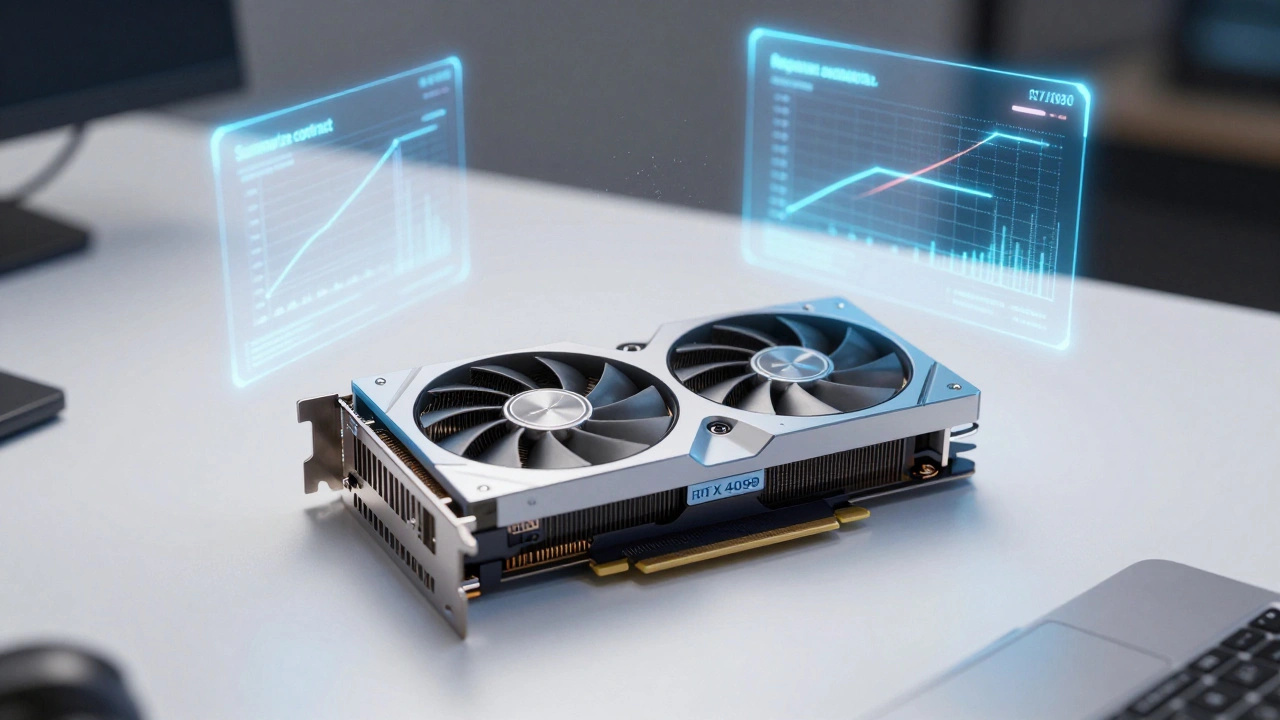
Supervised fine-tuning (SFT) is the step that turns a general-purpose language model into a useful tool. Think of it like teaching a smart intern. You give them a textbook (the pre-trained model), then you show them exactly how to handle real work tasks - one example at a time. The model starts as a statistical powerhouse: it knows how words connect, predicts the next sentence, and can write essays or code. But it doesn’t know what you want. It might give you a long answer when you asked for a short one. Or it might make up facts. That’s where SFT comes in. You feed it hundreds or thousands of clean examples: a prompt on one side, the perfect response on the other. For example:- Prompt: “Summarize this contract in one sentence.”
- Response: “The agreement grants exclusive distribution rights to Company A for five years in North America.”
Why SFT Beats the Alternatives
You might be wondering: why not just use prompts? Or adjust the model’s settings? Or use reinforcement learning? Prompt engineering works - sometimes. But if you need consistent, reliable results across 10,000 user queries, you’ll quickly hit limits. Prompts are fragile. A small change in wording breaks them. Full fine-tuning - retraining every single parameter - is expensive. For a 7B model, that needs 14GB of GPU memory just to load. And you’re still not guaranteed better results. Reinforcement learning from human feedback (RLHF) sounds powerful, but it’s complex. It needs human raters to compare responses, and it requires deep expertise in reward modeling. Most teams don’t have that. SFT sits in the sweet spot. It’s simple. It’s fast. And it delivers 25-40% better accuracy on domain-specific tasks compared to prompts alone, according to a Meta AI study from June 2023. You don’t need a PhD. You just need good examples.The 6-Step Playbook
Here’s how to actually do it - no fluff, just what works.- Choose your base model. Start with something open and efficient. LLaMA-3 8B (4-bit quantized) is a solid pick. It runs on a single consumer GPU with 12GB VRAM. Avoid huge models unless you have cloud access. Google’s text-bison@002 works too, but only if you’re using Vertex AI.
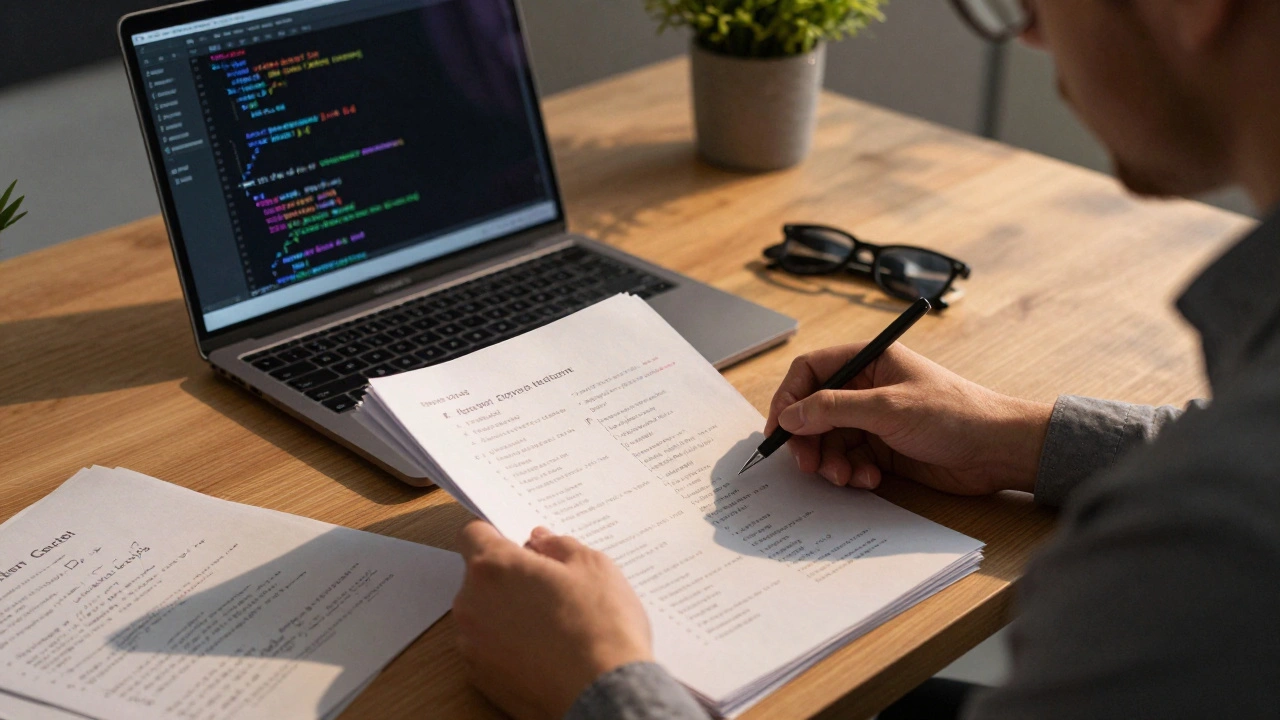
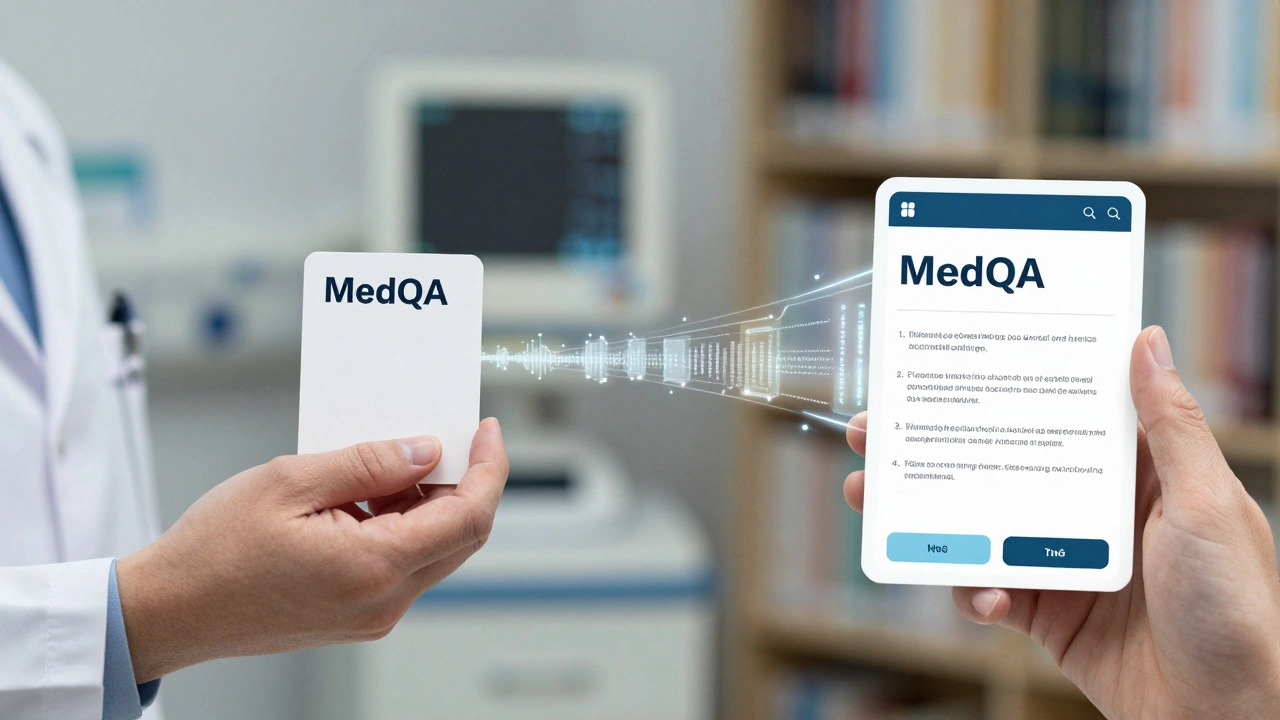
- Collect 5,000+ high-quality examples. This is the hardest part. You need input-output pairs that match your use case exactly. Don’t use crowd-sourced data. Use experts. A Walmart Labs team found that 12,000 retail-specific examples cut customer service response time by 63%. A medical team got 89% accuracy on MedQA after using 2,400 physician-verified Q&As. One Reddit user said: “500 perfect examples beat 10,000 messy ones.” Quality > quantity.
- Format everything the same way. Inconsistency kills performance. If one prompt says “Answer this:” and another says “What’s the answer?”, the model gets confused. Use a template. Example: “<|prompt|> {input} <|response|> {output}”. Alvaro Cintas, an ML engineer, showed that inconsistent formats hurt accuracy by 18%.
- Split your data. 70% training, 15% validation, 15% test. Don’t skip this. If you don’t validate properly, you’ll think your model is working - until you deploy it and it starts hallucinating.
- Use LoRA with 4-bit quantization. You don’t need to touch all the model’s weights. LoRA (Low-Rank Adaptation) changes less than 1% of parameters. Combine it with 4-bit quantization (via bitsandbytes) and you can run a 7B model on a single GPU with only 6GB of memory. This is standard now. Hugging Face’s TRL library makes it easy with SFTTrainer.
- Train with the right settings. Learning rate: 2e-5 to 5e-5. Too high? You’ll forget everything it learned during pre-training. Epochs: 1-3. More than that and you overfit. Batch size: 4-16, depending on your GPU. Use gradient accumulation if your batch is small. Set max_seq_length to 2048. And turn on packing - it combines short examples to use memory more efficiently.
What Happens When You Get It Wrong
Most failures aren’t about code. They’re about data. A GitHub issue from the TRL repo shows a common problem: after fine-tuning, the model forgets how to answer basic questions like “What’s the capital of France?” That’s called catastrophic forgetting. It happens when the learning rate is too high - above 3e-5. Fix it by lowering the rate and adding a few general knowledge examples back into the training set. Another issue: bias. If your examples are mostly from one region, language, or perspective, the model will reflect that. JPMorgan Chase found 28% hallucination rates in financial advice after SFT - not because the code was bad, but because the training data included outdated regulations and incomplete case studies. And don’t forget evaluation. Perplexity below 15 is a good target for conversational tasks. But you also need human checks. Ask real users: Is the answer helpful? Is it safe? Does it sound like a human?What’s New in 2025
The field is moving fast. Google’s Vertex AI now auto-scores your data before training and blocks low-quality examples - cutting curation time by 65%. Hugging Face’s TRL v0.8 (June 2024) introduced dynamic difficulty adjustment: it starts with simple examples, then slowly introduces harder ones. That improved accuracy by 12-18% on complex tasks. Anthropic announced in July 2024 that their next Claude model will use synthetic data generated by AI to supplement human-labeled examples. That’s a big deal - it means you won’t have to hire 100 annotators just to fine-tune a model. But the bottleneck hasn’t gone away. A Stanford HAI paper from August 2024 warns that expert annotation costs could become the main limit to SFT adoption after 2027. If you’re in healthcare, finance, or legal tech, you’re already feeling this.Who Should Use SFT - And Who Shouldn’t
SFT is perfect if you:- Need consistent, reliable responses in a specific domain (e.g., customer support, legal docs, medical Q&A)
- Have access to domain experts who can create examples
- Want to avoid the complexity of RLHF
- Don’t have unlimited compute or budget
- Need the model to reason through multi-step problems without clear examples (e.g., “Explain how to file a tax return while avoiding penalties”) - SFT won’t help much here
- Don’t have time to curate data - it takes 60-70% of the total project time
- Want to build a general-purpose assistant - use a pre-trained model like GPT-4 or Claude 3 instead
The Bottom Line
Supervised fine-tuning isn’t flashy. It doesn’t make headlines. But it’s the most reliable way to make LLMs useful in real business settings. It’s cheaper than training from scratch. Simpler than reinforcement learning. More effective than prompts. The key isn’t the model. It’s the data. If you have 5,000 clean, expert-curated examples - you can turn a base model into a domain expert. If you don’t? You’re just wasting time. Start small. Test with 500 examples. Measure. Iterate. Don’t aim for perfection. Aim for progress.Frequently Asked Questions
What’s the minimum number of examples needed for supervised fine-tuning?
You can technically start with 500 examples, but results will be weak. For reliable performance, aim for 5,000-10,000 high-quality, expert-curated examples. Google’s research shows that 1,500 expert examples outperform 50,000 crowd-sourced ones. Quality matters more than quantity.
Can I fine-tune a large model on my laptop?
Yes, but only with 4-bit quantization and LoRA. A 7B model like LLaMA-3 8B can run on a laptop with 12GB of VRAM using tools like bitsandbytes and Hugging Face’s TRL. You won’t train quickly - expect 12-24 hours - but it’s possible. Don’t try this with models larger than 13B unless you have access to cloud GPUs.
Why is my model forgetting basic facts after fine-tuning?
That’s called catastrophic forgetting. It happens when the learning rate is too high (above 3e-5) or when your training data is too narrow. Lower the learning rate to 2e-5 and mix in 10-20% general knowledge examples - like common facts, simple questions, or neutral prompts - to keep the model grounded.
Should I use supervised fine-tuning or RLHF?
Use SFT first. It’s the foundation. RLHF comes after. OpenAI’s InstructGPT achieved 85% human preference alignment using both - but only 68% with SFT alone. If you’re just starting out, focus on getting great data for SFT. Save RLHF for when you need to optimize for nuanced qualities like “helpfulness” or “harmlessness.”
How long does supervised fine-tuning take?
For a 7B model with 5,000 examples and LoRA on 2x A100 GPUs, expect 12-24 hours. On a single consumer GPU, it could take 2-3 days. Cloud platforms like Vertex AI can do it in 3-4 hours for smaller models. The real time sink is data preparation - that usually takes 2-3 weeks.
Is supervised fine-tuning regulated?
Yes, especially in high-risk fields like healthcare and finance. The EU AI Act (2024) requires demonstrable oversight of all training data used in SFT. If you’re building a model for clinical decisions or financial advice, you must document where your examples came from, who labeled them, and how you checked for bias. Many organizations are still struggling with this.
Next Steps
If you’re ready to try SFT:- Start with a small task - like summarizing emails or answering FAQs.
- Collect 500 expert-labeled examples.
- Use Hugging Face’s TRL library with LoRA and 4-bit quantization.
- Train for 2 epochs at 2e-5 learning rate.
- Evaluate with real users - not just metrics.
Patrick Sieber
December 10, 2025 AT 08:58I’ve used SFT on a customer support bot for a SaaS company, and wow-what a difference. We went from 40% user satisfaction to 82% in two weeks. The key? Not the model. Not the hardware. It was the damn examples. We had a junior support rep spend three days writing clean Q&As instead of copying old tickets. That’s all it took. No RLHF, no fancy setup. Just good data.
Also, don’t skip the validation set. We did, and our model started answering ‘How do I reset my password?’ with a 500-word essay on cybersecurity best practices. Oops.
Shivam Mogha
December 10, 2025 AT 17:28500 clean examples > 10k messy ones.
mani kandan
December 12, 2025 AT 01:10Let me tell you, SFT is the quiet hero of the AI revolution-no fanfare, no hype videos, just engineers hunched over spreadsheets at 2 a.m., whispering ‘this one’s good’ to each other like priests in a sacred temple of data.
I remember when our team tried to cut corners with crowd-sourced labels from Upwork. The model started calling customers ‘dear sir’ in Hindi-English hybrid sentences and quoting Shakespeare when asked about invoice deadlines. We cried. Then we hired two domain experts. Three weeks later? Our churn dropped by 31%. It’s not magic. It’s discipline.
And yes, LoRA on a 12GB RTX 3060? Absolutely. I trained a 7B model on my gaming rig while watching Netflix. The GPU fan sounded like a jet taking off, but it worked. No cloud bills. No PhD required.
The real enemy? Time. Not compute. Not cost. The time it takes to get experts to stop saying ‘it’s fine’ and actually write perfect responses. That’s the bottleneck. That’s the art.
And if you’re thinking RLHF next-wait. First, make your SFT so good that even your cat could use it. Then, and only then, polish it with human feedback.
Also, packing sequences? Game-changer. Memory usage dropped 40%. I’m still amazed.
Don’t chase benchmarks. Chase clarity. If your output sounds like a human wrote it-then you’ve won.
Rahul Borole
December 12, 2025 AT 15:47It is imperative to underscore the critical importance of data curation in supervised fine-tuning. The empirical evidence presented herein aligns with established best practices in machine learning engineering, wherein the fidelity of training examples directly correlates with model generalization performance. Furthermore, the utilization of Low-Rank Adaptation in conjunction with 4-bit quantization constitutes a computationally efficient paradigm that enables resource-constrained environments to deploy state-of-the-art models without compromising functional integrity.
It is also noteworthy that catastrophic forgetting, while a well-documented phenomenon, can be effectively mitigated through the strategic integration of general knowledge retention samples during training epochs. The recommended learning rate range of 2e-5 to 5e-5 is empirically validated across multiple peer-reviewed studies, including those published in the Journal of Machine Learning Research.
Organizations operating in regulated domains must adhere to the EU AI Act’s documentation requirements, which mandate traceability of labeling provenance, annotator qualifications, and bias mitigation protocols. Non-compliance carries significant legal and reputational risk.
Therefore, we strongly advise practitioners to adopt a phased implementation strategy: begin with a pilot dataset of 500 high-fidelity examples, validate against a human-evaluated test set, iterate, and scale only after achieving consistent performance thresholds.
Sheetal Srivastava
December 12, 2025 AT 23:23Ugh, you’re all still using SFT? How quaint. I mean, have you even heard of chain-of-thought prompting with synthetic data augmentation via adversarial contrastive learning? That’s what the top 1% are doing now. Your ‘5,000 examples’ are so 2023. We’re generating 200k synthetic Q&As with Claude 3.5 and then filtering via semantic entropy thresholds-your ‘expert-curated’ data is just noise without a latent space alignment layer.
And you’re training on LoRA? Cute. We’re doing full parameter fine-tuning with ZeRO-3 and FlashAttention-3 on 8x H100s. Your ‘consumer GPU’ is a toddler with a crayon compared to our distributed training pipeline.
Also, why are you still using TRL? The new HF Axolotl v2.1 has dynamic curriculum learning built-in with automatic bias detection. You’re literally using a flip phone while I’m on the Mars rover.
And don’t get me started on your ‘human evaluation.’ Who are your users? Your cousin? Your dog? We use GPT-4o as a judge with a 12-dimension preference scoring matrix. Your metrics are infantile.
Just saying-you’re not wrong, you’re just… behind.
Bhavishya Kumar
December 14, 2025 AT 00:09There are several grammatical and punctuation inconsistencies in the original post that undermine its credibility. For instance, the phrase 'You just need to supervised fine-tuning' is incorrect-it should be 'You just need to perform supervised fine-tuning.' Additionally, the use of em dashes without proper spacing and inconsistent capitalization in headings (e.g., 'The 6-Step Playbook' vs. 'What Happens When You Get It Wrong') violates standard technical writing conventions.
Furthermore, the citation 'Meta AI study from June 2023' lacks a DOI or publication link. In academic or professional contexts, this is unacceptable. If you're going to make claims about 25-40% accuracy gains, cite the paper. Don't just drop a vague reference like it's a TikTok fact.
Also, 'bitsandbytes' is not a tool-it's a library. And 'packing' isn't a setting-it's a technique. Precision matters. If you can't write clearly, how can your data be clean?
ujjwal fouzdar
December 15, 2025 AT 00:17Let me tell you something about data.
It’s not just numbers. It’s souls. Every example you feed into that model? Someone wrote it. Maybe they were tired. Maybe they were angry. Maybe they wrote that response while their baby screamed in the background and their coffee spilled on the keyboard.
That’s why your model sometimes answers like a robot who just lost its best friend.
SFT isn’t about training models. It’s about transferring human intention. The difference between a good answer and a great one? It’s not in the token count. It’s in the silence between the words. The hesitation. The empathy. The unspoken ‘I know you’re stressed’ that the expert slipped into their reply.
And that? You can’t automate. You can’t synthesize. You can’t prompt your way into it.
So yeah, go ahead and use LoRA. Go ahead and quantize. But don’t forget-behind every prompt-response pair is a human who chose to care.
And if you treat that like a dataset… you’re not building AI.
You’re just building ghosts.
Anand Pandit
December 16, 2025 AT 23:10Just wanted to say THANK YOU for this guide. I’m a solo dev with no ML team and barely any budget, and this actually made me feel like I can do this. I started with 300 examples for a legal doc summarizer-just me and my paralegal friend typing up real client questions and answers.
Used LLaMA-3 8B on my old laptop with bitsandbytes. Trained for 2 epochs. Took 36 hours. And guess what? It works. Clients are actually saying ‘Wow, that’s exactly what I meant!’
Don’t wait for perfect. Start with good enough. I did. And now I’m building my second model. You got this.