California AI Transparency Act: What You Need to Know About Generative AI Detection Tools and Content Labels
 Jul, 21 2025
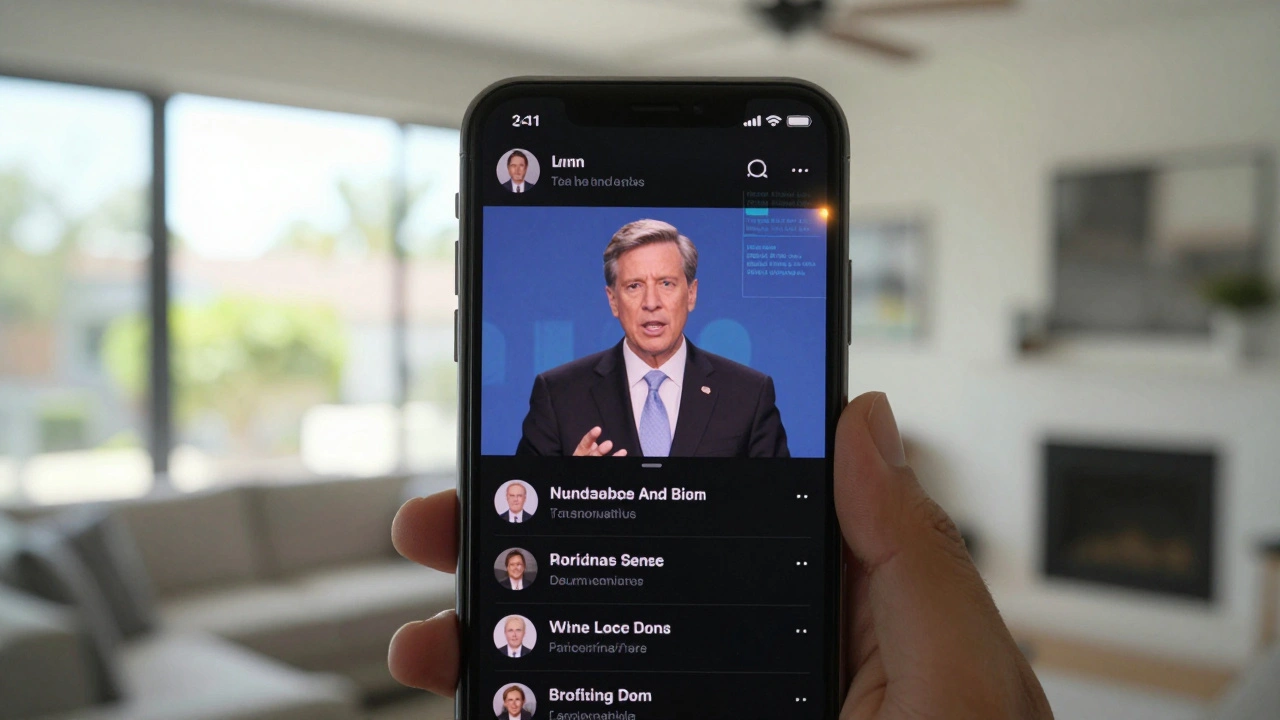
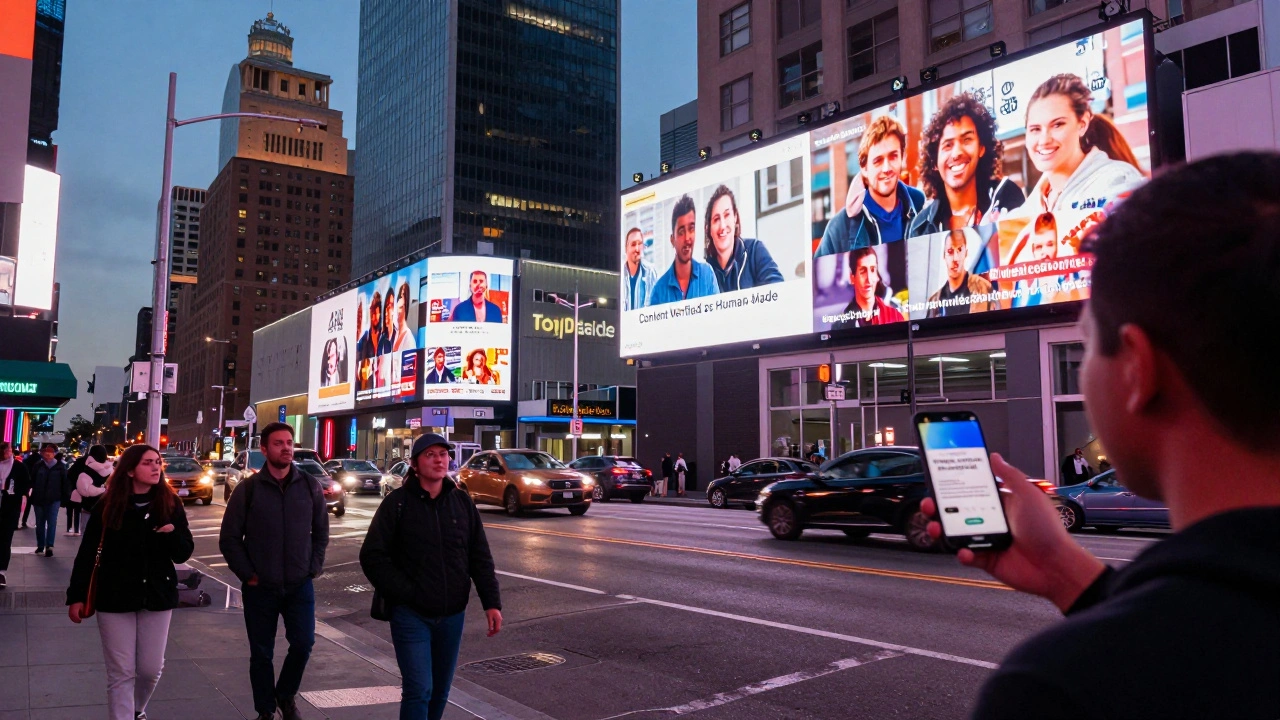
On September 30, 2025, California became the first U.S. state to require generative AI detection tools and mandatory content labels on major online platforms. The new law, Assembly Bill 853 - known as the California AI Transparency Act - doesn’t just ask companies to be honest about AI-generated content. It forces them to build systems that prove it. If you’re uploading videos, photos, or audio to Instagram, YouTube, or TikTok, you’ll soon see labels telling you whether that content was made or altered by AI. And if you’re a creator using a smartphone or camera, you might soon be asked if you want to tag your own footage as human-made.
What the California AI Transparency Act Actually Requires
The law targets companies with over 1 million monthly users in California. That means big platforms like Meta, Google, X, and TikTok - not small indie apps. These companies must now offer free, easy-to-use tools that let users check if an image, video, or audio file was created or modified by AI. These tools can’t be buried in settings. They have to be visible, fast, and accessible right on the platform where the content appears.
But it’s not just about detection. The law also demands that platforms preserve the original digital fingerprints - called provenance metadata - that show where content came from. If a video was made with AI, that fact must stay attached to it, even after it’s uploaded, shared, or compressed. Platforms can’t strip this data out. If they do, they’re breaking the law.
Here’s the catch: the law only applies to multimedia. Text generated by ChatGPT, Gemini, or Claude? Not covered. That’s a major gap. A misleading news article written by AI won’t trigger a label. But a fake video of a politician saying something they never said? That’s exactly what this law was built to stop.
How Detection Tools Work - And Why They’re Still Flawed
These detection tools analyze files for signs of AI manipulation. They look for unnatural patterns in facial movements, inconsistent lighting, weird audio glitches, or pixel artifacts that don’t occur in real-world recordings. Some tools use watermarking. Others compare content against known AI models. But none of them are perfect.
According to G2 Crowd data from November 2025, AI detection tools have accuracy rates between 68% and 82%. Video detection is the weakest - only 68% accurate. That means nearly one in three AI-generated videos slips through. And false positives are a real problem. Landscape photos with heavy filters? Sometimes flagged as AI. Artistic portraits? Often misclassified. One user on Reddit said their photo of a sunset got labeled as AI-generated because the clouds looked "too smooth." That’s not a flaw in the photo. It’s a flaw in the tool.
Platforms must publicly report their tool’s false positive and false negative rates every quarter. That transparency is new. But it also opens the door to lawsuits. If a detection tool wrongly labels a real video as AI, and someone’s reputation gets damaged, who’s liable? The law doesn’t say.
Hardware Gets Involved: The 2028 Rule for Cameras and Phones
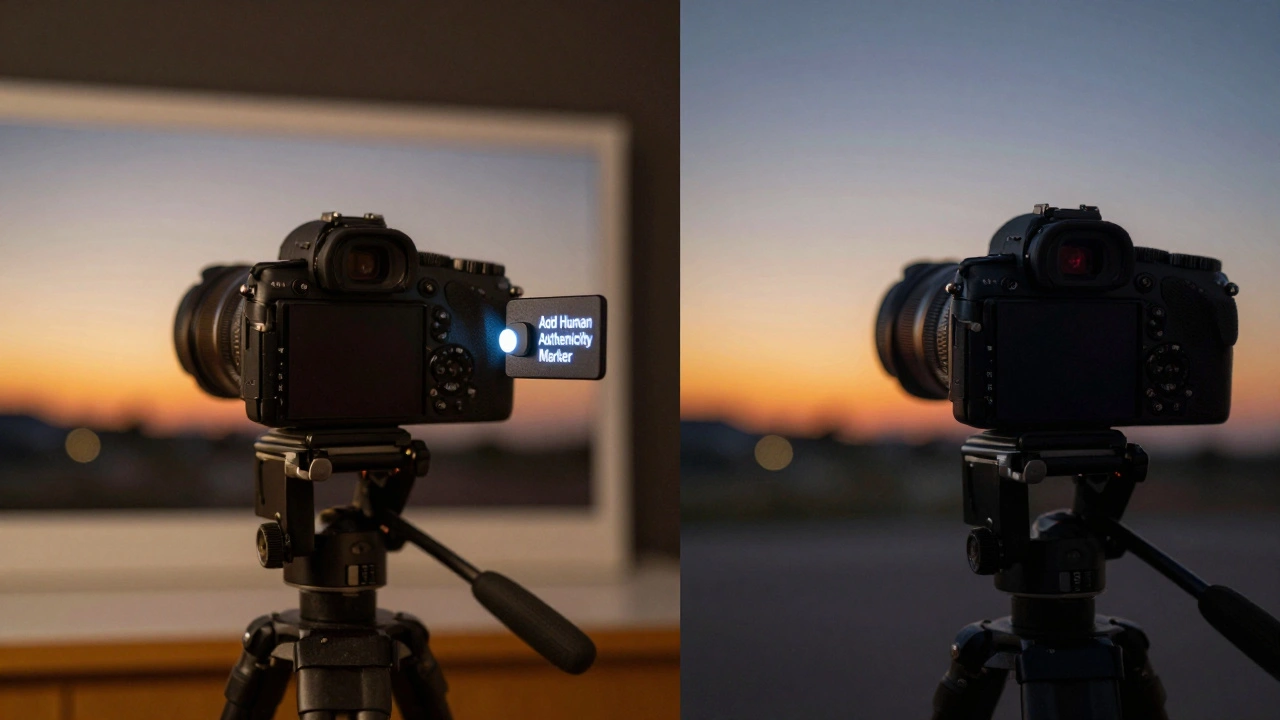
What makes California’s law unique isn’t just what it does now - it’s what it’s planning for 2028. Starting January 1, 2028, any camera, smartphone, or recording device sold in California must include an optional feature that lets users add a digital signature to their own content. Think of it like a tamper-proof stamp that says, "This was made by a human."
Apple, Samsung, and Sony are already testing this in prototypes. When you take a photo or record a video, you’ll see a toggle: "Add human authenticity marker." Turn it on, and your device embeds a cryptographic signature into the file. If someone later uses AI to alter that video, the signature breaks - and the platform knows it’s been tampered with.
This is the first time a government has tried to build authenticity into hardware. It’s ambitious. But it also raises questions. Will users understand what this marker means? Will they turn it on? Will it slow down recording? Will it drain battery life? And what happens if you record a public event - like a protest - and your phone auto-tags your video as human-made, but others around you didn’t enable the feature? That’s a new kind of digital inequality.
How This Compares to Other Laws
The EU’s AI Act doesn’t require content labels at all. It focuses on risk levels - banning some AI uses outright, like social scoring. The federal AI Foundation Model Transparency Act, introduced in June 2025, wants companies to disclose how they trained their models - not what their models produce. California’s law is different. It doesn’t care how the AI was built. It cares what comes out of it.
It’s closer to the proposed federal DEEPFAKES Accountability Act, but even stronger. That bill only requires labeling on political content. California’s law applies to everything - memes, ads, news clips, influencer videos, educational tutorials. If it’s audio, video, or image - and it’s AI-made - it gets labeled.
And unlike other states, California didn’t just pass a law. It built a system. It connects device makers, content platforms, and users in one chain of accountability. No other jurisdiction has tried that.
What This Means for Creators and Businesses
For indie creators, this is a double-edged sword. On one hand, if you’re a real human making content, you can now prove it. That’s powerful. If someone steals your video and claims it’s AI-generated to discredit you, the metadata will protect you.
On the other hand, the cost of compliance is high. BIP Consulting estimates platforms will spend $150,000 to $500,000 each to implement these systems. That’s not a problem for Google. But it could push smaller platforms out of California - or force them to limit features. Some fear this will hurt innovation. One user on HackerNews wrote: "Instagram already crushes EXIF data. Now they have to preserve something even more complex? They’ll just make it harder to upload."
For businesses, this changes how you use AI. Marketing teams using AI to generate product images? Those images must carry a label if uploaded to a covered platform. HR departments using AI to analyze job interview videos? That’s now regulated content. Legal teams need to audit AI usage - not just for bias, but for provenance.
Challenges and Criticisms
Even supporters admit the law has holes. Alan Butler from the Electronic Privacy Information Center called it "a crucial baseline," but warned that detection tools are still unreliable. OpenAI’s Head of Policy, Anna Makanju, said the law might give users "false confidence" in tools that can’t keep up with fast-evolving AI.
Privacy advocates worry about metadata being misused. What if law enforcement demands access to provenance data? The law says platforms can’t store personal provenance data from shared content - but it doesn’t say what happens if someone uploads a video and then reports it. Could that data be subpoenaed? The answer isn’t clear.
There’s also the fragmentation problem. If every platform uses a different metadata format, the system breaks. A video labeled as AI-generated on YouTube might not carry that label on TikTok. That’s why the Partnership on AI launched the Content Provenance Initiative in October 2025 - to create one open standard everyone can use. But standards take time. The law starts in August 2026.
What’s Next? The Road to August 2026
The California Attorney General’s office formed a GenAI Transparency Task Force in November 2025. Their job: write the technical guidelines for how detection tools should work, what formats to support, and how to report performance. Draft guidelines are due January 15, 2026. Final rules will follow in spring 2026.
Platforms have until August 2, 2026, to comply. That’s about seven months. For companies with no AI detection systems, that’s a tight deadline. They’ll need machine learning engineers, digital forensics experts, and metadata specialists. OneTrust estimates teams need 3-5 people just to get started.
And then there’s the 2028 hardware deadline. Manufacturers are already testing. But what if a user disables the authenticity marker? What if they use a camera bought before 2028? The law doesn’t cover retroactive application. So for years, we’ll have a mix: some content labeled, some not. That’s going to confuse people.
Why This Matters - Even If You’re Not in California
California’s market is too big to ignore. If a platform wants to reach 40 million Californians, they’ll implement these rules everywhere. That’s how laws like this spread. Instagram didn’t wait for federal rules to add age verification. They rolled it out globally because California demanded it.
Already, 14 other states have introduced similar bills. New York, Washington, and Illinois are watching closely. If California’s system works - even imperfectly - it becomes the model. If it fails, it becomes a warning.
More than 1.2 billion people use generative AI tools monthly. Deepfake detection is a $580 million market in 2025 - and it’s expected to hit $2.1 billion by 2027. This law isn’t just about control. It’s about trust. In a world where seeing isn’t believing, we need ways to know what’s real. California’s law doesn’t solve that problem. But it’s the first major step toward building the tools that might.
Does the California AI Transparency Act apply to text-based AI content like ChatGPT replies?
No. The law only covers audio, video, and image content. Text generated by AI models like ChatGPT, Gemini, or Claude is not required to be labeled under AB 853. This is one of the law’s biggest limitations, as misleading AI-written articles, emails, or social media posts remain unregulated.
Will my personal photos be labeled as AI-generated if I edit them?
It depends. If you use AI tools to alter your photo - like changing backgrounds, adding objects, or enhancing faces - the detection tool may flag it. But if you use standard editing apps like Lightroom or Photoshop for basic color correction or cropping, it likely won’t trigger a label. The law targets AI-generated or AI-altered content, not all digital edits. However, detection tools aren’t perfect and may produce false positives, especially on artistic or heavily filtered images.
What happens if a platform strips the AI detection metadata from my uploaded video?
Under AB 853, platforms are legally prohibited from removing or degrading provenance metadata. If they do, they risk fines and enforcement actions from the California Attorney General. The law requires platforms to preserve this data throughout the content’s lifecycle - even after compression or format changes. However, enforcement will be challenging, especially if the metadata is lost during platform-specific processing.
Do I need to do anything as a regular user when this law takes effect?
No immediate action is required. You’ll start seeing labels on AI-generated content when you scroll through platforms like Instagram or YouTube. If you use a smartphone or camera purchased in 2028 or later, you may see an option to add a human authenticity marker to your recordings - but it’s optional. You don’t have to turn it on. However, if you don’t, your content may be more easily mislabeled as AI-generated if someone alters it later.
Is there a penalty for not labeling AI content?
Yes. Covered providers who fail to implement detection tools, remove provenance data, or misrepresent AI content can be fined up to $10,000 per violation by the California Attorney General. Repeated or intentional violations may lead to higher penalties. The law doesn’t allow private lawsuits - only state enforcement.
Final Thoughts: A Start, Not a Solution
The California AI Transparency Act isn’t perfect. Detection tools are still unreliable. Text is ignored. Small creators may struggle. And the 2028 hardware rule feels like a distant promise. But this law is the first real attempt to tie AI output to its source. It doesn’t stop AI. It just makes it harder to hide.
In five years, we might look back and see this as the moment we started treating digital content like physical evidence - traceable, verifiable, and accountable. That’s not just regulation. It’s a new kind of digital responsibility.
Patrick Sieber
December 8, 2025 AT 18:51Finally, something that makes sense. I’ve had my photos flagged as AI-generated just because I used a slight vignette. It’s ridiculous. But at least now there’s a legal backbone behind demanding transparency. The detection tools aren’t perfect, but forcing platforms to disclose their error rates? That’s the real win. We’re not asking for perfection-we’re asking for honesty.
Shivam Mogha
December 10, 2025 AT 01:21Text isn’t covered? That’s the whole problem.
mani kandan
December 10, 2025 AT 16:16Let’s be real-this law is less about truth and more about optics. They’re slapping labels on videos like traffic cones on a highway, hoping people stop and think. But if your sunset photo gets flagged because the clouds look ‘too smooth,’ that’s not transparency, that’s paranoia dressed up as policy. And don’t get me started on the 2028 hardware mandate-do we really want our phones whispering ‘I’m human’ every time we take a selfie? It’s noble. It’s also wildly impractical.
Rahul Borole
December 12, 2025 AT 01:48It is imperative to acknowledge that the California AI Transparency Act represents a foundational milestone in the regulatory evolution of generative artificial intelligence. The statutory imposition of provenance metadata preservation, coupled with mandatory detection tool deployment, establishes a precedent for digital authenticity that transcends jurisdictional boundaries. While technical limitations in detection accuracy persist, the legislative framework prioritizes accountability over convenience-a paradigm shift of profound significance. Stakeholders across industry, academia, and civil society must engage constructively to refine implementation protocols prior to the August 2026 enforcement deadline.
Sheetal Srivastava
December 12, 2025 AT 19:23Ugh. This is such a performative gesture. You think a watermark on a video is going to stop deepfakes? Please. The real issue is that we’re outsourcing epistemic responsibility to corporate tech giants who don’t even know how to fix their own recommendation algorithms. And don’t even get me started on the metadata-this is just a backdoor for state surveillance under the guise of ‘authenticity.’ The EU’s risk-based approach is infinitely more sophisticated. This is California’s version of a Tesla sticker on a Prius-looks cool, but doesn’t actually solve anything.
Bhavishya Kumar
December 14, 2025 AT 01:53There is no comma after ‘However’ in the third paragraph of the hardware section. Also ‘tamper-proof stamp’ is a misnomer-it’s a cryptographic signature not a stamp. And you wrote ‘they’ll just make it harder to upload’ without a subject. Who’s they? Platforms. Say it. Grammar matters. This law is important but your writing undermines credibility. Fix your punctuation.
ujjwal fouzdar
December 15, 2025 AT 18:33Imagine living in a world where every photo you take has to come with a birth certificate. We used to trust our eyes. Now we need blockchain-embedded signatures just to believe a sunset isn’t AI. Is this progress? Or are we just building a digital panopticon where even our joy is suspect? The human touch used to be enough. Now we’re turning life into a forensic audit. And for what? So some lawyer can say ‘the metadata says it’s real’ while the real truth-our collective loss of wonder-goes unmarked?
Anand Pandit
December 16, 2025 AT 11:16Hey, I’m actually really hopeful about this. I’m a small photographer and I’ve had my work stolen and passed off as AI-generated before. This law gives me a way to fight back. Yeah, the tools aren’t perfect yet-but now there’s a legal reason for platforms to improve them. And the 2028 hardware thing? If my phone can prove I took that photo, I’m all for it. It’s not about distrust-it’s about giving real creators a shield. Keep pushing for better standards, and let’s make sure the open standard from Partnership on AI gets adopted fast. We’ve got this.