Data Privacy and Compliance Pitfalls for Non-Technical Vibe Coders
 Mar, 21 2026
When you build an app in a weekend using drag-and-drop tools, you’re not just coding-you’re creating something people trust with their personal data. Email addresses. Phone numbers. Health records. Payment details. And if you’re a vibe coder-someone who prioritizes speed, aesthetics, or user experience over technical depth-you might not realize how easily you’re breaking the law.
It’s not that you’re careless. You’re just trying to get things done. Maybe you used Bubble to build a customer portal. Or Airtable to collect survey responses. Or Retool to connect internal tools. You didn’t think about encryption. You didn’t ask for consent. You didn’t map where data goes. And now? You’ve got a €20,000 fine hanging over your head.
What Is a Vibe Coder?
The term "vibe coder" isn’t slang-it’s a real category of developer emerging from the low-code and no-code revolution. These are people who build applications without writing traditional code. They use platforms like Zapier, OutSystems, Mendix, or Power Apps. They don’t know what SQL injection is. They’ve never heard of OWASP. But they’re building apps that handle personal data for real customers, patients, and employees.
According to Gartner, 65% of enterprise applications will be built with low-code tools by 2025. That’s millions of apps, built by people who never took a security course. And here’s the scary part: 73% of Data Protection Officers say these apps are their biggest compliance headache.
Top 5 Compliance Pitfalls (And How You’re Probably Making Them)
Let’s cut through the noise. You don’t need to become a cybersecurity expert. But you do need to avoid these five mistakes-because they’re the ones that get you fined, sued, or shut down.
- Skipping server-side validation - You think client-side form checks are enough. They’re not. A hacker can bypass them in seconds. OWASP found 65.8% of web vulnerabilities come from this one mistake. If you’re collecting emails or IDs in a form, you need server-side checks. Period.
- Hardcoding secrets - You stuck your API key right into the app’s frontend. That’s like leaving your house key under the mat. GitGuardian found 31% of GitHub repos have keys exposed like this. One scan. One breach. Done.
- Ignoring data minimization - You asked for everything: name, address, birthdate, SSN, favorite color. GDPR says you can only collect what’s necessary. A 2023 IAPP study found 78% of low-code apps violate this. If you don’t need it, don’t ask for it.
- No consent mechanism - You just assumed people were okay with you storing their data. GDPR requires clear, active consent. Not a checkbox buried in fine print. Not a pre-ticked box. Not a "by using this app, you agree" notice. Real consent. And you need to let people withdraw it.
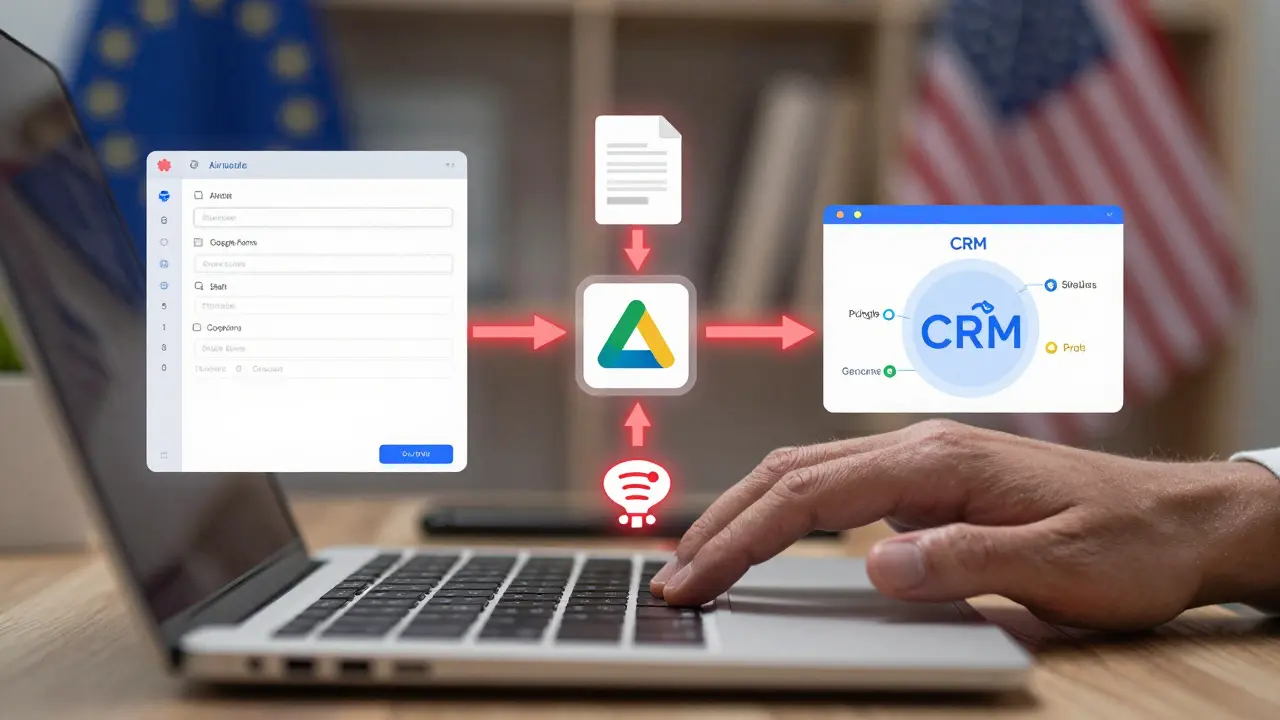
- Not knowing where data lives - You built a workflow that pulls data from Airtable, sends it to Slack, stores backups in Google Drive, and syncs with a third-party CRM. Do you know where every copy is? Do you know how to delete it when someone asks? 67% of low-code apps can’t answer that. That’s a GDPR violation waiting to happen.
Why Your "Auto-Secure" Platform Isn’t Enough
You might be thinking: "But my platform says it’s GDPR compliant!" That’s like saying your car is "accident-proof" because it has seatbelts. It helps-but it doesn’t make you immune.
Platforms like Bubble or Airtable give you tools. But they don’t know your use case. If you use Airtable to store patient health data without encryption, you’re still violating HIPAA-even if Airtable says it’s "HIPAA-ready." The platform doesn’t configure itself. You do. And if you don’t know how, you’re on the hook.
Encryption? You need to know if it’s AES-256. Key management? You need to know if keys are stored separately from data. Access controls? You need to know if your "admin" role can actually delete everything. Most vibe coders don’t. And that’s why 43% of low-code apps have excessive permissions, according to Forrester.
Real Stories From Real Vibe Coders
On Reddit, a user named NoCodeNewbie42 built a customer portal with Bubble. Collected emails. Didn’t ask for consent. Didn’t have a privacy policy. Got fined €20,000 by a European regulator.
A developer on Hacker News accidentally made an Airtable base public. It contained 12,000 customer records-including credit card numbers. The data was indexed by Google. Took three days to find and fix. Lost customers. Lost trust.
Stack Overflow saw a 217% spike in questions like "How do I implement right to be forgotten in Retool?" and "How do I encrypt data in OutSystems?" That’s not curiosity. That’s panic.
And it’s not just small apps. A healthcare startup built a no-code patient intake form using Google Forms. It stored sensitive medical data. No encryption. No access logs. The HHS Office for Civil Rights fined them $480,000. They didn’t even know HIPAA applied to them.
What You Can Do Right Now
You don’t need a degree. You don’t need to learn Python. But you do need to act.
- Know your laws - If you have users in the EU, GDPR applies. If you’re in California, CCPA does. If you handle health data, HIPAA kicks in. Don’t assume you’re too small to matter. Regulators don’t care.
- Use platform templates - Mendix has a GDPR template used by 28,000 devs. Zapier has built-in consent tools. Power Platform now scans for GDPR issues automatically. Use them. Don’t build from scratch.
- Map your data - Write down: Where does data come in? Where does it go? Where is it stored? How long do you keep it? Use a simple spreadsheet. You don’t need fancy software.
- Enable encryption - If your platform allows it, turn on encryption for data at rest. If it doesn’t, don’t store sensitive data. Period.
- Get a consent tool - Use Usercentrics, OneTrust, or Cookiebot. They plug into most low-code platforms. They handle consent logs, withdrawal, and audit trails. Cost: $50/month. Fine: $20,000+.
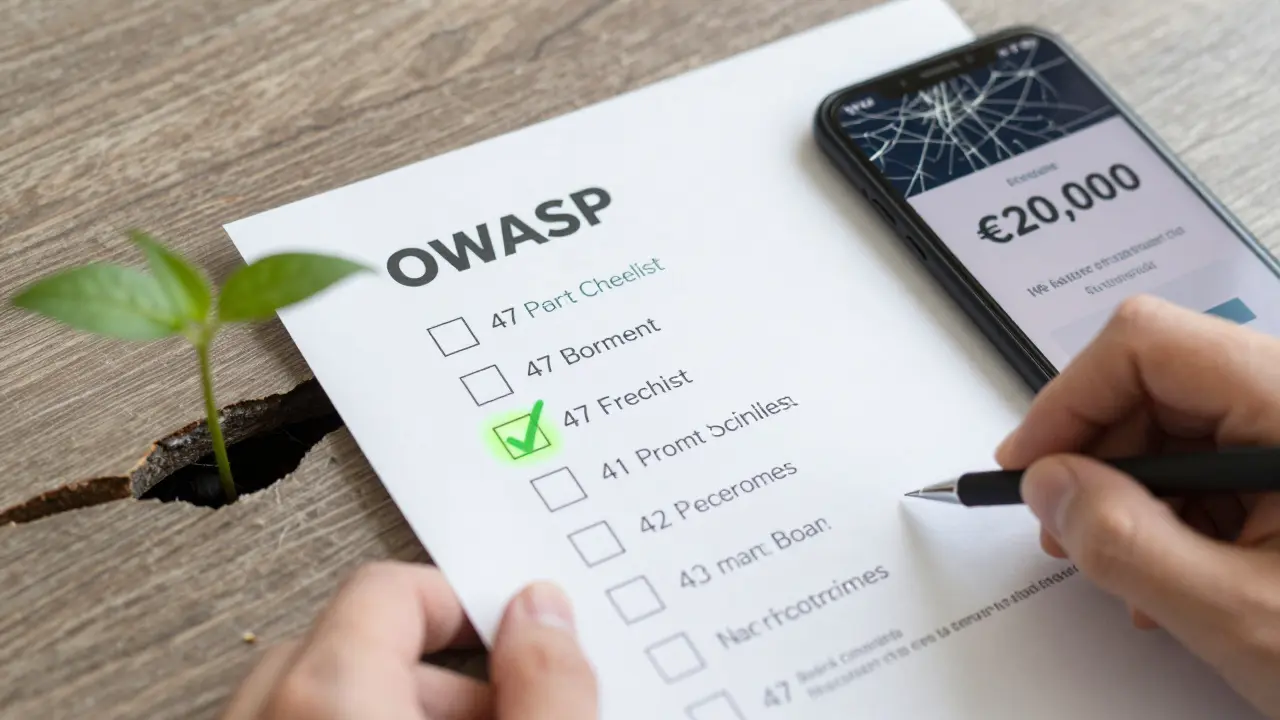
OWASP released a 47-point checklist for vibe coders. 78% of developers who used it reduced vulnerabilities. You can download it. It’s free. Read it. Check it. Do it.
The Future Is Here-And It’s Not Going Away
Low-code isn’t a trend. It’s the new normal. By 2026, 70% of platforms will have automated compliance checks. AI assistants will flag privacy issues as you build. That’s great. But until then? You’re the gatekeeper.
The democratization of development didn’t remove responsibility-it multiplied it. Now, anyone can build an app. But not everyone understands the consequences.
You’re not a hacker. You’re not a rebel. You’re someone trying to make something useful. That’s worth protecting. Not just for your business. For the people who trust you with their data.
Do I need to comply with GDPR if my app is only for U.S. users?
Yes-if even one EU citizen uses your app, GDPR applies. It doesn’t matter where your company is based. If you collect, store, or process personal data from someone in the EU, you’re subject to the law. This includes users who are traveling, studying abroad, or have EU citizenship. Many vibe coders assume they’re safe because they’re U.S.-based. That’s a common and costly mistake.
Can I use Airtable or Google Forms for storing customer data?
Only if you configure them correctly. Both platforms offer encryption and access controls-but they’re turned off by default. Airtable bases can be accidentally shared publicly. Google Forms can be indexed by search engines. You must manually restrict access, enable encryption, and delete data when requested. Many vibe coders use these tools without realizing they’re storing sensitive data in insecure ways.
What’s the easiest way to get GDPR-compliant consent?
Use a pre-built consent management platform like OneTrust, Usercentrics, or Cookiebot. These tools integrate with Bubble, Zapier, and other low-code platforms. They provide cookie banners, consent logs, and withdrawal options out of the box. Trying to build your own consent system from scratch is the #1 cause of compliance failures among vibe coders. Don’t reinvent the wheel-use a tool designed for this.
How do I know if my app is handling personal data?
If you collect anything that can identify a person-even indirectly-you’re handling personal data. That includes names, emails, IP addresses, phone numbers, device IDs, and even location data. If you ask for a first name or collect login history, you’re in scope. Don’t wait for a legal definition. If you’re unsure, assume it counts. The safest approach is to treat every piece of user input as personal data until proven otherwise.
Is there a free way to audit my app for compliance?
Yes. Start with the OWASP Secure Coding Practices Quick Reference Guide (version 2.1), which has a dedicated section for low-code developers. It’s free, downloadable, and includes a 47-point checklist. Also, use the GDPR Assessment Tool from the European Data Protection Board-it’s designed for non-experts. Run through it step by step. You don’t need a lawyer. You just need to be honest about what you’re doing.
Jane San Miguel
March 22, 2026 AT 07:20It's astonishing how many low-code developers operate under the delusion that their platform's marketing claims absolve them of legal responsibility. GDPR isn't a suggestion-it's a binding international regulation with extraterritorial reach. If you're collecting any identifier-even an IP address-you're processing personal data. No exceptions. No loopholes. And yes, that includes your 'harmless' Airtable form collecting 'just names and emails.' The regulators aren't coming for the big tech firms; they're coming for the weekend builders who think compliance is someone else's problem.
Kasey Drymalla
March 22, 2026 AT 18:19They're lying. This whole thing is a scam. GDPR doesn't even apply to you unless you're a multinational. They just want your money. Your app? Your data? Your life? All fake threats. The real criminals are the ones selling you these 'compliance tools' for $50/month. They're the ones profiting off your fear. Stop falling for it. Just delete the data and walk away.
Dave Sumner Smith
March 23, 2026 AT 19:45They're not just ignoring compliance-they're actively enabling it. These no-code platforms are designed to be used by people who don't understand security. That's not an accident. That's a business model. They want you to build apps with exposed API keys and public databases so when it all blows up, they can sell you the 'enterprise upgrade' at 10x the price. You're not a developer. You're a data honeypot. And they're the ones harvesting you.
Cait Sporleder
March 25, 2026 AT 15:56While the article presents a compelling and urgently necessary framework for mitigating the systemic risks inherent in low-code development ecosystems, I find myself compelled to underscore the epistemological dissonance between platform marketing rhetoric and regulatory reality. The notion that 'GDPR-ready' infrastructure equates to compliance is not merely misleading-it is a catastrophic ontological error. Compliance is not a feature toggle; it is an ongoing, context-sensitive, anthropologically embedded practice of data stewardship. One cannot outsource ethical responsibility to a third-party vendor, no matter how polished their UI or how robust their SOC2 certification. The burden of due diligence remains unequivocally with the builder, regardless of abstraction layer. The 73% statistic cited is not a failure of technology-it is a failure of pedagogy, of institutional oversight, and of collective moral imagination.
Paul Timms
March 26, 2026 AT 10:15Just enable encryption and use a consent tool. Done.
Aimee Quenneville
March 26, 2026 AT 22:10lol so now i'm a 'vibe coder' because i used airtable to collect feedback for my art project??
next they'll say i'm violating HIPAA because i asked for my aunt's birthdate to send her a birthday card
...wait, did she give consent??
Cynthia Lamont
March 27, 2026 AT 18:16THIS. IS. WHY. WE. CAN'T. HAVE. NICE. THINGS.
You think you're building something cute? You're building a lawsuit. You're building a data breach. You're building a headline that says 'Local Hobbyist Exposes 10,000 Records.' And guess what? The regulator doesn't care that you're 'just a vibe coder.' They care that your app has a form. And that form has data. And that data is out there. And now you're on the hook. Stop being cute. Start being responsible. Or get out.
Kirk Doherty
March 28, 2026 AT 13:42I get what you're saying. But honestly? Most people just want to make something that works. They don't care about GDPR. They don't know what OWASP is. And if you tell them they need to hire a lawyer before they can build a form, they'll just quit. Maybe the real solution isn't more rules. Maybe it's better tools. Simpler. Smarter. Built-in. Not just 'enable encryption'-make it the default. Not 'map your data'-auto-map it. We need tech that protects us, not just warns us.
Dmitriy Fedoseff
March 29, 2026 AT 09:49There is a deeper truth here that transcends compliance checklists and platform templates. The rise of the vibe coder is not merely a technical shift-it is a philosophical one. We have outsourced not just code, but conscience. We have traded understanding for convenience, responsibility for speed. And in doing so, we have created a generation of digital artisans who build with love but operate without awareness. This is not a failure of education. It is a failure of culture. We have normalized the illusion of safety. The platform says 'secure.' We believe it. But security is not a label. It is a practice. And practice requires humility. It requires learning. It requires listening-not to the marketing team, but to the people whose data you hold in your hands.
Meghan O'Connor
March 30, 2026 AT 01:55So let me get this straight. I built a form on Google Forms for my book club to collect RSVPs. Now I'm facing a €20k fine because someone from Ireland signed up? That's absurd. I didn't even know Ireland was in the EU. And why are we talking about HIPAA for a book club? This is panic-driven nonsense. The real problem is that regulators have no clue how people actually use these tools. They're punishing people for being human.