Ethical Futures for Generative AI: Ensuring Equitable Access and Global Impact
 Mar, 22 2026
Generative AI isn’t just getting smarter-it’s getting everywhere. From writing news articles to designing drug molecules, generating art, and even mimicking voices, it’s reshaping how we create and consume content. But here’s the real question: who gets to benefit from it? And who gets left behind? If we don’t fix the ethical gaps now, we risk building a future where AI deepens inequality instead of reducing it.
Why Equity Isn’t Optional-It’s Essential
Most generative AI models today are trained on data pulled from the internet. That sounds neutral, but it’s not. The data is skewed. It’s dominated by English-language content, mostly from North America and Western Europe. That means AI systems learn what’s common in those regions-and ignore everything else. A model trained on mostly U.S. medical journals won’t understand rare diseases common in sub-Saharan Africa. A language model trained on Reddit threads won’t recognize dialects spoken in rural India or indigenous languages in Latin America.
That’s not a bug-it’s a feature of how these systems were built. And the result? AI tools that work well for some, but fail badly for others. A 2025 study by the Global AI Equity Initiative found that voice recognition systems trained on Western accents had over 40% error rates for African and Southeast Asian speakers. That’s not just inconvenient. It’s exclusionary. When AI becomes the default for customer service, education, or healthcare access, those failures become life-altering.
Equitable access means more than just making AI available. It means making it work for everyone. That requires diverse data, local partnerships, and intentional design-not just technical tweaks.
The Hidden Costs of Bias
Bias in AI doesn’t come from malice. It comes from omission. When training data lacks representation, the AI doesn’t learn to see the full picture. It learns to ignore it.
Take hiring tools that screen resumes. In 2024, a major U.S. tech firm rolled out a generative AI system to rank job applicants. It was trained on 10 years of hiring data. The system learned to downrank resumes with words like "women’s chess club" or "community health worker"-not because those were bad qualifications, but because those roles were historically underrepresented in their top hires. The AI didn’t hate women. It just mirrored the bias in the data.
That’s why audits matter. Regular bias audits aren’t optional. They’re the only way to catch these patterns before they scale. The EU’s Trustworthy AI guidelines require mandatory impact assessments before deploying any high-risk AI system. That includes generative AI used in hiring, law enforcement, or public services. These aren’t bureaucratic hurdles-they’re safety checks.
And it’s not just gender or race. Bias shows up in age, disability, income, and even accent. A 2026 report from the OECD showed that AI-generated loan approvals were 32% less likely to approve applicants from low-income neighborhoods-even when their credit scores matched those from wealthier areas. The system wasn’t racist. It was trained on historical lending patterns that reflected decades of systemic inequality.
Who Owns What? The IP Mess
Generative AI doesn’t just copy-it remixes. It takes millions of images, songs, articles, and code snippets and stitches them into something new. But who owns the original pieces? And who gets paid?
Right now, most AI companies train on publicly available data. That’s legal in some places, unethical in others. Artists have sued AI firms for training on their work without permission. Musicians have found their songs cloned note-for-note. Writers have seen entire books rewritten and sold as AI-generated content.
The solution isn’t to ban AI. It’s to build transparency. Metadata matters. Every AI-generated output should clearly state: "This content was generated using data from X sources, with permissions from Y rights holders." Platforms like Adobe and Shutterstock have started tagging AI-generated content with watermarks and licensing logs. That’s a start.
But we need more. Licensing frameworks that let creators opt in-and get paid-are essential. The Creative Commons AI License, adopted by over 12,000 artists in 2025, lets creators choose whether their work can be used for training. Those who agree get royalties. Those who don’t are excluded. It’s fair. It’s simple. And it’s growing fast.
Privacy in a World of Synthetic Media
Deepfakes aren’t just scary videos. They’re tools for coercion, fraud, and reputational damage. In 2025, the U.S. Department of Justice reported that 93% of deepfake cases involved non-consensual intimate imagery. That’s not fiction. It’s a crisis.
But privacy isn’t just about stopping abuse. It’s about control. Should an AI be allowed to generate a voice clone of your late parent? Should a school use AI to simulate student behavior based on their past messages? These aren’t hypotheticals-they’re happening.
Strong privacy rules mean two things: consent and minimization. AI systems should only use data people have explicitly agreed to share. And they should collect the bare minimum needed. No scraping social media profiles. No recording private conversations. No building emotional profiles from chat logs.
The EU’s AI Act requires explicit consent for biometric data use-including voice and facial recognition. California’s 2025 AI Privacy Law goes further: it bans synthetic media that impersonates real people without written permission. That’s the bar. And it’s rising.
Accountability: Who’s Responsible When AI Goes Wrong?
When a self-driving car crashes, we know who’s liable-the manufacturer, the software team, the tester. But when an AI generates a false medical diagnosis that leads to harm? Who do you sue?
The problem is complexity. Generative AI involves data engineers, model trainers, API providers, app developers, and end users. Everyone points to someone else. That’s why accountability frameworks are critical.
The OECD’s AI Principles say responsibility must be clear. That means:
- Documenting every step of the AI pipeline
- Assigning a named person or team responsible for outcomes
- Creating a public incident report system
- Allowing users to appeal AI decisions
Companies like IBM and Salesforce now publish AI impact reports. They list where their models are used, what risks were found, and how they were addressed. That’s transparency. And it’s becoming the new standard.

Global Access: AI Shouldn’t Be a Rich Country’s Toy
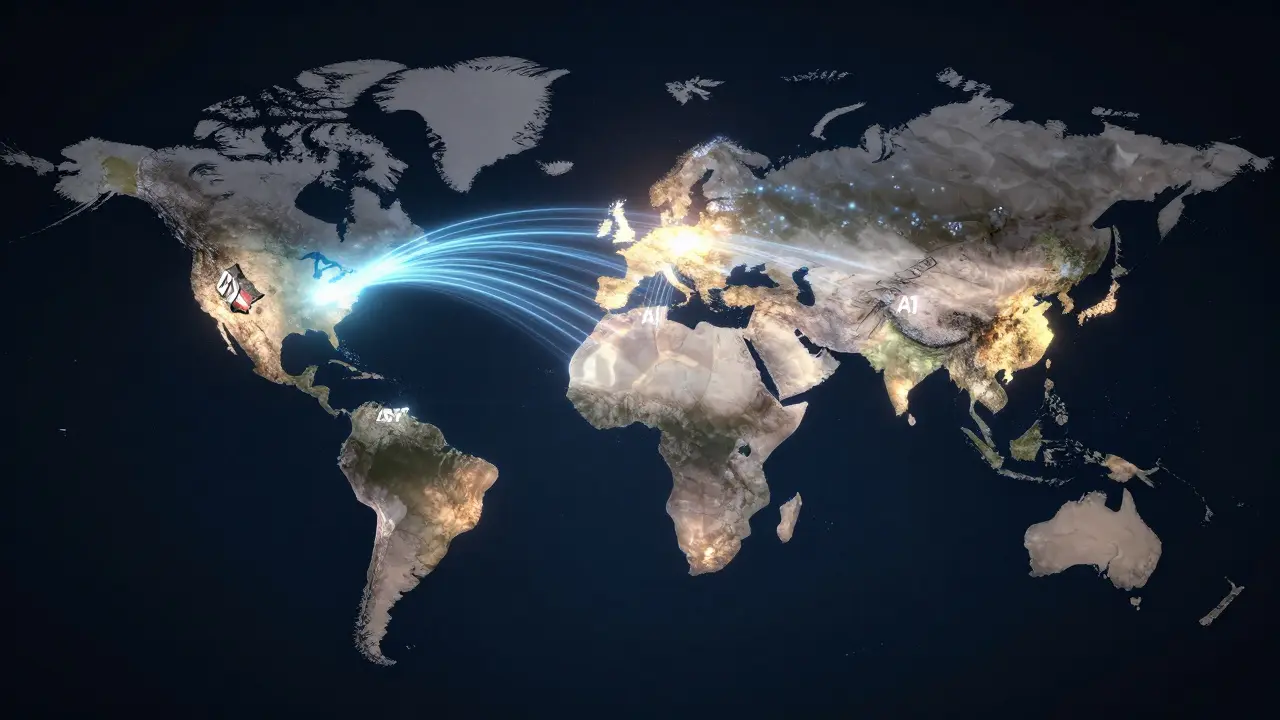
Most cutting-edge AI tools are built in the U.S., China, or Europe. But 80% of the world’s population lives elsewhere. Should they wait decades to benefit? Or can we build AI that works for them-today?
Some startups are proving it’s possible. In Kenya, a nonprofit built a generative AI that helps farmers understand weather patterns using local dialects and crop data. In Bangladesh, an AI tool translates government health advisories into regional languages and sends them via SMS. In Peru, AI helps indigenous communities document and protect ancestral land rights using satellite imagery and oral history.
These aren’t charity projects. They’re scalable models. They use lightweight models that run on basic phones. They train on local data. They involve local teams. And they’re free.
The global AI divide isn’t about technology. It’s about priorities. If we keep funding AI that targets wealthy markets, we’ll keep leaving billions behind. But if we fund AI built for equity, we can turn it into a tool for global inclusion.
The Path Forward: Five Actions We Can’t Delay
Fixing the ethics of generative AI isn’t a future project. It’s a present-day obligation. Here’s what needs to happen now:
- Require diverse training data-mandate inclusion of non-Western, non-English, and underrepresented datasets in public and commercial AI systems.
- Enforce transparency labels-every AI-generated output must clearly state its sources and limitations.
- Build local AI hubs-fund community-driven AI labs in low-resource regions to train models on local needs and languages.
- Adopt open licensing-encourage creators to share data under fair, royalty-based licenses like Creative Commons AI.
- Hold companies accountable-pass laws that make AI developers legally responsible for harms caused by biased or deceptive outputs.
Generative AI has enormous power. But power without ethics is dangerous. The future of this technology won’t be decided by engineers in Silicon Valley. It’ll be shaped by the choices we make today-to include, to protect, and to share.
What makes generative AI unethical?
Generative AI becomes unethical when it’s built without fairness, transparency, or accountability. That includes using biased data that discriminates against certain groups, generating misleading or harmful content like deepfakes, violating copyright by training on stolen work, or deploying systems that users can’t understand or challenge. Ethical AI requires intentional design-not just technical skill.
Can AI ever be truly equitable?
Yes-but only if we design it that way from the start. Equitable AI isn’t accidental. It requires diverse teams, locally relevant data, open licensing, and community input. Examples like AI tools for farmers in Kenya or health advisories in Bangladesh prove it’s possible. The barrier isn’t technology. It’s whether we prioritize profit-or people.
How do I know if an AI-generated image is fake?
Look for subtle glitches: unnatural lighting, mismatched shadows, or odd hand shapes. But the best way? Check for transparency labels. Reputable platforms now embed metadata that shows if content was AI-generated and which model was used. Tools like the Content Authenticity Initiative (CAI) and Adobe’s Content Credentials let users verify origins. If there’s no label, assume it’s unverified.
Why should developing countries care about AI ethics?
Because AI is already here-and it’s being built without them. If they don’t shape the rules, they’ll be locked out. AI systems trained on Western data will misdiagnose diseases, misread local dialects, or deny loans based on biased patterns. Ethics isn’t a luxury. It’s survival. Local communities must have a seat at the table to ensure AI serves them, not just the global elite.
What’s the difference between generative AI and responsible AI?
Generative AI is the technology that creates new content-text, images, audio. Responsible AI is the set of ethical rules that guide how that technology is built and used. You can have generative AI without responsibility-but you can’t have sustainable, fair, or safe AI without it. Responsible AI ensures generative tools don’t harm, exclude, or deceive.
Krzysztof Lasocki
March 23, 2026 AT 03:26Okay, let’s be real-AI isn’t the problem. The problem is that we let the same five tech bros in Silicon Valley build the future while everyone else gets to watch from the sidelines. I’ve seen AI tools that can’t tell the difference between Tamil and Telugu. Meanwhile, my cousin in Kerala uses a phone with a cracked screen to feed crop data into an app that actually works. That’s the future. Not another $20B model trained on Reddit and Wikipedia.
Stop calling it ‘equity.’ Call it ‘stop being lazy.’ Build for the margins, not the middle-class suburbs. And yeah, I’m saying this while sipping my $8 oat milk latte. Hypocrite? Maybe. But I’m trying.
Rocky Wyatt
March 24, 2026 AT 09:50Oh great. Another manifesto on how AI is ‘unethical.’ Newsflash: capitalism doesn’t care about ethics. It cares about ROI. If a model works better on white American voices, companies will use it. Because it’s cheaper than retraining. And yeah, that’s fucked. But crying about ‘bias’ won’t change a damn thing.
Real solution? Ban all AI that doesn’t pass a live audit in 100+ languages. And make the CEOs test it themselves on their grandma’s phone. No waivers. No loopholes. Or we’re just wasting bandwidth on virtue signaling.
Santhosh Santhosh
March 25, 2026 AT 17:51I come from a village in Odisha where the local dialect has no digital footprint. Our elders speak in proverbs, rhythms, and pauses that no algorithm has ever captured. When I first saw an AI voice assistant fail to understand my grandmother’s Tamil-Telugu mix, I didn’t feel angry-I felt erased.
It’s not just about data. It’s about dignity. We don’t need more models. We need communities to co-design them. I’ve worked with a small team in Bhubaneswar to train a model using oral histories, folk songs, and even the way people sigh when they’re tired. It’s not perfect. But it listens. And for the first time, someone built something that doesn’t assume we’re broken because we don’t speak like Bostonians.
The future isn’t in the cloud. It’s in the soil, the dialects, the silences between words. Let’s stop trying to digitize humanity and start honoring it.
Veera Mavalwala
March 25, 2026 AT 20:24Oh honey, you think this is about ‘bias’? Sweetheart, it’s about colonialism with a GPU.
They train AI on English, then act shocked when it can’t handle Adivasi dialects or Swahili proverbs? Newsflash: the internet wasn’t built for us. It was built for Harvard, Oxford, and a handful of VC-funded startups who think ‘global’ means ‘English with a fancy accent.’
I’ve seen AI reject loan applications from women in rural Tamil Nadu because their names ‘sound risky.’ Not because they defaulted. Because the system never saw a woman with a ‘non-Western’ name in a high-income bracket. So it invented a new rule: if you don’t sound like a Silicon Valley investor, you’re a risk.
And now we’re supposed to be grateful because Adobe added a watermark? A watermark doesn’t pay for my sister’s insulin. It doesn’t stop a deepfake of my daughter being used as bait on a dating app. This isn’t ethics. It’s damage control with a PR team.
Ray Htoo
March 26, 2026 AT 14:06What’s wild is how often we miss the obvious: AI doesn’t create bias-it amplifies it. Like a mirror with a megaphone.
That hiring tool that downranked ‘women’s chess club’? It didn’t invent sexism. It just noticed that 90% of the top hires in that company were men who played hockey and went to MIT. So it learned: hockey + MIT = good candidate. The AI didn’t hate women. It just thought they were outliers.
Which means the fix isn’t just ‘more data.’ It’s ‘better context.’ We need historians, anthropologists, and local educators in the room when we train models. Not just engineers and lawyers. And yeah, I know that sounds idealistic. But if we keep treating AI like a black box that ‘just works,’ we’re building a house on quicksand.
Also-shoutout to that Kenyan farmer AI. That’s the shit. Not another chatbot that sells crypto. Real people. Real problems. Real solutions. That’s the future I want to fund.
Natasha Madison
March 28, 2026 AT 05:34So let me get this straight. You want to force American companies to train AI on data from ‘underrepresented regions’? Who’s gonna pay for that? Who’s gonna audit it? And who’s gonna make sure we’re not giving China or Russia access to our cultural data under the guise of ‘equity’?
This isn’t ethics. It’s cultural surrender. The West built the internet. We built the chips. We funded the research. And now you want us to hand over our intellectual property so some NGO can ‘train a model on oral histories’ in a village that doesn’t even have Wi-Fi?
Wake up. This isn’t about fairness. It’s about control. And if we let this happen, we’re handing our future to people who don’t even believe in the same truths we do.
Shivam Mogha
March 29, 2026 AT 20:44Train locally. Run cheap. Share openly. That’s it.