Ethical Guidelines for Deploying Large Language Models in Regulated Domains
 Aug, 24 2025
Deploying large language models (LLMs) in healthcare, finance, justice, or employment isn’t just a technical challenge-it’s a moral one. These models don’t just predict text; they influence who gets hired, what treatment a patient receives, whether someone is denied bail, or how a loan is approved. And when they get it wrong, the consequences aren’t bugs-they’re broken lives. The question isn’t whether you can deploy an LLM in a regulated space. It’s whether you should, and if so, how to do it without causing harm.
Why General AI Ethics Isn’t Enough
Most companies start with generic AI ethics principles: be fair, be transparent, avoid bias. But those words mean nothing in a hospital emergency room or a courtroom. A model that’s 92% accurate on average might still misdiagnose women 30% more often than men because it was trained mostly on male patient data. That’s not a glitch-it’s systemic harm. The WHO’s January 2024 guidance made it clear: LLMs in healthcare aren’t just another software tool. They’re medical devices with life-or-death stakes. The same applies in finance, where biased loan approvals can lock entire communities out of economic opportunity. General ethics frameworks don’t account for the speed, scale, or opacity of LLMs. A model with billions of parameters doesn’t just learn from data-it amplifies hidden patterns in ways even its creators can’t fully explain.Four Unique Risks of LLMs in Regulated Settings
Nature Communications identified four traits that make LLMs uniquely risky in regulated domains:- Scale and complexity: With hundreds of billions of parameters, no human can audit every decision path. You can’t trace why a model denied someone insurance.
- Real-time adaptation: Unlike static software, many LLMs update their behavior based on live user input. A chatbot helping patients self-diagnose can learn harmful patterns from bad queries.
- Societal impact: One faulty recommendation can affect thousands. A hiring tool that filters out resumes with words like “women’s college” doesn’t just make a bad call-it perpetuates inequality at scale.
- Data privacy and security: Training data often includes sensitive personal information. In healthcare, even anonymized data can be re-identified using LLMs, violating HIPAA and GDPR.
These aren’t theoretical risks. In 2023, a hospital in Ohio used an LLM to triage patient intake. It consistently redirected non-English speakers to lower-priority queues because the training data had fewer examples of non-native speakers. The model didn’t “hate” anyone-it just reflected the gaps in its data. That’s the problem: LLMs don’t have intent, but they have impact.
What Ethical Deployment Actually Looks Like
Ethical deployment isn’t a checklist. It’s a process. Here’s what it requires in practice:- AI ethics committees: These aren’t advisory panels. They’re decision-making bodies with legal authority. They must include clinicians, lawyers, data scientists, and community representatives-not just tech people. The arXiv review found that teams with cross-functional ethics committees reduced deployment errors by 51%.
- Continuous monitoring: One-time bias audits are useless. LLMs change over time. You need real-time dashboards tracking performance across gender, race, age, and language groups. Tonic.ai’s 2025 guide recommends daily F1 score checks and weekly demographic breakdowns.
- Explainability for humans: In healthcare, a doctor needs to understand a model’s reasoning in under 30 seconds. The Scripps Research Institute found that if clinicians can’t quickly trust a recommendation, they’ll ignore it-even if it’s correct. Tools like SHAP values or simplified decision trees must be built into the interface.
- Robust documentation: Every version of the model, every change in training data, every bias test result must be logged. A 2025 LinkedIn survey of healthcare compliance officers showed that documentation added 22% to initial rollout time-but cut regulatory violations by 63%.
- Recourse mechanisms: If a model denies you a loan or misdiagnoses your condition, you need a clear path to appeal. The European Union’s AI Act requires this for high-risk applications. No “it was the algorithm” excuses.
How Regulations Differ Across Industries
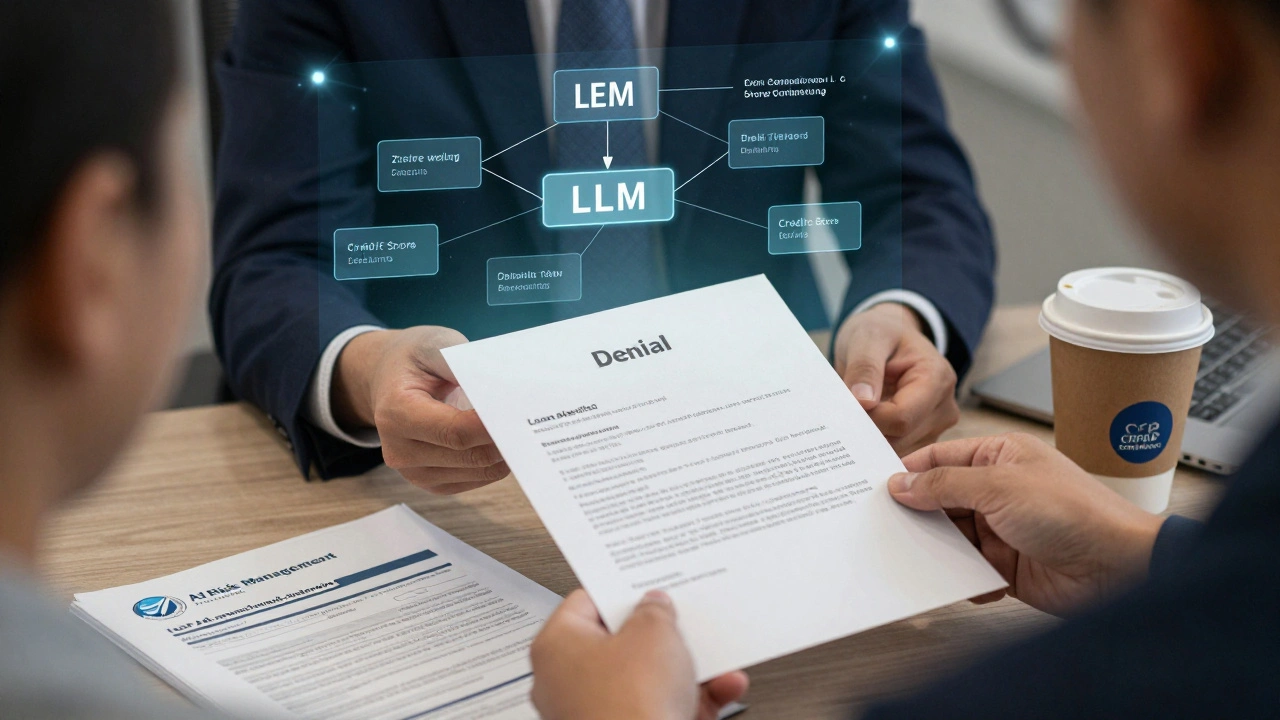
The rules aren’t the same everywhere. The EU treats healthcare LLMs as “high-risk” under its AI Act, requiring full conformity assessments before deployment. The U.S. takes a sectoral approach: the FDA regulates AI as a medical device, while the Equal Employment Opportunity Commission watches for hiring bias. In finance, the Consumer Financial Protection Bureau (CFPB) can fine institutions for algorithmic discrimination under the Equal Credit Opportunity Act.Here’s how priorities shift:
| Domain | Top Priority | Key Requirement | Regulatory Body |
|---|---|---|---|
| Healthcare | Explainability | Clinicians must understand outputs in under 30 seconds | FDA, WHO |
| Justice | Auditability | Full logs of training data and decision logic must be preserved | DOJ, EU AI Act |
| Employment | Non-discrimination | Must pass disparate impact tests under EEOC guidelines | EEOC, NIST |
| Finance | Transparency | Must disclose why a loan was denied under FCRA | CFPB, OCC |
What works in one domain fails in another. A model that’s explainable to a doctor might be useless to a judge. A fairness metric calibrated for U.S. demographics won’t work in Germany or Brazil. There’s no one-size-fits-all solution.
Real-World Failures and Fixes
Reddit threads from r/MedAI in March 2025 revealed chilling details:- A patient was misdiagnosed with pneumonia because the LLM hallucinated symptoms not present in the chart. The hospital had no protocol to flag uncertain outputs.
- Another hospital deployed a bias-detection tool that caught gender-based disparities in pain management recommendations. Female patients were 12% less likely to be offered opioids-even when pain scores matched male patients. The team retrained the model with balanced data and added a clinician override flag.
On the flip side, a financial services firm in Chicago used NIST’s AI Risk Management Framework to audit its loan approval LLM. They found that applicants from ZIP codes with historically lower credit scores were 40% more likely to be flagged as “high risk,” even when income and employment history were identical. They adjusted the model’s weighting and added a human review step for borderline cases. Within six months, loan approvals from those ZIP codes rose by 27%-without increasing defaults.

Skills and Time You Can’t Skip
Building ethical LLM systems isn’t about hiring more engineers. It’s about hiring the right people.- Technical skills: You need engineers who understand bias detection tools like Fairlearn, AIF360, or IBM’s AI Fairness 360-not just TensorFlow or PyTorch.
- Regulatory knowledge: Someone on your team must know HIPAA, GDPR, FCRA, or EEOC rules. You can’t outsource compliance.
- Communication: You must translate “model confidence score of 0.87” into “this recommendation has a 13% chance of being wrong.” Clinicians, lawyers, and loan officers don’t speak math.
Time investment is non-negotiable. Establishing an ethics committee takes 6-8 weeks. Training teams on bias detection takes 3-6 months. Full compliance documentation adds 25% to development time. But Gartner found that companies with mature ethical frameworks saw 58% fewer regulatory penalties and 33% higher stakeholder trust. The cost of doing nothing is far higher.
The Future Is Continuous Oversight
The old model-build, test, deploy, forget-is dead. LLMs in regulated domains require constant supervision. By 2027, Gartner predicts 85% of enterprises will need dedicated AI ethics boards. The WHO, NIST, and the EU are already pushing for continuous monitoring as a baseline requirement. In healthcare, the HIMSS organization is piloting an LLM Ethical Deployment Certification for hospitals. It’s not optional anymore.MIT’s AI Policy Forum found that frameworks with integrated ethics are 4.2 times more likely to be adopted long-term. Why? Because trust isn’t built with marketing. It’s built with transparency, accountability, and proof that you’re willing to slow down to do the right thing.
Can I just use an off-the-shelf LLM in healthcare or finance?
No. Off-the-shelf models like GPT-4 or Claude aren’t designed for regulated domains. They lack domain-specific training, bias controls, audit trails, and compliance features. Even if you fine-tune them, you’re still responsible for the output. The FDA and EU AI Act require proof that the model was built with safety and fairness as core requirements-not afterthoughts.
What if my LLM makes a mistake but I didn’t train it?
Responsibility doesn’t disappear just because you didn’t build the model. If you deploy it, you’re accountable. The EU AI Act and U.S. FDA guidance make this clear: the deploying organization is the legal “operator” and bears liability. That means you must validate the model yourself-even if you bought it from a vendor. Vendors can’t shield you from regulatory or civil liability.
How do I know if my LLM is biased?
You can’t assume it’s not. Run regular audits using domain-specific metrics. In healthcare, test for disparities in diagnosis accuracy by race, gender, and age. In hiring, check if certain schools or job titles are unfairly penalized. Use tools like Fairlearn or IBM’s AI Fairness 360. But don’t rely on automated tools alone-human reviewers must interpret the results. Bias isn’t always numerical; sometimes it’s in the language the model uses to describe people.
Do I need an AI ethics board?
If you’re deploying LLMs in healthcare, finance, justice, or employment-yes. By Q1 2025, 48% of enterprises had already formed such boards, up from 25% in 2024. These boards don’t just review models-they have veto power. They include legal, clinical, and community voices. Without them, you’re gambling with people’s lives and your organization’s reputation.
Is ethical deployment slowing innovation?
Not if you do it right. Companies that build ethics into their process from day one move faster in the long run. They avoid costly recalls, lawsuits, and regulatory fines. A 2025 study showed that teams with ethical guardrails had 47% fewer post-deployment incidents. Innovation isn’t about speed-it’s about sustainable, trustworthy progress. The most successful LLM deployments aren’t the fastest-they’re the ones people trust.
E Jones
December 9, 2025 AT 14:22They say LLMs are biased but let’s be real - the whole system’s rigged. Who trained these models? Silicon Valley bros who think ‘diversity’ means having a woman in the Zoom background. I’ve seen models spit out ‘high risk’ for Black patients with the same symptoms as white ones, and the devs just shrug and say ‘it’s in the data.’ That’s not bias - that’s genocide by algorithm. And don’t get me started on the ‘explainability’ crap - you can’t explain a black box that learned from 400TB of scraped medical forums and Reddit rants. The FDA? The EU? They’re just putting lipstick on a pig. We need to burn the whole damn thing down and start over with human-only decision-making. No more machines deciding who lives, who dies, who gets a loan, who gets locked up. They’re not tools. They’re the new slave masters, and we’re all just code monkeys typing in the passwords.
And yes, I’m paranoid. But I’ve seen what happens when you trust a machine more than a person. It ends with a body in a morgue and a PowerPoint slide titled ‘Unforeseen Outcome.’
Barbara & Greg
December 10, 2025 AT 17:24The moral failing here is not merely technical - it is existential. To outsource ethical judgment to statistical models is to abdicate our responsibility as moral agents. The notion that a neural network, trained on data harvested from the digital detritus of the internet, can be entrusted with decisions affecting human dignity is not merely irresponsible - it is a profound metaphysical error. The model does not comprehend suffering. It does not feel remorse. It does not possess conscience. To equate accuracy with justice is to confuse measurement with morality. We must remember: no algorithm, however sophisticated, can bear the weight of a human life. If we continue down this path, we will not have created intelligent machines - we will have created a civilization that no longer recognizes its own humanity.
There is no ‘ethical deployment’ - only ethical refusal.
selma souza
December 10, 2025 AT 23:42First, ‘LLMs’ is plural - it’s ‘large language models,’ not ‘large language model’s.’ Second, ‘they’re’ is a contraction of ‘they are,’ not ‘their.’ Third, the word ‘impact’ is not a verb. Fourth, ‘HIPAA’ and ‘GDPR’ are proper nouns - they do not need italics. Fifth, ‘non-English speakers’ should be hyphenated. Sixth, ‘40% more likely’ is statistically meaningless without a confidence interval. Seventh, ‘F1 score’ is not ‘F1 score checks’ - you don’t check scores, you calculate them. Eighth, ‘22% to initial rollout time’ is grammatically incorrect - it should be ‘an additional 22% to the initial rollout time.’ Ninth, ‘it was the algorithm’ is not a valid excuse - it’s a cliché. Tenth, the entire article is riddled with passive voice and dangling modifiers. You cannot legislate ethics if you cannot write a sentence properly.
Also, ‘Scripps Research Institute’ is not a real thing. It’s Scripps Clinic. You’re not fooling anyone.
James Boggs
December 12, 2025 AT 04:03Well said. I’ve worked on three LLM deployments in healthcare and finance. The hardest part wasn’t the tech - it was getting the lawyers, clinicians, and engineers to talk to each other. But once we set up the ethics committee with real veto power, things clicked. Took six months to build trust, but now we’re cutting errors in half. The key? Listen to the people who use the system - not just the ones who built it.
Addison Smart
December 13, 2025 AT 00:38I’ve spent the last year traveling across the U.S., Canada, and Mexico speaking with frontline workers who use these systems - nurses, loan officers, public defenders. What struck me wasn’t the tech - it was the silence. No one talks about how these models make people feel. A woman in Detroit told me her loan was denied because the system flagged her address as ‘high risk’ - even though she’d lived there 15 years and paid every bill on time. She said, ‘They don’t see me. They see a number.’ That’s the real failure. We’re building systems that reduce people to data points, then pretending we’re being ethical because we ran a fairness audit. True ethics isn’t about metrics - it’s about seeing the person behind the input. We need to stop optimizing for compliance and start designing for dignity. That means hiring social workers alongside data scientists. It means letting community members sit at the table with veto power. It means admitting that some decisions shouldn’t be automated at all. The technology exists. What’s missing is the courage to use it humanely.
David Smith
December 13, 2025 AT 20:49Ugh. Another ‘ethical AI’ manifesto. Can we just admit that this whole thing is a scam? Companies don’t care about bias - they care about lawsuits. They slap on an ‘ethics board’ like it’s a sticker on a Tesla so they can tell investors they’re ‘responsible.’ Meanwhile, the model still rejects single moms in rural Ohio because ‘their ZIP code has high default rates.’ And guess what? The ‘human review’ step? It’s a 10-second glance by a tired intern who’s been told to ‘approve unless it’s obviously broken.’ This isn’t ethics - it’s theater. The only thing that’ll fix this is a lawsuit that costs them $500 million. Until then, we’re just rearranging deck chairs on the Titanic while the AI is busy deciding who gets to live.
Also, why does everyone think ‘explainability’ is a solution? I’ve seen SHAP values. They’re like reading tea leaves written by a drunk wizard.
Michael Jones
December 14, 2025 AT 00:44They say ethics slows innovation but what’s the alternative - chaos? We’re not talking about apps that recommend cat videos here. We’re talking about people’s lives. If you’re deploying an LLM in healthcare and you don’t have a clinician on the team who can say ‘no’ - you’re not innovating you’re gambling. And the worst part? The people who get hurt won’t even know why. They’ll just get denied care or a loan and assume it’s their fault. That’s not progress. That’s negligence dressed up as AI. We need to stop pretending this is about technology. It’s about power. Who gets to decide who gets helped? And if the answer is a model trained on data from 2018 - then we’ve already lost.
Slow down. Listen. Fix it right. Or don’t do it at all.
allison berroteran
December 14, 2025 AT 15:08I work in a rural clinic where the only AI we have is a triage chatbot that keeps suggesting ‘mild anxiety’ for patients who are clearly in diabetic ketoacidosis. We didn’t build it - we inherited it. But we’re the ones who have to fix it. We’ve started logging every incorrect output, translating them into plain language, and sharing them with the vendor. It’s slow. It’s frustrating. But slowly, they’re listening. The model still misreads Spanish phrases, but now it flags uncertainty instead of pretending it’s sure. That small change saved two lives last month. Ethics isn’t a checklist. It’s showing up every day and saying ‘this isn’t good enough.’ Even if no one’s watching. Even if it takes longer. Even if it costs money. Because someone’s life is on the line - and they don’t care if your model is ‘state-of-the-art.’ They just want to be heard.
Small steps matter. Don’t give up.
Gabby Love
December 15, 2025 AT 06:12Just a quick note - the table under ‘How Regulations Differ Across Industries’ has a missing closing tag. Also, the header row is missing . It renders fine in browsers but breaks accessibility tools. Small thing, but if you’re talking about compliance, you should fix the small things too.-

- AI & Machine Learning
(219)
- AI Regulation & Compliance
(45)
- Tools & Platforms
(19)
- Technology
(7)
- Technology & Strategy
(7)
- Artificial Intelligence
(4)
- Finance & Technology
(2)
- Legal Technology
(1)
- vibe coding
- generative AI
- prompt engineering
- large language models
- transformer architecture
- AI governance
- GitHub Copilot
- prompt injection
- AI development
- LLM fine-tuning
- model compression
- AI compliance
- AI-generated code
- multimodal AI
- AI bias
- AI security
- fine-tuning
- vLLM
- EU AI Act compliance
- AI coding tools
-
October 2026
(23)
-
September 2026
(30)
-
August 2026
(31)
-
July 2026
(31)
-
June 2026
(30)
-
May 2026
(31)
-
April 2026
(27)
-
March 2026
(27)
-
February 2026
(20)
-
January 2026
(16)
-
December 2025
(19)
-
November 2025
(3)
- About
- Terms of Service
- Privacy Policy
- CCPA
- Contact Us
© 2026. All rights reserved.
Xavier Lévesque
December 17, 2025 AT 02:14Canada’s got the same problem. We’re using a U.S.-trained hiring model and it keeps flagging resumes with French names as ‘low fit.’ The vendor says ‘it’s just the data.’ I say ‘then we’re not hiring people - we’re hiring stereotypes.’ We paused deployment. Got a local linguist to audit the training corpus. Found 87% of the ‘successful candidate’ examples were from Toronto and Vancouver. No one from Quebec, no Indigenous names, no immigrants. We’re rebuilding it with Canadian data. Took six months. Worth it. The algorithm doesn’t know culture. We do. And we’re not outsourcing our values to a Silicon Valley black box.
Write a comment
Search Blog
Categories
Popular tags
Archives