Vibe Coding in Agencies: Delivering Client Prototypes on Compressed Timelines
 Mar, 24 2026
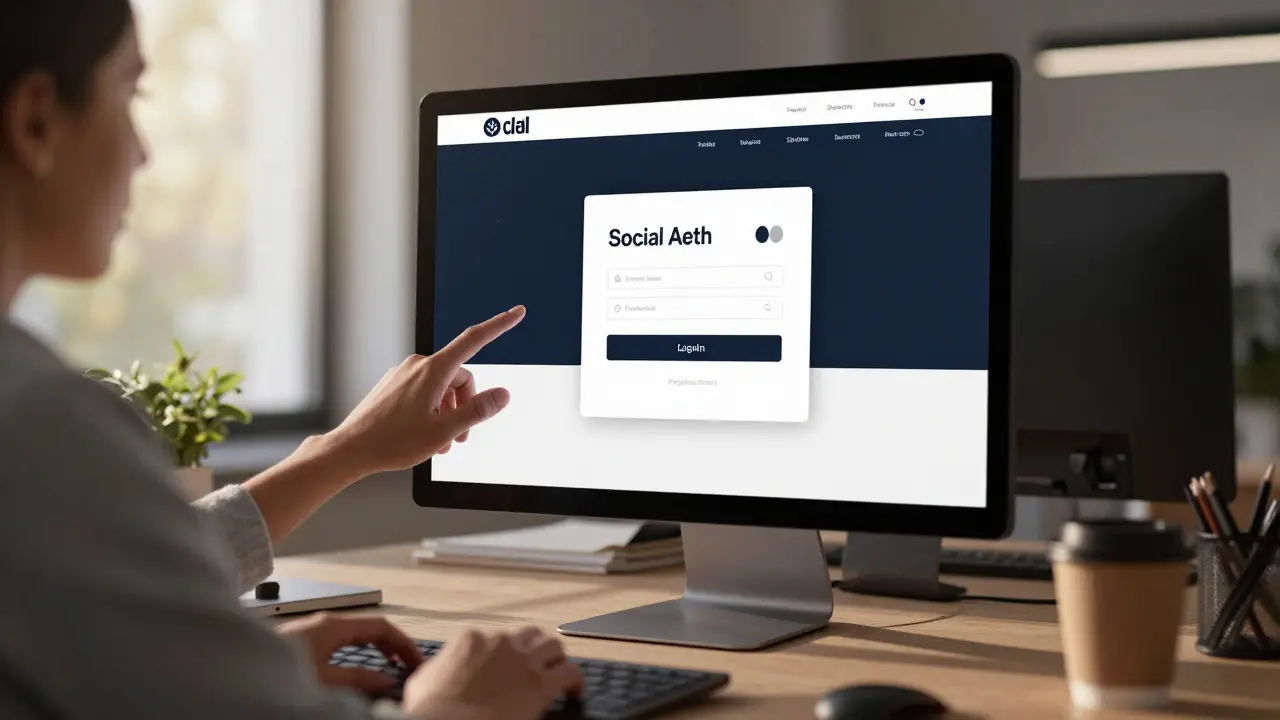
Imagine telling your AI tool, "Build me a login screen with social auth, a password reset flow, and dark mode toggle," and having a fully functional, responsive prototype ready in under 10 minutes. No writing a single line of code. No debugging syntax errors. No waiting for a developer to finish their current task. This isn’t science fiction-it’s vibe coding, and it’s reshaping how agencies deliver client prototypes on compressed timelines.
What Vibe Coding Actually Does
Vibe coding isn’t just another AI code generator. It’s a workflow where natural language prompts replace manual coding. Instead of writing JavaScript, CSS, or SQL, team members describe what they want in plain English: "Make a dashboard that shows daily sales, filters by region, and auto-refreshes every 30 seconds." The AI interprets that, generates the front-end UI, connects to a database, sets up an API endpoint, and delivers a working prototype.
This isn’t magic-it’s powered by large language models trained on millions of code repositories, documentation, and real-world app structures. The system understands context: if you mention "Stripe," it knows to integrate payment APIs. If you say "mobile-first," it builds responsive layouts. If you ask for "user onboarding," it scaffolds a step-by-step flow with tooltips and progress indicators.
For agencies, this means shifting from building to directing. Developers no longer spend hours writing boilerplate. Designers can prototype interactions without waiting for engineers. Project managers can validate features with clients before writing a single line of code.
Why Agencies Are Switching Overnight
Traditional agency workflows are broken. A client asks for a custom CRM module. The agency estimates 3 weeks. They assign a senior dev. Two weeks in, the client says, "Can we add a file upload feature?" The dev groans. The timeline slips. The budget balloons. The client loses trust.
Vibe coding flips this script. With AI-assisted development, agencies can deliver a working prototype in 4-8 hours. Not days. Not weeks. Hours. That changes everything.
Take a two-person agency in Portland. A local bakery wants a custom ordering system with inventory tracking. In the old model, they’d need to hire a freelance dev for $15,000. With vibe coding, the designer describes the interface: "A simple form for cake orders, with dropdowns for size, flavor, and delivery date. Auto-calculate total. Email confirmation. Sync with Google Sheets." The AI generates the entire app. The agency reviews, tweaks the styling, adds a logo, and hands it over in 12 hours-for $1,200.
Pendo reports that product teams using vibe coding reduce feature delivery time by 70%. For agencies, that means handling 3x more clients without hiring more staff. It means turning weekend brainstorming sessions into Monday morning client demos.
The Hidden Advantage: Democratizing Development
Before vibe coding, only developers could build. Now, anyone can.
A product manager at a mid-sized agency in Eugene used to sit in meetings, taking notes, then handing them off to the dev team. Now, she opens the vibe coding tool and types: "Create a feedback widget that pops up after 60 seconds on the homepage. Ask: Did this help? Yes/No. If No, prompt for details. Store responses in Airtable." She hits generate. The widget works. She shows it to the client. They love it. No dev needed.
This isn’t about replacing developers. It’s about multiplying their impact. Junior designers can prototype UIs. Customer success reps can build internal tools for client onboarding. Content strategists can create dynamic landing pages based on user segments.
Agencies that embrace this shift stop being code factories. They become experience architects. They focus on user behavior, emotional flow, and business outcomes-not whether a div has the right margin.
Enterprise-Grade Vibe Coding: It’s Not Just for Startups
Some agencies hesitate, worried: "What if the AI generates insecure code? What if it breaks later?" Valid concerns.
The solution isn’t to avoid vibe coding-it’s to use Vibe Composition. This is the enterprise approach: AI suggests components. Humans approve them.
Here’s how it works:
- The designer prompts: "Build a user registration form with email verification and GDPR consent checkbox."
- The AI generates the form, backend logic, and database schema.
- The dev team reviews: Is the encryption standard compliant? Are sessions properly timed? Is the data flow logged?
- They approve, tweak, and lock the component into a reusable library.
- Next client? Same form, instantly deployed-no rework.
This is how agencies serving banks, healthcare providers, or SaaS platforms maintain security and compliance while still moving at startup speed. It’s not AI replacing humans. It’s humans using AI to scale their expertise.
Feedback Loops: The Secret Weapon
Traditional prototyping ends when the client says, "Looks good." Vibe coding begins there.
Integrate vibe-coded prototypes with analytics tools like Pendo Agent Analytics. Now you can track:
- How users interact with AI-generated features
- Which prompts lead to high-engagement flows
- Where users drop off in automated workflows
One agency noticed their AI-generated checkout flow had a 40% abandonment rate. Instead of guessing why, they asked the analytics tool: "Why are users leaving at step 3?" The system analyzed 12,000 sessions and found: users were confused by the auto-filled phone number field. They didn’t know they could edit it.
The team updated the prompt: "Add a tooltip under the phone field saying: 'You can change this number if needed.'" Generated the new version. Deployed in 90 seconds. Abandonment dropped to 12%.
This is the real power of vibe coding: it turns prototyping into a learning loop. Every client interaction teaches the system. Every tweak improves future outputs.
Client Onboarding Without Extra Work
Delivering a prototype is one thing. Making sure the client’s team can use it? That’s where most agencies fail.
Vibe coding tools now integrate with contextual guidance platforms. When a client logs into their new AI-generated app, they’re greeted with smart tooltips:
- "This button saves your changes automatically."
- "To export reports, click the three dots in the top right."
- "You’ve used this feature 3 times. Here’s a pro tip: use Ctrl+Shift+R to refresh data instantly."
These guides adapt to user behavior. If someone keeps clicking the wrong button, the system learns and surfaces a hint. No extra documentation. No training sessions. No agency hours spent onboarding.
For agencies, this means delivering complete solutions-not just code. Clients don’t just get a prototype. They get a product that’s intuitive, supported, and ready to use.

The New Agency Business Model
Agencies are no longer competing on how many developers they have. They’re competing on how fast they can turn ideas into action.
Here’s what’s changing:
- Before: "We build custom software. 6-8 weeks. $25K minimum."
- Now: "We deliver working prototypes in 24 hours. $999. Test it. Iterate. Scale."
This opens up new markets: small businesses, indie creators, nonprofits, local governments. Clients who couldn’t afford a full build can now test ideas for under $1,000. Agencies that adopt vibe coding aren’t just faster-they’re more accessible.
It’s not about replacing traditional development. It’s about layering speed on top of it. Use vibe coding for prototyping, MVPs, and internal tools. Keep manual coding for high-stakes, long-term systems. The combination is unbeatable.
Where Vibe Coding Falls Short
Let’s be clear: vibe coding isn’t a cure-all.
- It can’t replace deep architectural planning for complex systems.
- It doesn’t handle legacy integrations well (yet).
- It can’t replace human judgment on ethical design, accessibility, or brand tone.
Agencies that treat it as a magic wand end up with messy, insecure, unmaintainable prototypes. The key is discipline: use it for speed, not for everything. Always review, always test, always document.
The best agencies don’t use vibe coding to cut corners. They use it to cut waste. Waste of time. Waste of money. Waste of potential.
The Future Is Composable
Tomorrow’s agencies won’t have 10 developers. They’ll have 2 developers and 8 AI agents.
Each agent handles a task: one generates UI, one writes API docs, one writes tests, one checks security, one builds onboarding guides. The humans? They focus on strategy, client relationships, and quality control.
This isn’t the future. It’s happening now. Agencies that wait for "the right time" will lose to the ones who are already delivering prototypes before lunch.
Stop thinking about coding. Start thinking about prompting.
Stop building software. Start building experiences.
And if your client asks, "Can we get this done by Friday?"-you’ll finally be able to say yes.
Colby Havard
March 24, 2026 AT 11:53Let us not be seduced by the siren song of automation-this so-called 'vibe coding' is merely the latest iteration of techno-utopian delusion. The notion that natural language prompts can replace the disciplined, painstaking craft of software engineering is not merely naive; it is profoundly dangerous. Every line of code is a decision, a trade-off, a moral act-reduced to a prompt, it becomes a commodity, stripped of intent, context, and responsibility.
When a designer types, 'Make a dashboard that shows daily sales,' they are not describing architecture-they are outsourcing cognition. And when that dashboard fails under load, or leaks PII because the AI misinterpreted 'secure,' who is liable? The user? The agency? The algorithm? There is no accountability in a world where 'it worked yesterday' is the only audit trail.
We have already seen the consequences of this mindset in healthcare algorithms, in hiring tools, in loan approvals. Now it is coming for our craft. This is not progress-it is erosion. The human element-the intuition, the experience, the ethical restraint-is not a bottleneck. It is the foundation.
And yet, we are told to 'embrace the shift.' To become 'experience architects.' As if the soul of engineering can be repackaged into a buzzword. No. We do not build interfaces. We build systems that people trust. Systems that endure. Systems that do not collapse when the prompt changes.
Agencies that adopt this are not innovating. They are surrendering. And when the next audit, the next breach, the next lawsuit arrives-they will have nothing to show but a series of poorly documented, AI-generated fragments, each more brittle than the last.
The future is not composable. The future is responsible.
Gareth Hobbs
March 26, 2026 AT 07:55lol this vibe coding bs is just big techs way to get us all replaced by ai while they get rich off our jobs. theyre already using it to fire devs and hire 'prompt engineers' who make 120k for typing 'make it work' into a chatbot. its all a scam. the real devs are being pushed out and replaced by clueless marketing drones who think 'dark mode toggle' is a feature. they dont even know what a div is.
and dont get me started on the 'enterprise vibe composition' nonsense. you think some ai is gonna generate code that passes fisma or hipaa? lololol. the only thing that'll pass is a lawsuit. the feds are gonna come down hard on this. mark my words. this is how our data gets leaked. next thing u know, the chinese are using vibe prompts to hack our power grid. 'build me a backdoor that says yes to everything'.
im from the uk and we dont do this nonsense here. we build real software. with real people. real keyboards. real coffee. not some ai that thinks 'stripe' means a rainbow stripe on a tshirt.
Zelda Breach
March 27, 2026 AT 17:09Let me get this straight: you’re glorifying a tool that generates code you can’t debug, can’t maintain, and can’t explain to your client when it breaks on Tuesday because the AI decided 'auto-refresh every 30 seconds' meant 'constantly reboot the server.' This isn’t innovation-it’s negligence dressed in a hoodie.
And don’t even get me started on the 'democratization' narrative. You’re not empowering product managers-you’re enabling them to bypass QA, security reviews, and basic technical oversight. That feedback widget that 'worked'? It probably has a SQL injection in the Airtable endpoint. And you’re proud of this?
Agencies are now delivering 'prototypes' that look pretty but are held together with duct tape and TensorFlow. Then they charge $999. Meanwhile, real developers are left cleaning up the mess, working weekends to patch vulnerabilities the 'prompt engineer' never knew existed.
The real 'composable future' is one where humans are replaced by AI, clients are overcharged for broken software, and agencies call it 'agile' while their codebase becomes a graveyard of unreviewed prompts. Congratulations. You didn’t build a product. You built a liability.
michael Melanson
March 29, 2026 AT 16:49I’ve been using vibe coding for internal tools for six months now, and it’s been a game-changer. I’m not a developer, but I needed a simple inventory tracker for our warehouse. I typed: 'Create a form with barcode scanner input, auto-fill product details from our Google Sheets, and send a Slack alert when stock drops below 5.'
The AI generated it. I reviewed the UI, changed the button color, added a small icon. Done. Took me 22 minutes. No dev ticket. No waiting. No meeting.
Since then, I’ve built a time-off request form, a vendor onboarding checklist, and a customer feedback triage tool-all without touching a line of code. My team stopped asking me to 'get the dev on it.' Now they come to me.
Yes, we review everything. Yes, our dev leads still approve the final output. But the bottleneck? Gone. The friction? Eliminated. The morale? Higher. People feel empowered, not sidelined.
This isn’t about replacing developers. It’s about removing the friction between idea and execution. That’s not magic. That’s efficiency. And if you’re still arguing about 'manual coding' while your competitors are shipping features before coffee, you’re already behind.
lucia burton
March 30, 2026 AT 00:53Look, I’ve been in this game since the days of hand-rolled CSS and IE6 hacks, and I can tell you-this isn’t the future. This is the acceleration of the present. Vibe coding isn’t a tool; it’s a paradigm shift in the velocity of execution. The traditional agency model was a waterfall of misaligned incentives: designers waiting for devs, devs waiting for QA, QA waiting for client feedback. All of it costing time, money, and emotional bandwidth.
Now, with vibe composition, we’ve created a feedback-driven, iterative, hyper-responsive ecosystem where every stakeholder-from the intern to the CMO-can contribute to the prototype at the speed of thought. The AI doesn’t replace judgment; it amplifies it. It surfaces patterns we didn’t know we were looking for. It surfaces edge cases we never thought to test. It surfaces usability insights from real-time analytics that tell us users don’t want a dark mode toggle-they want a context-aware theme engine that adapts to ambient light.
And yes, we still have our senior engineers reviewing every generated component for security, scalability, and compliance. But now they’re not stuck maintaining boilerplate-they’re architecting reusable, auditable, version-controlled modules that become institutional knowledge. That’s not waste reduction. That’s knowledge multiplication.
When a client says, 'Can we get this done by Friday?'-we don’t say yes. We say, 'Already done. Here’s the prototype. Here’s the analytics. Here’s the next iteration. What’s your feedback?' And that’s not just agile. That’s anticipatory design.
The agencies that survive the next five years won’t be the ones with the most developers. They’ll be the ones with the most empowered, prompt-savvy, feedback-integrated teams. And if you’re still writing code manually when you could be refining user journeys? You’re not a developer. You’re a bottleneck.