Vibe Coding vs No-Code: Building Lead Capture Apps for Marketers
 Apr, 9 2026
Most marketing teams are stuck in a frustrating cycle: they have a great idea for an interactive lead magnet-like an ROI calculator or a personalized audit tool-but they're blocked by the "development queue." Waiting weeks for a developer to build a simple tool often kills the momentum of a campaign. While drag-and-drop builders helped, they often hit a ceiling where the tool looks generic or can't handle the specific logic needed to actually qualify a lead. This is where vibe coding is a hybrid development method that uses natural language prompts and AI to generate editable code, allowing non-technical users to build production-ready apps. It's not just about speed; it's about giving marketers the ability to "vibe" with the AI until the application feels and functions exactly how they envisioned, without needing a computer science degree.
The Middle Ground Between Drag-and-Drop and Hard Coding
For years, marketers had two choices. They could use No-Code Platforms, which are great for simple landing pages but rigid when it comes to complex logic. Or, they could hire a developer to write custom code, which is flexible but expensive and slow. Vibe coding breaks this dichotomy. It allows you to describe a feature in plain English-"Make the lead capture form change its questions based on the industry selected"-and the AI generates the actual code to make it happen.
Unlike pure no-code tools that hide the underlying logic, vibe coding gives you a window into the code. If the AI gets a detail wrong, you don't have to hope there's a setting in a menu to fix it; you can simply tell the AI to adjust the snippet or make a quick manual tweak. This flexibility is critical for lead capture apps that need to perform specific calculations, scrape data, or integrate with a niche CRM.
| Feature | No-Code Platforms | Vibe Coding |
|---|---|---|
| Customization | Limited to templates | High (Editable code) |
| Learning Curve | Very Low | Low to Medium |
| Scalability | Moderate | High |
| Deployment Speed | Near Instant | Fast (Hours to Days) |
| Security Control | Managed by platform | User-managed/Custom |
Turning Ideas Into Lead Magnets
So, what does this actually look like for a marketing team? Instead of a static PDF, imagine creating an interactive tool that provides immediate value to a prospect. With a vibe coding approach, a marketer can take a screenshot of a competitor's pricing page and ask the AI to build a comparison tool that helps users calculate their potential savings by switching to their service. This turns a passive visitor into an active lead.
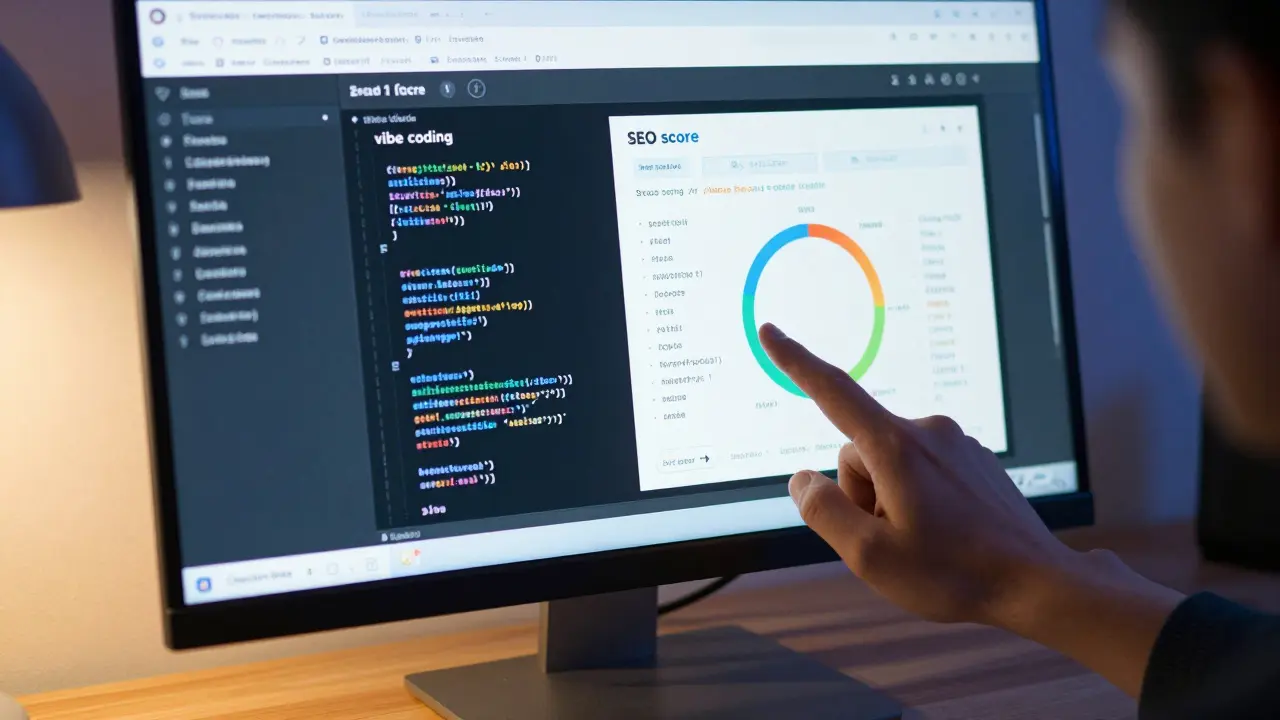
One of the most powerful applications is the creation of "mini-PRDs" (Product Requirements Documents). Instead of vague prompts, marketers are learning to provide structured instructions. For example, telling an AI to "Build a lead capture app that accepts a company URL, scrapes the home page for keywords, and outputs a personalized SEO score" is a high-value lead magnet. This is far beyond the capability of a standard form builder.
Common a-ha moments for marketing teams using these tools include:
- Converting a rough sketch on a whiteboard into a functional UI in minutes.
- Building custom Chrome extensions that automate competitor research.
- Creating ROI calculators that push data directly into a CSV or a database for sales follow-up.
- Iterating on a tool in real-time based on user feedback without waiting for a sprint cycle.
The Modern Toolstack for Marketing Engineers
Several platforms have emerged to facilitate this shift, turning marketers into what some are calling "Marketing Engineers." Lovable is a standout here, as it's designed for building full-stack web applications. It handles the frontend UI, the backend database, and authentication all through chat prompts. It's particularly useful for those who need to ship a product that handles real user data without managing five different subscriptions for hosting, databases, and auth.
For those who need to move even faster during the brainstorming phase, Bolt provides an incredible environment for rapid prototyping directly in the browser. If you need more robust development environments with deeper control, Replit offers a more comprehensive set of tools to host and scale these applications. These tools aren't just replacing builders; they are replacing the need for a middleman between the marketing strategy and the technical execution.
The Reality Check: From Prototype to Production
There is a dangerous narrative in the AI space that you can build a professional app in 20 minutes. While you can certainly get a prototype running in 20 minutes, a production-ready app is a different story. Real-world data from companies like SaaStr shows that while small teams can now build and launch multiple apps that generate revenue, the timeline is closer to a month, not a few minutes.
The secret is in the QA. Roughly 60% of the development time in vibe coding is actually spent on testing and quality assurance. Why? Because AI can occasionally introduce "hallucinations" in the code or logic errors that only appear when a real user enters unexpected data. If your lead capture app crashes when someone enters a special character in their name, you've lost a lead. Marketing teams must budget time for rigorous testing before a public launch.

The Security Gap in AI-Generated Apps
Here is the most critical warning for B2B marketers: security. When you use a platform like Shopify or Squarespace, you are paying for a massive security team that protects your data. When you vibe-code an application that includes its own database, you are effectively becoming the security officer.
Hackers often target AI-generated apps because they assume the creator (a marketer, not a security engineer) has left the "digital back door" open. The moment you create a database to store lead information, you are responsible for ensuring that data is encrypted and that your API keys aren't exposed in the frontend code. For enterprise-level lead capture, failing to implement robust security protocols can lead to data breaches that outweigh any benefit of a fast launch.
Do I need to know how to code to use vibe coding?
No, you don't need to be a professional developer, but a basic understanding of logic (if/then statements) and how data flows from a form to a database will help you get much better results. The AI does the heavy lifting of writing the syntax, but you still need to guide the architecture.
How does vibe coding differ from a GPT wrapper?
A GPT wrapper is essentially a specialized interface for a language model. Vibe coding creates actual, deployable software-complete with UI, databases, and server-side logic-that can exist independently and perform complex tasks beyond just chatting.
Which platform is best for a non-technical marketer?
For those who want a full-stack app (database, login, and UI) from a single prompt, Lovable is currently one of the most accessible. For fast, browser-based prototypes, Bolt is a great starting point.
Is it safe to store customer emails in a vibe-coded app?
Only if you prioritize security from day one. Because you are creating a custom application rather than using a locked-down SaaS form, you must ensure your database is secured and your authentication is handled correctly to avoid data leaks.
How long does it actually take to build a lead capture tool?
While a prototype can take minutes, expect a production-ready tool to take about a month. This includes time for refining the prompts, tweaking the UI, and spending significant time (about 60% of the project) on QA and testing.
Next Steps for Your Marketing Team
If you're ready to move beyond static forms, start small. Don't try to build a full CRM on your first attempt. Instead, identify one repetitive task-like calculating a specific metric for your clients-and build a single-purpose calculator. Use a tool like Lovable to get a version one live, then spend a week trying to "break" it with weird inputs before you promote it on social media.
For those who want a more structured path, look into "Marketing Engineering" courses that focus on VIBE prompting. Learning how to write a "mini-PRD" will save you hours of frustration and prevent the AI from looping in circles. Once you've mastered the simple tools, you can move toward more complex integrations and automated workflows that turn your lead capture into a genuine revenue engine.