Query Understanding for RAG: Reformulation and Expansion Techniques
 Apr, 16 2026
Imagine you're using an AI assistant to find a specific legal precedent or a medical symptom. You type in a quick, slightly vague question, and the AI comes back with a generic answer that misses the point entirely. The problem isn't usually that the AI doesn't have the information-it's that the search query you wrote didn't "hit" the right documents in the database. This is the primary bottleneck in standard Retrieval-Augmented Generation (RAG). To fix this, we need Query Understanding for RAG is a strategic process of analyzing, reformulating, and expanding user inputs to ensure a retrieval system finds the most relevant data before the LLM generates a response.
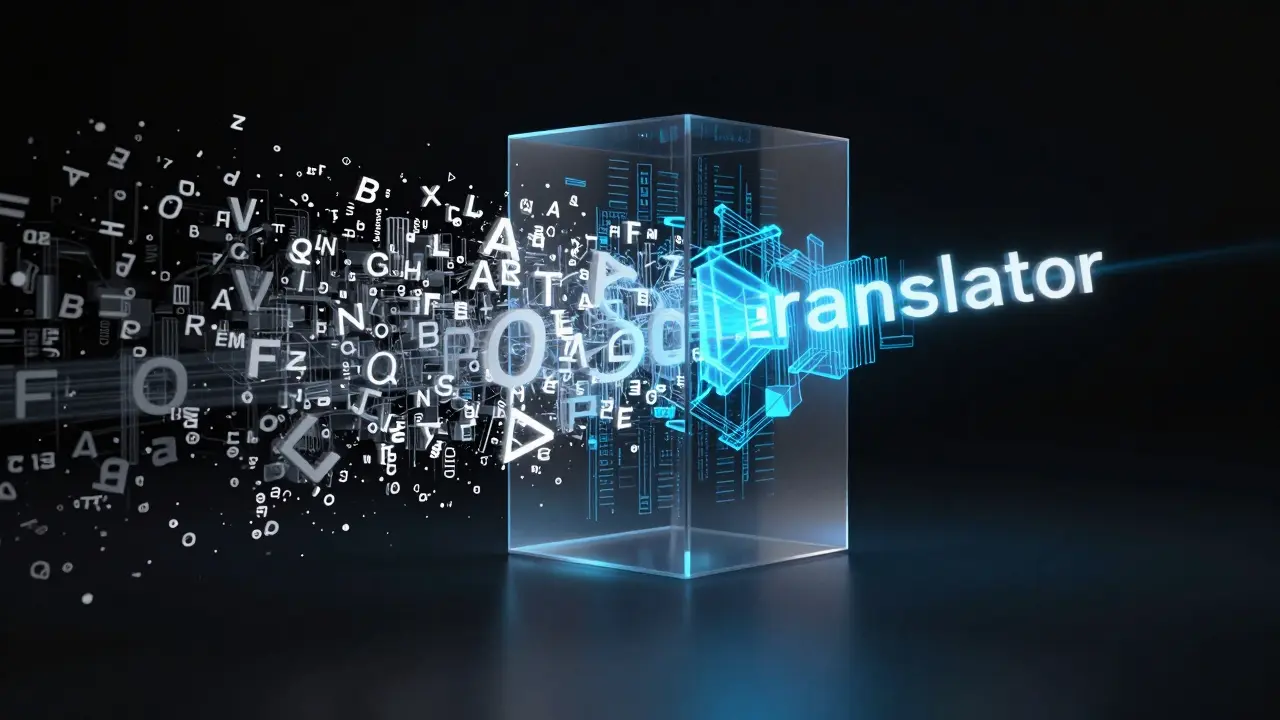
If you're running a basic RAG pipeline, you're likely just turning a user's question into a vector and searching a database. But humans are bad at writing perfect queries. We use slang, we omit context, and we're often ambiguous. By implementing a query understanding layer, you can improve retrieval accuracy by 35-48%, according to benchmarks from Stanford University. You're essentially adding a "translator" that turns a messy human thought into a precision tool for your vector database.
The Core Architecture of Query Understanding
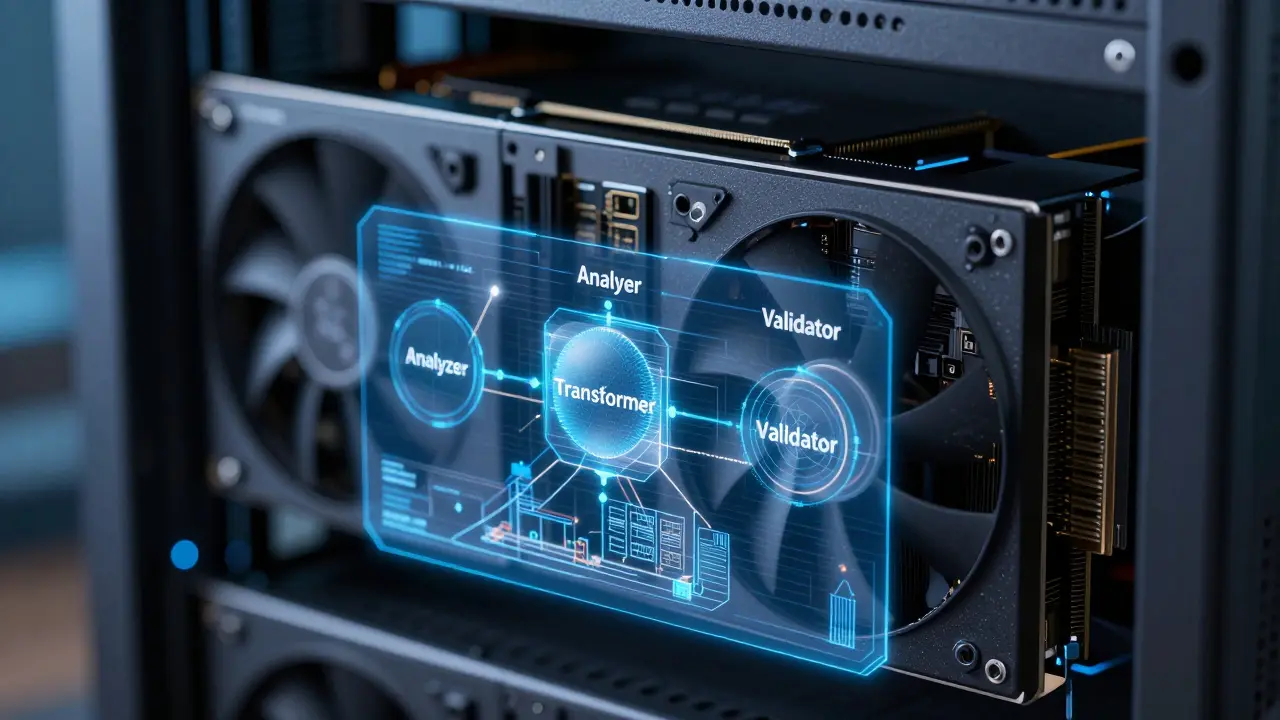
You can't just tell an LLM to "make the query better." A production-grade system needs a structured pipeline. Most modern implementations, including those seen in NVIDIA's RAG 101 framework, break this down into three distinct parts:
- The Query Analyzer: This is the first stop. It parses the semantic structure of the input to figure out what the user actually wants. Is it a factual question? A comparison? Or a request for a summary?
- The Query Transformer: This is where the magic happens. Based on the analysis, the system applies specific techniques like rewriting or expansion to optimize the query for the retrieval engine.
- The Query Validator: Before the search is executed, a validator checks if the transformed query actually makes sense. This prevents the system from "hallucinating" search terms that might lead the retrieval process astray.
The best part is that this doesn't require a supercomputer. You can run these transformations using a lightweight transformer model with about 110 million parameters. Even on an entry-level GPU like the NVIDIA T4, the added latency is usually only 150-300ms-a small price to pay for a massive jump in accuracy.
Powerful Reformulation Techniques for Better Answers
Once you have the architecture in place, you need the right strategies to transform the queries. Not every query needs the same treatment. Here are the most effective methods currently used in the field.
Multi-Query Rewriting
A single query only captures one perspective. Multi-query rewriting uses an LLM to generate several variations of the user's original question. By searching for three or four different versions of the same intent, you cast a wider net. Research from the University of Washington shows this can increase the retrieval of relevant documents by over 37% compared to a single-query approach.
Step-Back Prompting
Sometimes a user asks a question that is too specific, causing the retrieval system to miss the broader concepts needed to answer it. Step-back prompting instructs the LLM to first generate a more generic, high-level question about the concept. For example, if a user asks about a specific rare drug interaction, the system first asks, "What are the general mechanisms of this class of drugs?" This broader context helps the LLM avoid factual hallucinations, reducing them by nearly 34% in medical applications.
The RAG Decider Pattern
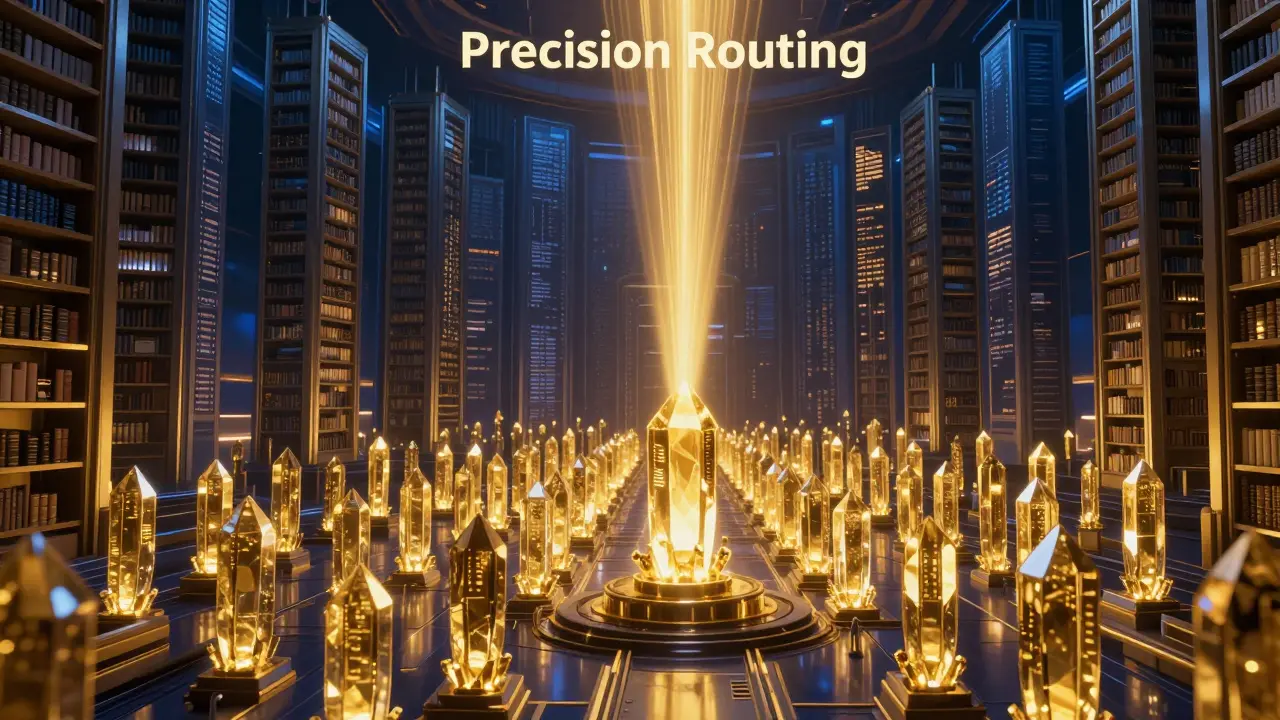
For enterprises with messy, heterogeneous data sources, the RAG Decider Pattern is a game-changer. Instead of a blind search, it uses routing logic to decide which data source or retrieval strategy is best for a specific query. While this increases maintenance overhead, it can boost relevance by over 41% by ensuring the query goes to the right "bucket" of information.
| Technique | Primary Goal | Key Benefit | Trade-off |
|---|---|---|---|
| Multi-Query | Increase Recall | 37.2% more relevant docs | Higher token cost |
| Step-Back | Contextual Depth | ~30% fewer hallucinations | Slower response time |
| RAG Decider | Precision Routing | 41.3% higher relevance | Higher dev effort |
Practical Implementation: Avoiding Common Pitfalls
If you're moving from a prototype to production, be prepared for a few bumps. Implementing these techniques isn't as simple as adding a prompt; it usually requires 35-50% more development effort than a basic RAG setup. One of the most common mistakes is over-expanding the query. While more variations can help, there's a point of diminishing returns. Most experienced developers settle on 2-3 expansion variations to keep token costs manageable and avoid "noise" in the retrieval results.
You also need to watch out for bias. As noted by computational linguists at the University of Washington, expanding a query can sometimes amplify biases present in the training data. In legal RAG systems, for instance, query expansion increased the retrieval of relevant cases but also increased the presence of historical biases by 19%. It's a reminder that while you're optimizing for Query Understanding for RAG, you must also monitor the output for fairness.
Another hurdle is conversational history. If a user asks "Who is the CEO of Apple?" and then follows up with "Where did he go to college?", the second query is useless without the context of the first. You'll need to invest an additional 15-25% of your development time into "query condensing"-where the LLM rewrites the follow-up question into a standalone query (e.g., "Where did Tim Cook go to college?").
Choosing Your Toolset
You don't have to build this from scratch. Several frameworks have standardized these patterns. LangChain, for example, introduced specialized query transformation modules that have shown a 28.7% improvement in Mean Reciprocal Rank (MRR@10). If you're deeply integrated into the NVIDIA ecosystem, the RAG Stack provides adaptive transformation that dynamically picks the best reformulation method based on how complex the query is.
For those using LlamaIndex or Haystack, the biggest challenge is usually domain-specific terminology. Generic LLMs might not know your company's internal jargon, leading to poor rewrites. The fix here is to provide the query transformer with a small, curated glossary of terms to ensure the reformulated queries use the language your vector database actually contains.
Does query expansion significantly increase LLM costs?
Yes, it does. Multi-query rewriting typically consumes about 2.7x more tokens than a basic single-query RAG setup because you are generating and processing multiple versions of the same question. However, the trade-off is usually worth it for the increase in accuracy.
How much latency does query understanding add to a request?
On average, a well-optimized query understanding layer adds between 150ms and 400ms to the total processing time. This depends on the model size used for transformation and whether you are running on CPU or GPU.
Is query reformulation necessary for simple factual queries?
Not necessarily. Microsoft Research has found that for simple factual queries, basic keyword matching or vector search suffices. Query understanding provides the most value for ambiguous, multi-faceted, or complex knowledge-intensive questions.
What is the difference between query reformulation and query expansion?
Reformulation is about changing the structure or wording of a query to make it clearer (like rewriting a vague sentence). Expansion is about adding related terms or multiple variations of the query to ensure a wider search of the knowledge base.
How do I handle domain-specific jargon during transformation?
The most effective way is to use a small, domain-specific glossary or a few-shot prompting technique. By providing the transformer model with examples of how your industry's jargon maps to searchable terms, you prevent the LLM from "correcting" technical terms into generic words.
Next Steps for Implementation
If you've already got a basic RAG pipeline running, don't try to implement everything at once. Start with multi-query rewriting-it's the easiest to set up and provides the most immediate boost in recall. Give yourself about two weeks to integrate and test this first phase.
Once you're comfortable, move toward a "decider" or routing pattern if you have multiple data sources. If you're working in a high-stakes field like healthcare or law, prioritize the Step-Back prompting technique to kill off hallucinations. Finally, set up a monitoring dashboard to track your MRR (Mean Reciprocal Rank) and token spend so you can find the sweet spot between cost and accuracy.
Jamie Roman
April 18, 2026 AT 15:55I've been tinkering with a similar pipeline for a few months now, and I honestly feel like the journey of implementing multi-query rewriting is where you really start to see the AI move from just being a fancy autocomplete to actually understanding the intent, although it does take a lot of patience to get the prompts just right so they don't drift too far from the original meaning, and I think anyone starting out should definitely give themselves the grace to fail a few times before the accuracy numbers actually start climbing in the right direction, because it's a bit of a steep learning curve at first but so rewarding in the end.
Johnathan Rhyne
April 18, 2026 AT 19:40The audacity to suggest a 300ms latency hit is a "small price to pay" is absolutely precious. In a world of high-frequency requirements, that's an eternity! Also, whoever wrote this needs to learn that "mush" is not a word in the context of variability, though I'm guessing that's a typo in the source. Still, the logic is sound enough, even if the optimism is borderline delusional.
Andrew Nashaat
April 19, 2026 AT 04:45It's honestly just pathetic how many people ignore the bias issue mentioned here!!! Like, seriously!!! We are literally automating prejudice if we just blindly expand queries without a moral framework overseeing the retrieval process... it's absolutely disgusting that this is treated as a footnote!!!
Salomi Cummingham
April 19, 2026 AT 06:23Oh my goodness, the absolute tragedy of a user asking a follow-up question and the AI just staring back blankly because it forgot the previous sentence is a heartbreak I wouldn't wish on my worst enemy! It is simply an emotional rollercoaster of frustration when you're trying to build something sophisticated and you realize you've completely neglected query condensing, leaving your poor users in a state of utter confusion while the system just hallucinates wildly because it has no context to cling to, which is why investing that extra development time is not just a suggestion but a complete necessity for anyone who actually cares about the human experience of the interface!
Lauren Saunders
April 19, 2026 AT 08:49Imagine thinking a basic glossary is the 'fix' for domain-specific jargon. How quaint. Most of us are utilizing far more sophisticated semantic mapping and custom embedding fine-tuning because relying on a static list of terms is essentially the 'Hello World' of RAG. It's adorable that this is presented as a production-grade solution for the masses.
Jawaharlal Thota
April 20, 2026 AT 12:54I completely agree with the point about not implementing everything at once because when I first tried to combine the Decider pattern with Step-Back prompting, the complexity of the debugging process became overwhelming and I spent more time tracing the query path than actually improving the results, so the advice to start with multi-query rewriting is incredibly grounded and helpful for developers who are trying to maintain a steady pace of improvement without burning out on the sheer overhead of the architectural complexity.
Gina Grub
April 21, 2026 AT 17:52total overkill for 90% of usecases tbh. if your vector space is actually optimized you don't need these bloated transformer layers just to fix a bad prompt. just fix the chunking strategy and stop chasing these marginal gains in MRR that dont even translate to UX improvements in the real world. its all just academic fluff
Nathan Jimerson
April 22, 2026 AT 12:17This is a great roadmap for anyone looking to level up their AI project. The breakdown of the three distinct parts makes it feel much more achievable than it seems at first glance.