Fine-Tuning LLMs: How Nonprofits Adjust AI Models for Real-World Impact
When you hear fine-tuning LLMs, the process of adjusting a pre-trained large language model using targeted data to improve performance on specific tasks. Also known as model adaptation, it’s not about building AI from zero—it’s about teaching existing AI to understand your nonprofit’s language, goals, and community. Most open-source LLMs are trained on broad internet text. That’s great for general chat, but not for writing grant proposals that sound like your org, or answering donor questions in your voice. Fine-tuning fixes that.
Think of it like training a new staff member. You don’t teach them everything from scratch—you show them how your team works. Same with LLMs. You feed them examples of your past emails, program descriptions, or donor responses, and the model learns patterns. It starts to mimic your tone, prioritize your key messages, and even spot what donors care about most. This isn’t theory. Organizations using fine-tuned models report 30-50% faster response times on donor outreach and higher engagement on automated communications. And it doesn’t require a PhD. Tools like Hugging Face and LoRA make it possible to do this with modest compute budgets—even on a nonprofit’s tight tech stack.
Fine-tuning LLMs connects directly to other critical areas nonprofits are tackling. For example, LLM compute budget, the planned spending on hardware, cloud services, and energy needed to train or run AI models becomes more manageable when you fine-tune a smaller model instead of buying a bigger one. Model compression, techniques like quantization and pruning that reduce model size without losing key performance often go hand-in-hand with fine-tuning—you shrink the model, then tailor it. And when you’re working with sensitive data like donor records or client info, ethical AI deployment, the practice of using AI in ways that protect privacy, avoid bias, and ensure accountability means you control exactly what data goes into the model. No third-party cloud scraping. No risky data transfers. Just your data, your rules.
What you’ll find in these posts isn’t a list of technical manuals. It’s real-world guidance from nonprofits who’ve done this. You’ll see how one org used fine-tuning to turn survey responses into automated impact reports. How another trained a model to recognize donor intent from messy email threads. How teams avoid common pitfalls like overfitting or losing their voice in the process. These aren’t experiments. They’re working systems that saved hours, boosted donations, and kept data safe. If you’ve ever thought AI was too big, too expensive, or too complicated for your mission—you’re about to see how fine-tuning LLMs changes that.
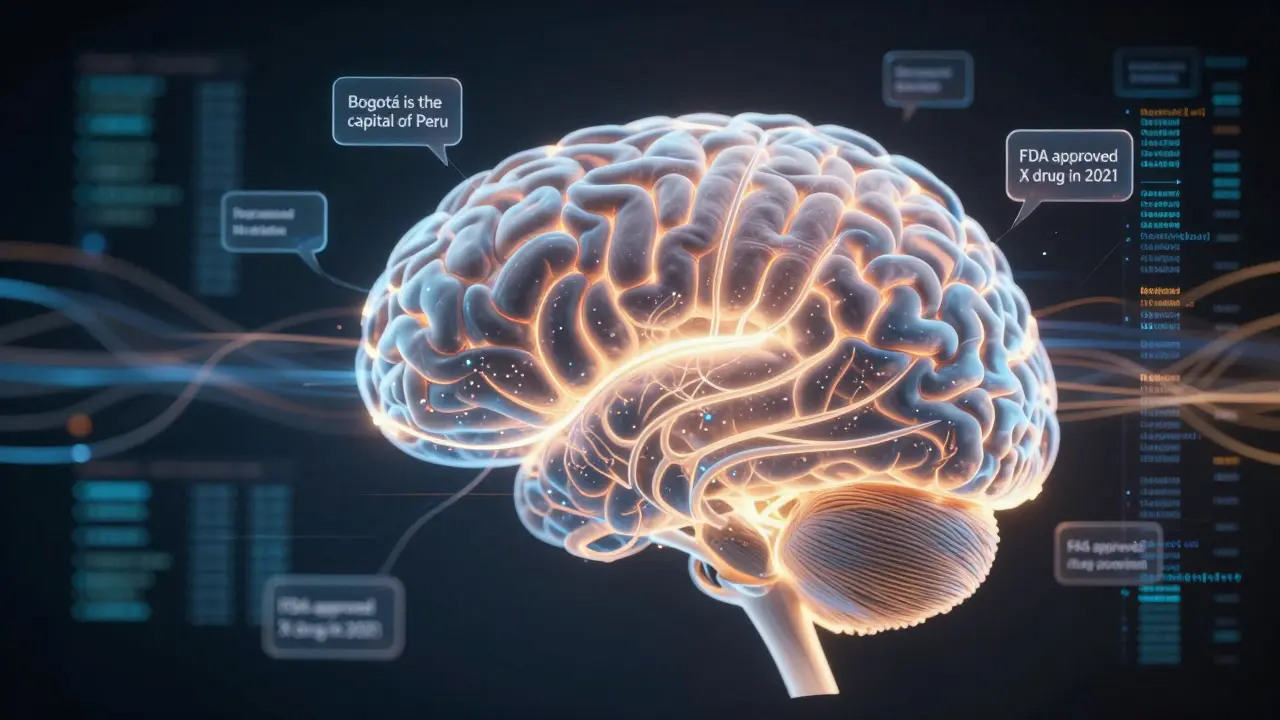
Reducing Hallucinations in Large Language Models: A Practical Guide for 2026
Learn practical, proven methods to reduce hallucinations in large language models using prompt engineering, RAG, and human oversight. Real-world results from 2024-2026 studies.
Read More
Fine-Tuning LLMs: API-Hosted vs Open-Source Models Compared
Compare API-hosted and open-source LLMs for fine-tuning: cost, control, performance, and when to choose each. Real data on Llama 2 vs GPT-4, infrastructure needs, and enterprise use cases.
Read More
Supervised Fine-Tuning for Large Language Models: A Practical Guide for Real-World Use
Supervised fine-tuning turns general LLMs into reliable domain experts using clean examples. Learn how to do it right with real-world data, proven settings, and practical tips to avoid common mistakes.
Read More