Why AI-Generated Code Drifts in Style and Architecture Across Sessions
 Sep, 3 2026
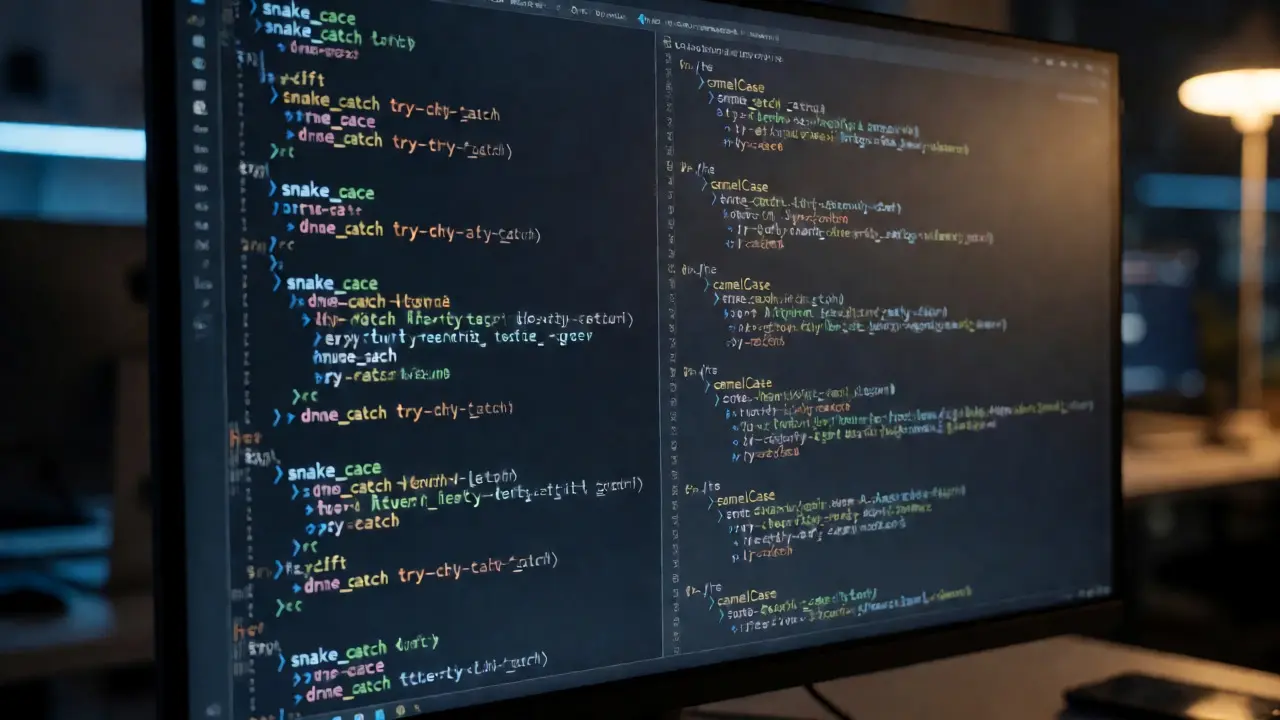
You ask an AI coding assistant to write a function. It looks clean, follows your team’s naming conventions, and fits perfectly into your existing module structure. You hit save, go get coffee, come back, and ask for a similar helper function. Suddenly, the variable names switch from snake_case to camelCase, the error handling moves from try-catch blocks to early returns, and the whole thing feels like it was written by a different developer. This isn’t just you losing your mind. It’s a documented phenomenon known as code drift, where AI-generated code shifts in style and architecture between sessions, even when you think you’re asking the exact same question.
If you’ve ever felt like your AI pair programmer has multiple personalities, you aren’t alone. Developers on forums like Reddit have been complaining about "swings" in output quality and style since tools like GitHub Copilot became mainstream. But why does this happen? Is it a bug? Can we fix it? The answer lies deep within how Large Language Models (LLMs) work, specifically in the tension between stochastic decoding, training data diversity, and the hidden complexity of your own context window.
The Myth of Deterministic Output
Most developers assume that if they set the temperature to zero, the model becomes deterministic. In theory, temperature=0 means the model always picks the most probable next token. If the input is identical, the output should be identical. Simple, right? Wrong.
A 2025 study titled “Non-Determinism of ‘Deterministic’ LLM Settings” tested five major LLMs across eight tasks, running each configuration ten times with temperature=0 and top-p=1. The result? Every single model showed output differences in at least some runs. For code generation, this meant different library choices, distinct error-handling strategies, or entirely different architectural patterns for the same prompt.
Why does this happen if the math says it shouldn’t? It comes down to hardware and floating-point arithmetic. Modern GPUs perform massive parallel calculations. Due to thread scheduling and non-deterministic parallelism in GPU kernels, tiny variations in floating-point precision can occur. These micro-differences might seem negligible, but in a sequence of hundreds of tokens, a slight shift in probability can tip the balance. One run might pick `user_id`, another might pick `userId`. Once that first divergence happens, the rest of the code generation cascades differently because the model now conditions its next predictions on the previous token choice.
This isn’t just theoretical. Engineering analyses from 2025 highlight that reproducibility requires controlling not just model parameters, but also the hardware stack, library versions, and seed values. Even then, perfect determinism is elusive. So, when you see your AI switch from an object-oriented approach to a functional one, it’s often because a tiny numerical fluctuation nudged the model down a different path in its high-dimensional solution space.
Training Data: A Buffet of Conflicting Styles
If non-determinism explains why the model *can* vary, training data explains why it *wants* to. LLMs are trained on billions of tokens of source code scraped from the internet. This includes everything from strict, PEP 8-compliant Python projects to messy legacy scripts, from rigorous enterprise Java to experimental JavaScript frameworks.
A June 2024 paper, “Investigating Coding Style Inconsistencies in Large Language Models,” found that these models learn multiple, often conflicting, local optima for what constitutes “good” code. When you ask for a function, the model doesn’t retrieve a single canonical answer. Instead, it samples from a multimodal distribution. One mode might represent a verbose, heavily commented, class-based structure typical of academic examples. Another mode might represent concise, arrow-function-heavy, un-commented code typical of modern web development tutorials.
Because the training mixture includes such diverse paradigms, the model sees both as valid. There is no single “correct” style encoded in the weights; there is a probability landscape where many styles coexist. When you prompt the model, you’re essentially rolling dice in this landscape. Depending on where the dice land, you get a snippet that aligns with one subset of the training data rather than another. This is why your AI might suggest a monolithic function one day and a layered service with helper classes the next. Both are statistically plausible based on what the model has seen, but they clash violently in your production codebase.

Your Context Window Is Leaking Signals
Here is where things get personal. The drift isn’t just about the model’s internal randomness; it’s about what you show it. Modern LLMs have large context windows, meaning they look at thousands of tokens surrounding your cursor to generate suggestions. This context acts as a powerful style prior.
Imagine you are working in a file where you’ve recently refactored several functions to use dependency injection. The AI sees these recent changes. Now, you ask it to write a new utility function. Because the immediate context is heavy with DI patterns, the model is biased toward generating code that fits that pattern. Later, if you open a different file where the code is more procedural and script-like, the same prompt might yield a completely different architectural approach. The model is mirroring the neighborhood it lives in.
Developers report this constantly. A November 2025 discussion on r/GithubCopilot noted that output quality and style “swing” dramatically based on the partially written code in the current buffer. Variable names, comment density, and even the presence of docstrings in nearby code serve as implicit instructions. If your previous code was sloppy, the AI might interpret that as permission to be sloppy. If your previous code was strictly typed and documented, it tries to match that rigor. This sensitivity makes consistent output across different files or editing sessions incredibly difficult without explicit, rigid constraints.
Architectural Drift: The Reasoning Path Problem
Style drift is annoying, but architectural drift is dangerous. This occurs when the high-level design pattern changes-say, from a factory pattern to a simple constructor, or from synchronous callbacks to async/await promises. This is tied to reasoning-path variability.
Research on self-consistency in LLMs shows that when asked to solve a complex problem, the model generates multiple potential reasoning paths. Some paths lead to efficient, modular designs; others lead to tangled spaghetti code. Without intervention, the model picks one path randomly. Techniques like Adaptive-Consistency, introduced in a 2023 paper, attempt to mitigate this by sampling multiple candidates and selecting the most consistent one. However, standard IDE integrations usually don’t do this heavy lifting by default. They take the first plausible completion.
This means that for a ticket requiring a specific architectural integration, the AI might propose a solution that works logically but violates your system’s structural norms. One session might give you a service layer wrapper; another might dump logic directly into the controller. Both pass unit tests, but only one fits your long-term maintenance strategy. This inconsistency forces human reviewers to spend extra time normalizing structures, shifting effort from creation to cleanup.

Mitigation Strategies for Consistent Code
So, how do you stop the drift? You can’t eliminate it entirely because it’s baked into the physics of LLMs and their training, but you can constrain it. Here is a practical checklist for maintaining consistency:
- Tighten Decoding Parameters: Set temperature to 0.0 or 0.1. Reduce top-p (nucleus sampling) to 0.5 or lower. This narrows the search space, forcing the model to stick closer to the highest-probability tokens, which often correlate with more common, standard styles.
- Explicit Style Instructions: Don’t rely on implicit learning. Add comments like “Follow PEP 8,” “Use TypeScript interfaces,” or “Prefer functional composition.” Treat the prompt as a specification, not just a question.
- Curate Your Context: Keep your active files stylistically consistent. If you want object-oriented code, ensure the surrounding code is object-oriented. Remove unrelated, messy snippets from the context window if possible.
- Enforce Post-Generation Checks: Use formatters like Black for Python or Prettier for JavaScript immediately upon acceptance. While this fixes surface-level style, it doesn’t fix architecture. Combine this with linters that enforce architectural rules (e.g., no circular dependencies).
- Human Review for Structure: Accept that AI is great for boilerplate but poor for high-level design decisions. Use AI for implementation details within a predefined architectural skeleton created by humans.
The Impact on Maintainability
Why does all this matter? Because software maintenance costs dwarf initial development costs. A heterogeneous codebase, where modules feel like they were written by different junior developers, increases cognitive load. Debugging becomes harder when error-handling strategies vary. Refactoring becomes risky when naming conventions clash.
An organization using AI for 30-50% of new code lines could accumulate a codebase that reflects dozens of subtly different architectural decisions. Each decision was the result of stochastic sampling, not deliberate design. Over time, this entropy slows down velocity. Teams spend more time debating whether to refactor AI-generated inconsistencies than shipping features.
The industry is moving toward multi-sample workflows, where tools generate several options and select the best one based on test passing rates or style similarity scores. Until those tools become standard, the burden falls on you to manage the chaos. Recognize that AI is a probabilistic engine, not a deterministic compiler. Adjust your expectations, tighten your prompts, and keep your architecture under human control.
Does setting temperature to 0 guarantee identical code output?
No. Studies in 2025 demonstrated that even with temperature=0, outputs can differ due to non-deterministic GPU kernel execution, floating-point precision variances, and thread scheduling differences in the serving infrastructure. Tiny numerical shifts can alter token probabilities enough to change the selected output.
Why does my AI change naming conventions between files?
The AI uses the surrounding code (context window) as a style prior. If File A uses snake_case and File B uses camelCase, the model biases its generation to match the immediate context of the file you are currently editing. It mirrors the local style rather than adhering to a global project standard unless explicitly instructed.
Can I fix architectural drift with linters?
Linters fix surface-level style issues like indentation and unused variables, but they rarely enforce high-level architectural patterns. Architectural drift involves structural decisions (e.g., service layers vs. controllers) that require semantic understanding. Human review or specialized architectural linters are needed to catch these deeper inconsistencies.
Is code drift unique to GitHub Copilot?
No, it affects all major LLM-based coding assistants, including Claude, Gemini, and Cursor. The root causes-stochastic decoding and diverse training data-are inherent to transformer-based language models, not specific to any single vendor’s product.
How can I reduce style inconsistency in AI-generated code?
Lower the temperature and top-p settings, provide explicit style guidelines in comments or system prompts, ensure the surrounding code context matches the desired style, and use automated formatters immediately after generation. Consider using multi-sample selection techniques if your tool supports them.