Code Quality, Maintainability, and Technical Debt in Vibe Coding
 May, 28 2026
You’ve just built a feature in twenty minutes. You described what you wanted in plain English, the AI generated the code, it ran on the first try, and you felt like a wizard. This is vibe coding, defined as an AI-assisted development approach where developers describe functionality in natural language and large language models generate executable code. It feels magical until you need to fix a bug six months later, or worse, when another developer tries to understand why your authentication logic looks like a Rorschach test.
We are living through a massive shift. As of 2026, nearly half of all global code is AI-generated. The speed is undeniable. But speed often masks cost. The real question isn’t whether vibe coding works-it does. The question is what we are paying for that speed in terms of long-term stability, readability, and the silent accumulation of technical debt, which refers to the implied cost of additional rework caused by choosing an easy but limited solution now instead of using a better approach that would take longer.
The Illusion of Clean Code
When you ask an AI to "build a login page," it gives you something that works. But "works" is not the same as "maintainable." Traditional engineering prioritizes structure, naming conventions, and modular design because humans have to read that code repeatedly. Vibe coding prioritizes output. The AI optimizes for completing the prompt, not for creating a clean architecture that survives team changes.
Here is the trap: AI-generated code often looks correct at a glance. It uses standard libraries and follows common patterns. However, under the hood, it frequently lacks cohesive intent. A human developer writes a function because they understand how it fits into the larger system. An LLM writes a function because it predicts the next likely token based on billions of training examples. This difference creates code that is syntactically valid but semantically fragile.
- Inconsistent Naming: One module might use
getUserData()while another usesfetchUserProfile()for the exact same operation, simply because the prompts were phrased differently. - Hidden Dependencies: The AI might import a library that is deprecated or overkill for the task, creating bloat you didn’t authorize.
- Lack of Abstraction: Instead of creating reusable components, the AI often duplicates logic across files because it treats each prompt as an isolated event rather than part of a continuous architectural conversation.
This isn’t about bad code; it’s about code without context. When you lose the narrative thread of why decisions were made, maintainability plummets.
How Technical Debt Accumulates in AI-Driven Workflows
Technical debt usually comes from rushing deadlines. In vibe coding, the rush is baked into the tool. Because generating code is so fast, the temptation to skip planning is huge. You don’t sketch the database schema; you just ask the AI to "create a user table." You don’t define API contracts; you ask it to "connect this frontend to that backend."
This leads to three specific types of debt unique to AI workflows:
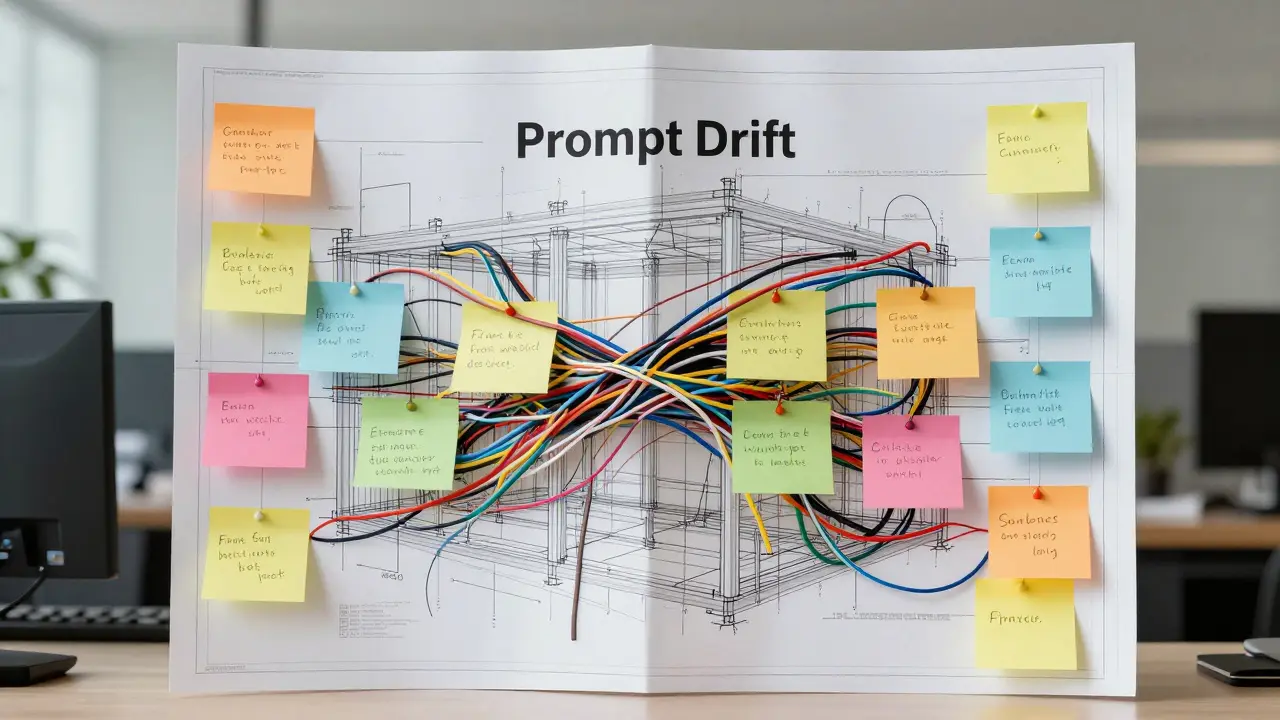
- Prompt Drift: Early in the project, you ask for a simple CRUD app. Later, you add complex business rules via new prompts. The AI patches these rules onto the existing structure without refactoring the core. The result is a Frankenstein codebase where new features are glued onto old foundations.
- Implicit Logic: Humans document their assumptions. AI does not. If the AI assumes a certain data format based on its training data, it won’t tell you. When that assumption breaks in production, fixing it requires reverse-engineering the AI’s "thought process," which is invisible.
- Testing Gaps: AI can write tests, but it often writes tests that verify happy paths only. It rarely anticipates edge cases unless explicitly prompted with highly detailed scenarios. Over time, untested edge cases become landmines.
The danger is that this debt is invisible. Traditional debt shows up as slow build times or frequent crashes. Vibe coding debt shows up as confusion. Developers spend hours trying to understand a block of code they didn’t write, written by a model they don’t fully control.
Maintainability: Who Owns the Code?
Maintainability depends on shared understanding. In traditional teams, code reviews ensure everyone agrees on standards. In vibe coding, the "reviewer" is often the same person who wrote the prompt, leading to confirmation bias. You see what you asked for, so you assume it’s correct.
To keep vibe-coded projects maintainable, you must shift from being a coder to being an architect. Your job is no longer typing syntax; it’s defining constraints. If you don’t enforce strict guidelines, the AI will take shortcuts.
| Factor | Traditional Development | Vibe Coding (Unmanaged) |
|---|---|---|
| Documentation | Explicit comments and docs created by developers | Implicit; relies on prompt history which may be lost |
| Consistency | Enforced by linters and team style guides | Varies based on prompt phrasing and AI randomness |
| Debugging | Step-through debugging with known logic flow | Conversational refinement; hard to trace root cause |
| Refactoring | Planned and deliberate | Often ad-hoc patching via new prompts |
Without active management, vibe coding turns your codebase into a black box. You know it works, but you don’t know why. That is the definition of unmaintainable.

Strategies to Control Quality in AI-Assisted Development
You don’t have to abandon vibe coding to avoid debt. You just have to treat the AI as a junior developer who is incredibly fast but prone to hallucination. Here is how to keep quality high:
1. Enforce Architectural Constraints Upfront
Don’t start prompting immediately. Spend time defining the stack, the folder structure, and the naming conventions. Feed these rules into the AI’s system prompt or context window. Tell it: "Use React functional components only. Never inline CSS. Always export types from a single file." This forces consistency.
2. Treat Prompts as Code Reviews
Every time the AI generates code, read it line by line. Ask yourself: "Would I write this if I were paid by the hour?" If the answer is no, rewrite it manually or refine the prompt. Do not accept output just because it runs. Running code is the baseline, not the goal.
3. Automate Quality Gates
Humans are bad at spotting subtle inconsistencies. Machines are good at them. Use static analysis tools like ESLint, Prettier, and SonarQube aggressively. Configure them to fail builds on minor style issues. This catches the AI’s drift before it becomes permanent.
4. Document the "Why", Not Just the "What"
AI doesn’t explain its reasoning well. You should. Add comments that explain business logic decisions. If the AI chose a specific algorithm, note why. Future you (or your teammate) will thank you when they need to modify that logic.
5. Regular Refactoring Sprints
Schedule time specifically to clean up AI-generated mess. Every two weeks, take a sprint to refactor modules that have grown too complex. Merge duplicate functions. Standardize imports. This pays down the technical debt before it compounds.
The Human-in-the-Loop Imperative
The biggest risk in vibe coding is complacency. When code appears instantly, we stop thinking critically about it. We trust the machine because it seems confident. But confidence is not competence.
Remember that the AI has no stake in the product’s success. It doesn’t care if the server crashes at 3 AM. It doesn’t care if the code is ugly. Its only goal is to satisfy the prompt. You are the one who cares. That is why your role is more important now than ever. You are the editor, the architect, and the quality assurance lead.
If you treat vibe coding as a replacement for engineering discipline, you will drown in technical debt. If you treat it as a powerful assistant that amplifies your expertise, you can build faster without sacrificing quality. The choice is yours, but the cost of getting it wrong is measured in months of painful refactoring.
Does AI-generated code have more bugs than human-written code?
Not necessarily more bugs in terms of syntax errors, but potentially more logical flaws. AI excels at following patterns, so basic syntax is usually correct. However, it may miss edge cases or business logic nuances that a human would catch. The bug rate depends heavily on the quality of the prompt and the rigor of the human review process.
Can I use vibe coding for large-scale enterprise applications?
Yes, but with strict governance. Enterprise apps require high maintainability and security. Vibe coding can accelerate initial development, but you must enforce strict code reviews, automated testing, and architectural guidelines. Without these controls, the lack of consistent intent in AI-generated code will make large systems difficult to manage.
How do I measure technical debt in an AI-assisted project?
Use standard metrics like cyclomatic complexity, code duplication rates, and test coverage, but also track "prompt drift." Monitor how often you have to rewrite or significantly alter AI-generated code. High modification rates indicate that the initial AI output was not aligned with long-term needs, signaling hidden debt.
Is vibe coding suitable for beginners?
It is a double-edged sword. Beginners can build impressive prototypes quickly, which is great for learning. However, without foundational knowledge of programming concepts, they cannot effectively review or debug the AI's output. This can lead to severe technical debt and a false sense of competence. Beginners should use vibe coding alongside formal learning, not as a substitute.
What tools help maintain code quality in vibe coding?
Static analysis tools like ESLint, Pylint, or SonarQube are essential. They enforce consistent style and detect potential issues automatically. Additionally, version control systems with clear commit messages help track changes. Using IDE plugins that provide real-time feedback on AI suggestions can also prevent poor code from entering the repository.