Compliance Controls for Vibe-Coded Systems: SOC 2, ISO 27001, and More
 Jun, 16 2026
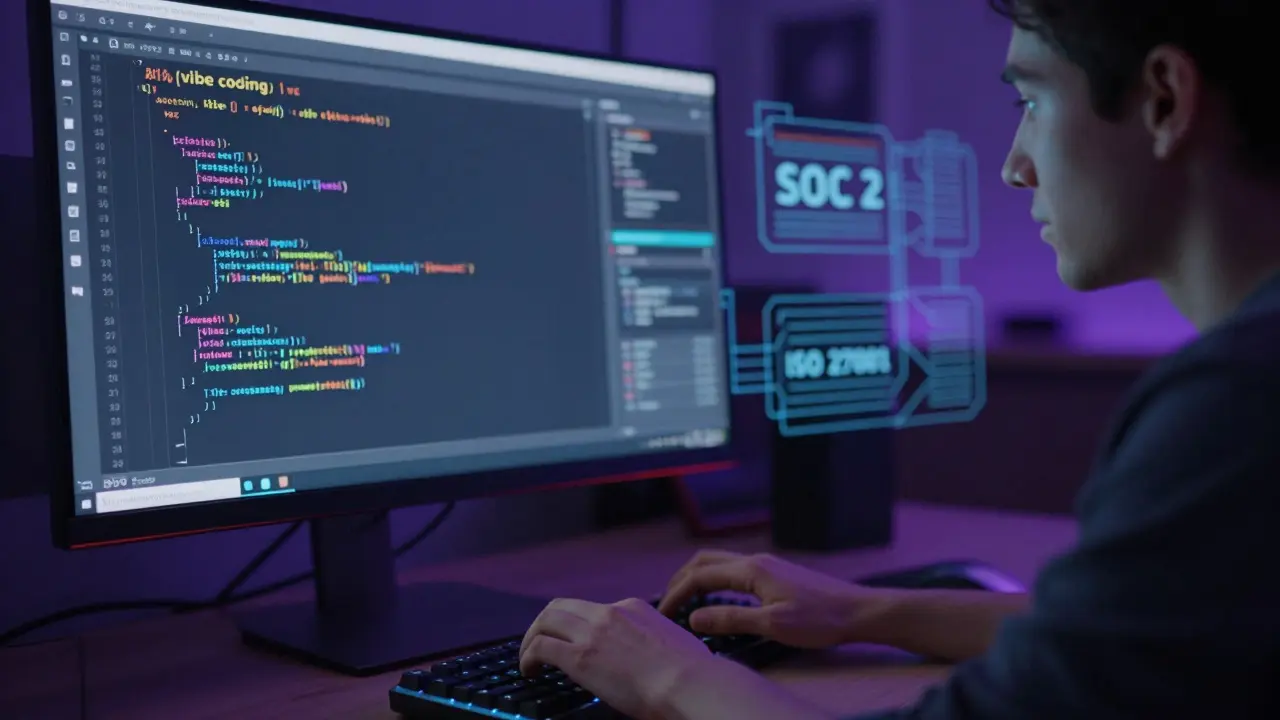
You type a prompt. An AI generates the code. You hit run. It works. Simple, right? If you are building software for a regulated industry, that simplicity is actually your biggest risk. This new workflow, known as vibe coding is AI-assisted software development where natural language prompts generate code through tools like GitHub Copilot and Cursor, has fundamentally broken traditional security models. Frameworks like SOC 2 and ISO 27001 were built for humans writing code line by line. They were not designed for an environment where the "author" of a vulnerability might be a large language model (LLM) responding to a vague instruction.
In 2026, the gap between how we build software and how we audit it is widening. Auditors are asking questions your current CI/CD pipeline cannot answer: Who approved this logic? What prompt generated this function? Is this dependency safe? If you cannot trace the lineage of AI-generated code from prompt to production, you are likely failing your next compliance review. The goal here is not to stop using AI-it is to make sure your use of AI doesn't cost you your certification or your customers' trust.
The Core Problem: Audit Trails in an AI World
Traditional compliance relies on version control systems like Git. In a standard workflow, a human writes code, commits it with a message, and a peer reviews it. The chain of custody is clear. In vibe coding, that chain snaps. A developer might paste a complex snippet generated by an IDE plugin directly into their file without a meaningful commit message, or worse, without realizing the AI introduced a subtle logic error that passes unit tests but fails in production.
This creates a massive blind spot for SOC 2 Type 2 audits which examine five Trust Service Criteria including Security, Availability, Processing Integrity, Confidentiality, and Privacy. Specifically, the "Processing Integrity" criterion is under fire. According to Superblocks' March 2025 Enterprise Vibe Coding Playbook, organizations relying on standard frameworks saw 43% more audit findings in development lifecycle controls compared to those with specialized vibe coding controls. Why? Because auditors can no longer verify that the code executing in production matches the intent of the business requirements when the translation layer is an opaque AI model.
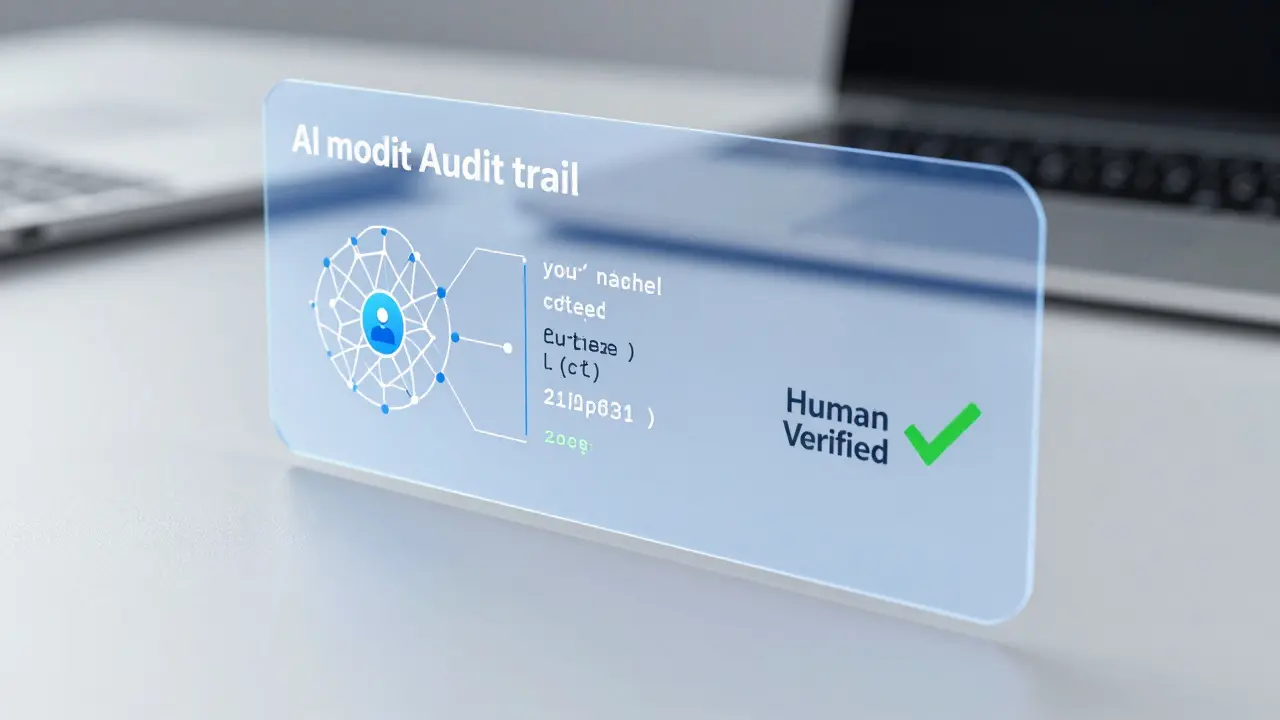
Knostic's January 2025 whitepaper highlights that traditional approaches offer only "manual reporting; limited traceability for ISO 27001 or SOC 2 audits." To fix this, you need centralized audit logs that track "who, what, when, and why" for every AI-generated decision. This means capturing the prompt, the AI model version, the generated code snippet, and the final acceptance by the human developer. Without this metadata, you don't have an audit trail; you have a guess.
SOC 2 vs. ISO 27001: Adapting the Standards
Both SOC 2 and ISO 27001 require rigorous access controls, change management, and vulnerability monitoring. However, vibe coding forces you to interpret these requirements differently. Let's look at how the controls shift.
| Control Area | Traditional SDLC Approach | Vibe Coding Requirement |
|---|---|---|
| Change Management | Git commits with human-authored messages. | Prompt-to-code lineage tracking; AI model versioning. |
| Access Control | Role-based access to repositories (RBAC). | Attribute-based access control (ABAC) for AI tools; restricting which models can generate sensitive code. |
| Vulnerability Scanning | SAST/DAST scans at build/deploy time. | Real-time IDE-level scanning; blocking vulnerable dependencies before they enter the codebase. |
| Human Oversight | Peer code reviews. | Mandatory "human-in-the-loop" verification for all AI-generated artifacts. |
| Audit Evidence | Logs of user actions and system events. | Automated evidence mapping linking prompts to specific SOC 2/ISO controls. |
For ISO 27001, the focus is often on the Information Security Management System (ISMS). You must demonstrate that risks are identified and treated. In a vibe-coded environment, the risk profile changes. You are now dealing with supply chain risks from AI training data and potential intellectual property leakage if your proprietary code is used to train public models. Legit Security's 2024 framework specifies mandatory secrets management across the IDE, repository, and pipeline. Using vault-integrated systems like HashiCorp Vault or AWS Secrets Manager is no longer optional; it is a baseline requirement to ensure 100% credential scanning in development environments.
Technical Controls: Shifting Left to the Prompt
The most effective way to handle compliance in vibe coding is to move controls earlier in the process. Traditionally, security checks happen at the commit or build stage. By then, the damage is often done. ReversingLabs' January 2025 analysis showed a 78% reduction in high-risk vulnerabilities when controls activate during code generation rather than post-commit.
This requires integrating security tools directly into your Integrated Development Environment (IDE). Tools like Knostic Kirin (version 2.3) implement dependency scanning at the IDE level with real-time checks against the National Vulnerability Database (NVD). Their December 2024 case study with a Fortune 500 financial institution reported blocking 97.3% of vulnerable packages before integration. This is critical because AI models often suggest popular libraries that may have known CVEs (Common Vulnerabilities and Exposures).
Here is what a robust technical stack looks like for compliant vibe coding:
- IDE Plugins: Compatible with VS Code (v1.85+) and JetBrains IDEs (2023.3+). These plugins must enforce policy rules locally, preventing insecure code from being accepted.
- Secrets Detection: Real-time scanning for API keys, tokens, and credentials within AI-generated snippets. False positives are common, so tuning is essential.
- Runtime Instrumentation: Contrast Security's Application Vulnerability Monitoring (AVM), updated in March 2025, provides runtime instrumentation that identifies vulnerabilities in AI-generated code with 89% accuracy, compared to 62% for traditional Static Application Security Testing (SAST) tools.
- CI/CD Integration: GitHub Actions, GitLab CI, or Jenkins pipelines must include specific API endpoints for policy enforcement, ensuring that any code merging into main branches has passed both static and dynamic checks.
A critical weakness many teams miss is prompt engineering risks. TechTarget's September 2024 analysis found that 68% of vibe coding compliance failures originated from poorly constrained prompts. If a developer asks an AI to "write a quick login script," the AI might generate code that lacks proper input validation. Your controls must include prompt validation templates that reduce false positives and guide developers toward secure patterns. Superblocks' case studies show these templates can reduce false positives by 63%.
Implementation Strategy: Phased Rollout
Trying to lock down your entire organization overnight will kill productivity. Black Duck's November 2024 survey of 250 engineering teams found that strict controls created 37% longer development cycles in rapid prototyping environments. Instead, adopt a phased approach. Legit Security's April 2025 guide recommends four phases totaling 10-18 weeks for full deployment.
- Phase 1: Package Governance (2-4 weeks): Establish allowlists and blocklists for third-party libraries. Ensure your artifact registry rejects known vulnerable components.
- Phase 2: Plugin Control (1-3 weeks): Deploy IDE plugins that scan for secrets and basic syntax errors. Start with non-blocking alerts to let developers adjust.
- Phase 3: In-IDE Guardrails (3-5 weeks): Implement attribute-based access control (ABAC) policies. For example, restrict junior developers from using AI to generate code for payment processing modules without senior approval.
- Phase 4: Complete Audit Automation (4-6 weeks): Integrate with your SIEM (Security Information and Event Management) system. Automate the collection of evidence for SOC 2 and ISO 27001 audits. Knostic documented a 92% faster SOC 2 evidence collection time with this setup.
You will also need to address staffing. Black Duck documents that teams typically need 2.3 additional Full-Time Equivalents (FTEs) for specialized compliance roles. These aren't just security engineers; they need skills in security policy configuration, prompt engineering expertise, and IAM (Identity and Access Management) integration.

The Human Element: Accountability and Training
No amount of automation replaces human accountability. Dr. Emily Chen, lead for the NIST Secure Software Development Framework, stated in a January 2025 report that "AI-generated code requires enhanced verification processes that align with NIST SP 800-218 but extend beyond traditional human-written code reviews." This means developers must treat AI output as untrusted input until verified.
Contrast Security's CTO, David Harvey, argues that "the most critical element is establishing a framework of developer accountability and best practices." This involves mandatory human-in-the-loop workflows. Every piece of AI-generated code should require a conscious acceptance action by the developer, logged with a timestamp and user ID.
Training is equally vital. Developers often don't understand the security implications of their prompts. Black Duck's security awareness framework emphasizes training programs that address "AI limitations and associated risks." Common failure cases, like the healthcare startup that failed HIPAA compliance due to AI-generated code accidentally logging Protected Health Information (PHI), stem from a lack of understanding. The CTO of that startup noted auditors couldn't verify "whether the developer or the AI introduced the vulnerability." Proper training ensures developers know to ask for secure, validated code patterns explicitly.
Market Trends and Future Outlook
The landscape is moving fast. Gartner forecasts the AI development security market will reach $4.2B by 2027, with compliance controls representing 68% of this segment. Adoption varies by industry; financial services leads at 73% adoption of specialized controls, while manufacturing lags at 29%. Regulatory pressure is intensifying. NIST's January 2025 update to SP 800-218 explicitly addresses AI-generated code requirements, demanding "traceability from prompt to production code." Additionally, the EU's AI Act, effective February 2026, requires "comprehensive documentation of AI development processes."
By 2026, Gartner predicts 70% of enterprises will require specialized compliance controls for AI-assisted development, up from just 15% in 2024. The competitive landscape includes specialized players like Knostic (18% market share), Contrast Security (15%), and ReversingLabs (12%). However, traditional AppSec vendors are retrofitting solutions. Look for integrated compliance-as-code frameworks where security policies automatically translate to IDE guardrails. Forrester predicted in March 2025 that "by 2027, 85% of vibe coding compliance will be enforced through automated policy engines rather than manual reviews."
Long-term viability depends on adaptation. As AI agents become more autonomous, current frameworks may become obsolete. Black Duck's CTO warned that continuous adaptation is necessary. Your compliance strategy must be dynamic, evolving with the capabilities of the AI tools you use.
What is vibe coding and why does it complicate SOC 2 compliance?
Vibe coding is AI-assisted development where natural language prompts generate code. It complicates SOC 2 compliance because traditional audit trails rely on human-authored commits. With AI, the "author" is ambiguous, making it difficult to prove who is responsible for code quality, security vulnerabilities, and adherence to processing integrity criteria without specialized tracking tools.
How do I create an audit trail for AI-generated code?
You need centralized logging that captures the prompt, the AI model version, the generated code snippet, and the human developer's acceptance action. Tools like Knostic Kirin automate this by integrating with IDEs and CI/CD pipelines, creating a verifiable chain of custody from prompt to production.
Are traditional SAST tools enough for vibe-coded systems?
No. Traditional Static Application Security Testing (SAST) tools often miss context-specific vulnerabilities in AI-generated code. Runtime instrumentation and real-time IDE-level scanning are more effective. Contrast Security's benchmarks show runtime tools achieve 89% accuracy versus 62% for traditional SAST in identifying AI-related vulnerabilities.
What role does human oversight play in AI compliance?
Human oversight is non-negotiable. Auditors require proof that a human reviewed and accepted AI-generated code. This involves mandatory "human-in-the-loop" workflows where developers must consciously approve code snippets, ensuring accountability and reducing the risk of undetected logical errors or security flaws.
How long does it take to implement compliance controls for vibe coding?
A phased rollout typically takes 10-18 weeks. Phase 1 (Package Governance) takes 2-4 weeks, Phase 2 (Plugin Control) 1-3 weeks, Phase 3 (In-IDE Guardrails) 3-5 weeks, and Phase 4 (Audit Automation) 4-6 weeks. Rushing this process can hinder developer productivity and lead to control fatigue.
Robert Barakat
June 16, 2026 AT 10:48The essence of coding has always been about intent, not just syntax. When we outsource the 'how' to an algorithm, we risk losing the 'why'. It is a philosophical shift that compliance frameworks are struggling to catch up with.
Michael Richards
June 17, 2026 AT 04:47This entire industry is running on fumes and hope because nobody wants to admit that vibe coding is fundamentally broken for enterprise use. You cannot audit a black box. If you are relying on AI to write your security controls, you are already failing SOC 2 before you even start. Stop pretending that prompt engineering is a substitute for rigorous software engineering discipline. It is lazy, it is reckless, and it will get your company sued when the inevitable breach happens. Wake up.
Laura Davis
June 18, 2026 AT 00:24I hear you Michael but let's keep it real here because panic doesn't help anyone.
We need to protect our teams from burnout while also keeping us safe from these massive regulatory pitfalls. The key is balance. We can use these tools if we set strict boundaries. Think of it like driving a car with autopilot; you still need to keep your hands on the wheel and eyes on the road. It is not about banning the tech, it is about respecting the limits. Let's focus on building guardrails that empower developers rather than crushing their spirits. We can do this together without losing our minds or our certifications.
Lisa Nally
June 18, 2026 AT 08:33Oh, please. Laura, you are dangerously naive if you think 'balance' solves the cryptographic impossibility of verifying LLM output lineage.
Let us be precise: the epistemological crisis in vibe coding is not a matter of 'keeping it real.' It is a fundamental breakdown in the chain of custody. When an LLM hallucinates a dependency that looks valid but contains a supply-chain attack vector, your 'hands on the wheel' metaphor collapses into irrelevance. We are talking about deterministic verification vs probabilistic generation. These are mutually exclusive paradigms.
You cannot 'respect the limits' of a model that has no concept of limits. The ISO 27001 requirement for traceability is binary. Either you have the metadata linking the prompt to the code artifact with immutable timestamps, or you do not. There is no middle ground where 'empowerment' satisfies an auditor. The drama of claiming otherwise is intellectually dishonest. Read the NIST SP 800-218 update again. It does not care about your feelings. It cares about evidence. And right now, most vibe-coded systems produce zero admissible evidence. This is not a debate; it is a technical fact.
Edward Gilbreath
June 19, 2026 AT 02:20they all want to sell you more tools knostic contrast legit security its all a scam to make money off your fear the ai is fine its the auditors who are the problem they just want to control everything nothing is really secure anyway so why bother