How to Build Approval Workflows for AI Changes in Regulated Industries
 Jul, 21 2026
Imagine an AI agent that automatically updates your credit scoring model or adjusts a clinical dosage recommendation. It’s fast, efficient, and likely more accurate than a tired human analyst. But what happens if it gets it wrong? In regulated industries like finance, healthcare, and manufacturing, the answer is rarely just "fix it later." The answer involves lawsuits, massive fines, and potential shutdowns.
This is why approval workflows for AI-generated changes are no longer optional best practices-they are survival mechanisms. As of mid-2026, regulators are shifting from point-in-time audits to continuous lifecycle oversight. If you cannot prove who approved an AI change, when it was approved, and why, you are already non-compliant with frameworks like the EU AI Act and US supervisory guidance such as SR 11-7.
The Shift from Pilot to Production Governance
For years, companies treated AI as a sandbox experiment. You ran a pilot, got some cool results, and maybe deployed it in a low-stakes area. That era is over. Between 2024 and 2026, organizations moved from isolated pilots to embedded, production-grade AI in core processes. This shift brought a new reality: AI outputs-whether code, configuration updates, or decision recommendations-are now considered regulated assets.
The primary goal of these workflows is to reduce compliance risk while keeping efficiency gains. You don't want to slow down innovation, but you do need to ensure that every AI-generated change meets strict standards for fairness, explainability, and auditability. Think of it as building a safety net that catches errors before they hit the customer or the regulator's desk.
Core Components of a Robust Approval Workflow
A robust approval workflow isn't just a digital signature at the end of a process. It is a multi-stage pipeline that combines automated checks with human review. Here is how top-tier regulated enterprises structure their pipelines:
- Risk Classification: Not all AI changes are equal. A scheduling bot needs lighter oversight than a loan denial engine. Classify use cases into tiers based on impact.
- Data Governance Checks: Ensure that prompts and outputs do not leak sensitive data like Protected Health Information (PHI) or financial records.
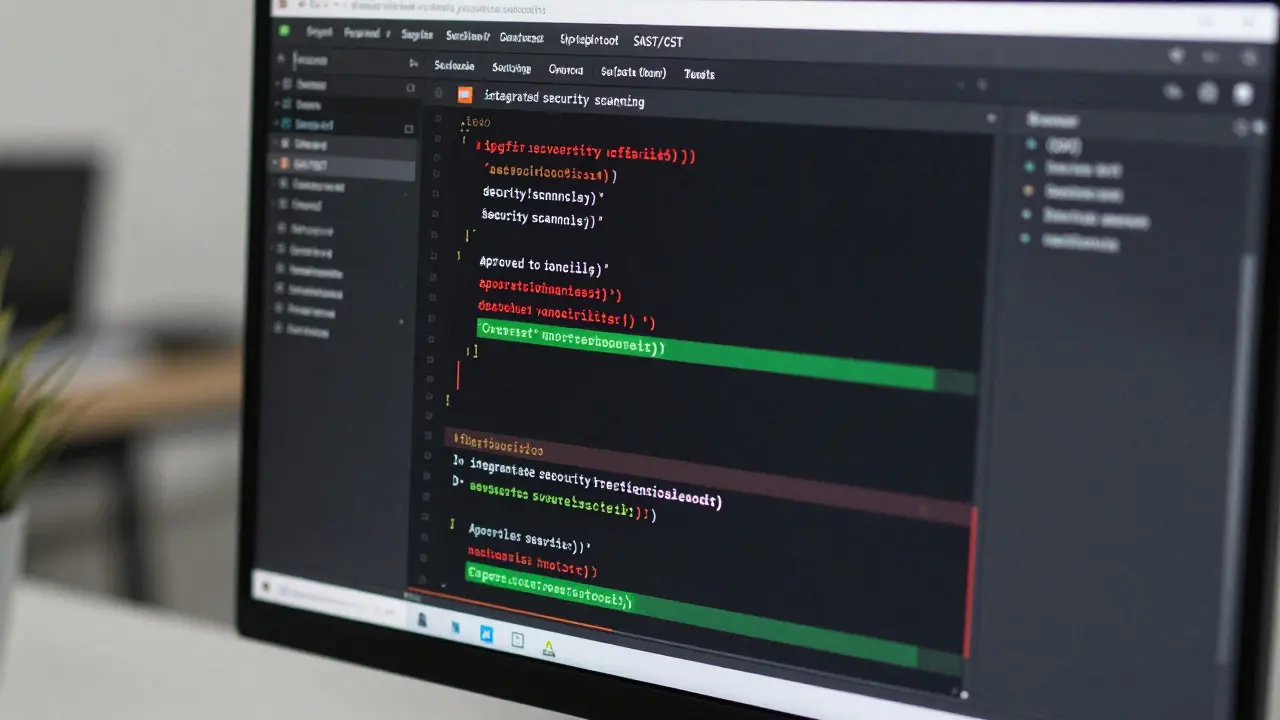
- Automated Security Scanning: Use tools like Static Application Security Testing (SAST) to catch vulnerabilities before humans see the code.
- Human Peer Review: Focus human effort on business logic and regulatory alignment, not syntax errors.
- Immutable CI/CD Policies: Block merges automatically if compliance checks fail. Make the system enforce the rules.
This structure ensures that approvals become explicit regulatory artifacts rather than informal decisions. When an auditor asks, "Who approved this change?" you can show them a documented trail, not just a verbal assurance.
Regulatory Drivers: Why You Need This Now
The pressure isn't coming from inside the house; it's coming from regulators worldwide. Let's look at the specific frameworks driving this change.
In the European Union, the EU AI Act defines obligations for high-risk AI systems. Articles 9 and 17 explicitly require risk management procedures and quality management systems. These aren't vague suggestions; they are legal requirements that demand demonstrable evidence through formal approval workflows. By August 2026, firms lacking continuous review cycles face significant enforcement risk.
In the United States, the Federal Reserve's SR 11-7 guidance is being extended to cover Large Language Models (LLMs) and agents. This means machine learning models must follow the same validation, documentation, and change-controls as traditional statistical models. Additionally, fair-lending rules require clear decision lineage for any credit-adjacent AI. If an AI denies a loan, you must be able to trace exactly why, which version of the model made the decision, and who approved its deployment.
Operational resilience is another key driver. Frameworks like DORA (Digital Operational Resilience Act) apply to AI dependencies. Your approval workflow must ensure that an AI change doesn't accidentally break your failover systems or routing protocols.
Building the Technical Architecture
How do you actually build this? You start with isolation. AI coding assistants should run in locked-down development environments without direct access to production data. This prevents data leakage right at the source.
Next, implement local pre-commit hooks. These scripts run on the developer's workstation before code even leaves their machine. They catch obvious errors and prevent sensitive information from entering prompts or code comments. It's the first line of defense.
Then, move to automated scanning. Configure SAST, Dynamic Application Security Testing (DAST), and Software Composition Analysis (SCA) tools with rule sets tailored to your industry. For example, a financial system might prioritize PCI DSS rules, while a healthcare app focuses on HIPAA compliance. These tools generate metrics-like vulnerability counts per release-that become part of your audit trail.
Finally, enforce immutable policies in your CI/CD pipeline. Tools like Azure DevOps can be configured to block merging code that fails compliance checks. This turns your deployment system into a technical enforcement mechanism for governance. No one can bypass the rules because the system physically won't let them.
| Stage | Primary Goal | Key Tools/Methods | Regulatory Relevance |
|---|---|---|---|
| Local Pre-commit | Catch errors early, prevent data leaks | Git hooks, linting scripts | Data privacy (GDPR/HIPAA) |
| Automated Scanning | Identify security vulnerabilities | SAST, DAST, SCA | Operational resilience (DORA) |
| Human Peer Review | Validate business logic and fairness | Checklists, expert judgment | Fair lending, transparency |
| CI/CD Enforcement | Block non-compliant deployments | Azure DevOps, Jenkins policies | Change management controls |

Governance Best Practices for Humans
Technology alone isn't enough. You need strong governance practices. Start with explicit risk classification. Categorize AI use cases into tiers. High-impact decisions, like clinical support or credit decisioning, need stringent human checkpoints. Lower-risk tasks, like document search, can rely on sampled reviews.
Transparency is non-negotiable. Regulators reject "black box" systems. Your approval workflow must enforce documentation requirements. Every approved AI decision needs decision lineage: why was it made, which features mattered, and which model version produced it? This documentation should be attached to the change request, not created after the fact.
Continuous monitoring is the fourth pillar. Model behavior drifts over time. Your workflow should include feedback loops where monitored metrics trigger re-validation. If an AI agent starts making unusual recommendations, the system should escalate the next set of changes for stricter manual approval.
Finally, define clear human-in-the-loop boundaries. Know exactly when AI advises versus when humans approve. Log every checkpoint. This makes human oversight an integral part of the workflow, not a vague principle.
Industry-Specific Considerations
Different industries face different pressures, but the core principles remain similar.
Financial Services: Banks and insurers track updates from dozens of regulators. AI agents might monitor regulatory changes in real-time, but any suggested policy updates must pass through documented approvals meeting SR 11-7 standards. Fair-lending lineage is critical here.
Healthcare and Pharma: Automated extraction of regulatory requirements must flow into validated Quality Management Systems (QMS). Human review by clinical governance teams is essential before changes affect Standard Operating Procedures (SOPs).
Manufacturing: AI predicting maintenance needs or safety risks must have its recommendations approved by engineering and safety teams. These insights should live inside validated systems like Manufacturing Execution Systems (MES), not in uncontrolled spreadsheets.
Energy and Utilities: Sustainability reporting driven by AI forecasts needs validation before public disclosure. Environmental regulations require accuracy and accountability in these numbers.

Common Pitfalls to Avoid
Don't treat AI-generated verification flows like draft text. They are production controls. Blending generation and approval in one step undermines separation-of-duties expectations. Keep the approval step separate from the generation step.
Avoid jumping straight into high-risk areas. Start with scoped pilots in lower-risk, high-volume processes like document review. Build evidence of effective approval workflows there before moving to transaction monitoring or credit decisioning.
Don't neglect upskilling. Quality, compliance, and operations leaders need to understand AI behavior and risks. If they don't, they will either fear the technology or blindly trust it. Both are dangerous. Equip them with the knowledge to participate in approval workflows with informed judgment.
Future Outlook: Continuous Lifecycle Oversight
By late 2026, supervisors have largely abandoned the idea that static, point-in-time model validations are sufficient. The future is continuous lifecycle oversight. Regulators expect to see consistent approval histories and review cycles for AI-generated changes.
The trajectory is toward AI-enabled governance. AI will assist in monitoring and analysis, but humans will remain central in approving high-risk changes. Automation will handle more low-risk approvals as evidence accumulates of safe performance. However, the tension between rapid deployment and governance rigor will persist. Organizations that invest in mature approval workflows combining technical enforcement with organizational governance will be better positioned to scale AI under increasing scrutiny.
What is an approval workflow for AI-generated changes?
It is a structured, multi-stage process that determines how outputs from AI systems-such as code, configurations, or decisions-are reviewed, approved, and promoted into production. It combines automated security checks with human oversight to ensure compliance with regulatory standards like the EU AI Act and SR 11-7.
Why are approval workflows critical in regulated environments?
They reduce compliance risk and enforcement exposure. Regulators require evidence of risk management, quality control, and auditability. Without formal workflows, firms face penalties for lack of transparency, unfair decisions, or operational failures caused by unchecked AI changes.
How does the EU AI Act impact AI approval workflows?
The EU AI Act mandates risk management procedures (Article 9) and quality management systems (Article 17) for high-risk AI systems. Approval workflows provide the necessary documentation and evidence to demonstrate compliance with these articles, especially regarding human oversight and transparency.
What is the role of human-in-the-loop in these workflows?
Humans provide final oversight for high-stakes decisions. While automation handles routine checks, human reviewers validate business logic, fairness, and regulatory alignment. Their approvals are logged to create an audit trail, ensuring accountability and preventing "black box" decision-making.
Can AI approve its own changes?
Generally, no. Best practices dictate separating generation from approval to maintain separation-of-duties. AI can suggest changes and run preliminary checks, but a distinct human or independent automated gate must formally approve changes affecting regulated evidence or high-risk outcomes.
Edward Gilbreath
July 23, 2026 AT 03:10its all a scam to sell more consulting hours
the regulators dont know shit about code
just keep the black box running and pray
Lisa Nally
July 24, 2026 AT 01:39Oh, please. The notion that one can simply 'pray' their way through SR 11-7 compliance is not just naive, it is professionally suicidal.
We are talking about Large Language Models operating within high-stakes financial ecosystems where the margin for error is non-existent. The integration of Static Application Security Testing (SAST) and Dynamic Application Security Testing (DAST) into the CI/CD pipeline is not merely a suggestion; it is an absolute imperative for maintaining operational resilience under DORA guidelines.
Furthermore, the distinction between low-risk document search and high-risk credit decisioning cannot be overstated. One requires sampled reviews, while the other demands rigorous human-in-the-loop validation with explicit decision lineage. To treat them as equivalent is to invite catastrophic regulatory enforcement actions.
Laura Davis
July 25, 2026 AT 13:22Look, I get that Edward thinks he's being clever by dismissing the whole thing, but let's keep this respectful.
Lisa has a point about the stakes. If you're in healthcare or finance, you can't just wing it. We need boundaries here-AI suggests, humans approve. That's the line.
I've seen teams try to skip the peer review step because they were 'too busy,' and guess what? They got burned when the model started hallucinating dosage recommendations. It’s not about slowing down innovation; it’s about keeping people safe. Let’s motivate each other to build these safety nets properly rather than tearing them down.
Edward Nigma
July 25, 2026 AT 22:35actually you guys are missing the forest for the trees
the real issue is that azure devops is just another vendor lockin trap
why trust microsoft when you can use open source tools and verify everything yourself
also who says we need human approval at all if the ai is smart enough
maybe the problem is we are too slow not the ai
Francis Laquerre
July 27, 2026 AT 22:14It is fascinating how quickly the conversation shifts from technical governance to ideological rebellion against established frameworks.
In my experience working across different cultural contexts in engineering, the universal truth remains: accountability cannot be automated away entirely. When an AI agent adjusts a clinical dosage or denies a loan, there must be a human face behind the decision. This is not about vendor lock-in; it is about the fundamental social contract between technology and society.
The dramatic tension you perceive as 'slowness' is actually the necessary friction of democratic oversight. Without it, we risk creating systems that are efficient but utterly alienating to the very people they serve.
kimberly de Bruin
July 28, 2026 AT 23:56we think we control the machine but the machine controls the workflow
who approves the approver
is the human just a rubber stamp in a digital theater of consent
silence is the only true audit trail
michael rome
July 30, 2026 AT 00:34While Kimberly raises profound philosophical questions about agency, we must remain grounded in the practical realities of implementation.
As professionals, our duty is to ensure that every checkpoint is logged and every decision is traceable. This does not diminish human value; it elevates it. By defining clear boundaries where AI advises and humans approve, we create a system of checks and balances that protects both the organization and the end-user.
Let us approach this with empathy for the complexity of the task, recognizing that rigorous governance is an act of care, not just compliance.
Saranya M.L.
July 30, 2026 AT 00:55It is quite amusing to see Western commentators struggling with basic compliance concepts that have been standard practice in Indian IT services for decades.
The EU AI Act and SR 11-7 are not new ideas; they are codifications of best practices already employed by top-tier firms in Bangalore and Hyderabad. The emphasis on immutable CI/CD policies and pre-commit hooks is elementary for anyone who has managed large-scale enterprise deployments.
Perhaps instead of debating whether to comply, we should focus on implementing these robust architectures correctly. After all, global standards exist for a reason-to ensure that quality and fairness are maintained regardless of geography.
om gman
July 30, 2026 AT 17:36oh wow such sophistication saranya
as if indian outsourcing models are the pinnacle of ethical ai governance
please spare us the nationalist pride parade
we all know most of those 'best practices' are just checkbox exercises for american clients
and dont get me started on the jargon dumping
it reeks of insecurity
Andrea Alonzo
August 1, 2026 AT 14:38I want to gently steer this back to the core message of the post, which is really about building sustainable and inclusive workflows that protect everyone involved.
Whether you are in Silicon Valley, Mumbai, or anywhere else, the goal is the same: ensuring that AI serves humanity without causing harm. It is wonderful to see such passionate debate, but let us remember that collaboration is key. We need to upskill our teams, including quality and compliance leaders, so they feel empowered to participate in these approval processes with informed judgment.
By fostering an environment where diverse perspectives are valued and where technical enforcement meets organizational governance, we can create systems that are not only compliant but also truly beneficial to society. Let us support each other in this journey toward responsible AI adoption.