Archive: 2026/02

Domain-Specialized LLMs: How Code, Math, and Medicine Models Outperform General AI
Domain-specialized LLMs like CodeLlama, Med-PaLM 2, and MathGLM outperform general AI in code, math, and medicine with higher accuracy, lower costs, and real-world impact. Here's how they work-and why they're changing the game.
Read More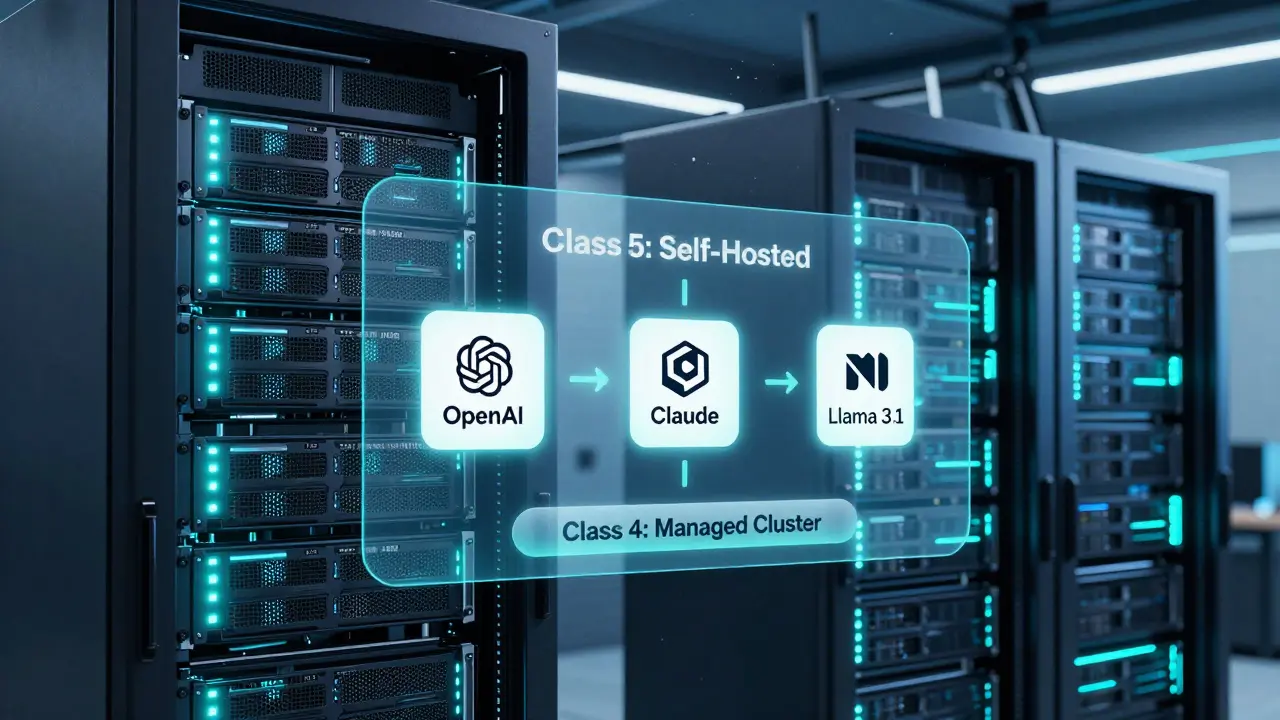
Migrating Between LLM Providers: How to Avoid Vendor Lock-In in 2026
In 2026, avoiding LLM vendor lock-in means building portable AI systems. Learn how to use open-source models, model-agnostic proxies, and self-hosted infrastructure to cut costs, reduce latency, and stay compliant.
Read More
Replit for Vibe Coding: Cloud Dev, Agents, and One-Click Deploys
Replit transforms coding into a seamless, AI-powered experience where you build, collaborate, and deploy apps in minutes-no setup required. Perfect for vibe coding, startups, and educators.
Read More
Marketing the Wins: Telling the Vibe Coding Success Story Internally
Vibe coding lets non-technical teams build real software in weeks-not months-using AI. Learn how internal stories of real wins-from restaurants to marketing teams-are changing how companies think about innovation, speed, and ownership.
Read More
Fixing Insecure AI Patterns: Sanitization, Encoding, and Least Privilege
AI security isn't about fancy tools-it's about three basics: sanitizing inputs, encoding outputs, and limiting access. Without them, even the smartest models can leak data, inject code, or open backdoors. Here's how to fix it.
Read More
Model Distillation for Generative AI: Smaller Models with Big Capabilities
Model distillation lets small AI models match the performance of massive ones by learning from their reasoning patterns. Learn how it cuts costs, speeds up responses, and powers real-world AI applications in 2026.
Read More
Multi-Task Fine-Tuning for Large Language Models: One Model, Many Skills
Multi-task fine-tuning lets one language model handle many tasks at once, boosting performance and cutting costs. Learn how it works, why it outperforms single-task methods, and how companies are using it to build smarter AI.
Read More
Structured Output Generation in Generative AI: How Schemas Stop Hallucinations in Production
Structured output generation uses schemas to force generative AI to return clean, predictable data instead of unreliable text. This eliminates parsing errors, reduces retries, and makes AI usable in production systems - without requiring perfect model accuracy.
Read More
Efficient Sharding and Data Loading for Petabyte-Scale LLM Datasets
Efficient sharding and data loading are essential for training petabyte-scale LLMs. Learn how sharded data parallelism, distributed storage, and smart data loaders prevent GPU idling and enable scalable model training without requiring massive hardware.
Read More
Education and Generative AI: How AI Is Reshaping Curriculum, Assessment, and Tutoring
Generative AI is transforming education by personalizing curriculum design, revolutionizing assessment, and providing 24/7 tutoring. With 86% of schools adopting these tools by 2026, learning is becoming adaptive, efficient, and student-centered.
Read More
Fine-Tuned Models for Niche Stacks: When Specialization Beats General LLMs
Fine-tuned models beat general LLMs in niche tasks like legal, medical, and financial work. They’re more accurate, less prone to hallucinations, and cost less to run-when you have the right data. Here’s how to know if it’s right for you.
Read More
Runtime Protections for Vibe-Coded Services: WAFs, RASP, and Rate Limits
Vibe-coded apps built with AI tools are riddled with hidden security flaws. WAFs, RASP, and rate limiting are the three essential protections that stop attacks before they breach your system.
Read More- 1
- 2