Archive: 2026/02 - Page 2
Future Trajectories and Emerging Trends in AI-Assisted Development in 2026
By 2026, AI-assisted development has moved from experimental to essential. Learn how specialized models, edge AI, and autonomous agents are reshaping software teams-and what still doesn’t work yet.
Read More
Ethical Guidelines for Democratized Vibe Coding at Scale
Vibe coding lets anyone build apps with natural language - but without ethical rules, it risks security, legal trouble, and eroded skills. Here are five proven guidelines to scale it responsibly.
Read More
Enterprise Q&A with LLMs: Transforming Internal Knowledge Management
LLM-powered enterprise Q&A systems turn internal documents into instant answers. They slash retrieval time from hours to seconds, cut help desk calls, and handle complex queries. But challenges like inaccuracies and setup costs remain. Learn how companies implement this tech and what to watch for.
Read More
How AI Generated 41% of Global Code in 2024: Drivers and Implications
In 2024, AI-generated code reached 41% of all global code output. This article explains the key drivers behind this surge, including tools like GitHub Copilot, productivity gains, security risks, and expert insights on what's next for AI in software development.
Read More
From Markov Models to Transformers: A Technical History of Generative AI
This article traces the technical evolution of generative AI from early probabilistic models like Markov chains to modern transformer architectures. Learn how breakthroughs in neural networks, GANs, and attention mechanisms shaped today's AI capabilities-and the challenges still ahead.
Read More
Chain-of-Thought in Vibe Coding: Why Explanations Before Code Make You a Better Developer
Chain-of-thought prompting forces AI coding assistants to explain their logic before generating code, reducing errors and building real understanding. Learn how this simple technique transforms how developers work with AI.
Read More
Retrospectives for Vibe Coding: How to Learn from AI Output Failures
Learn how to run effective retrospectives for Vibe Coding to turn AI code failures into lasting improvements. Discover the 7-part template, real team examples, and why this is the new standard in AI-assisted development.
Read More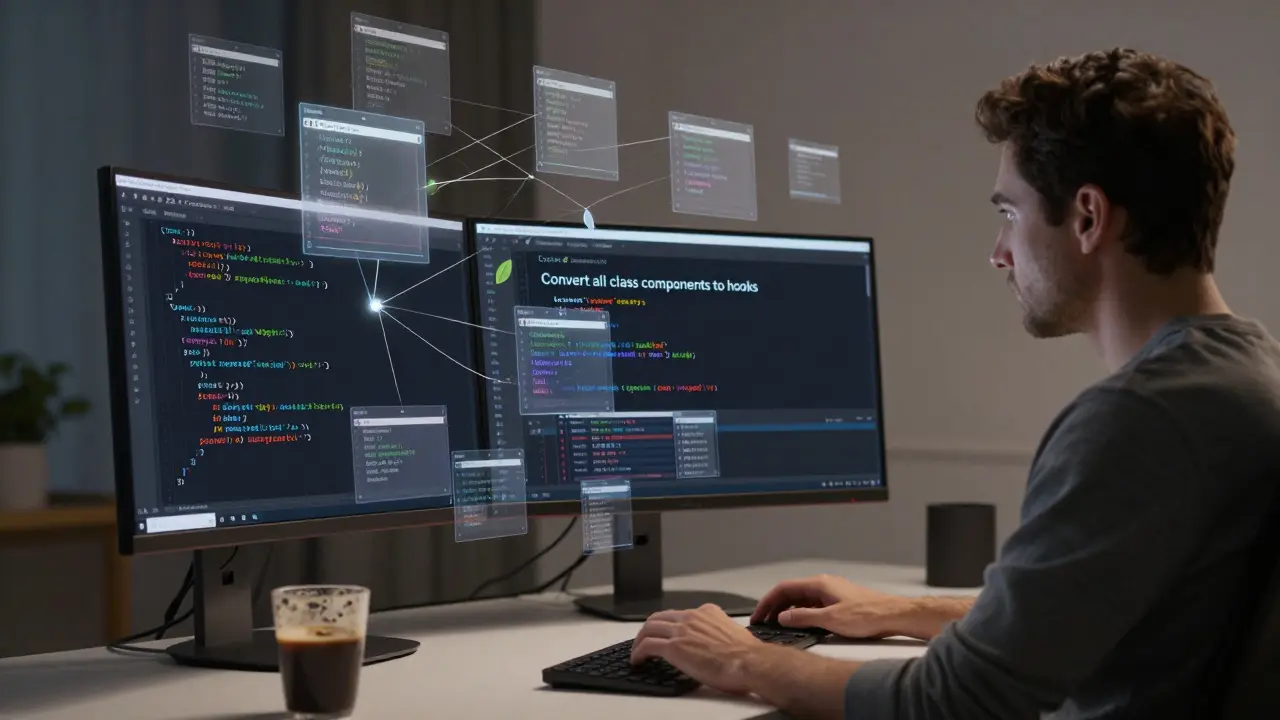
Using Cursor for Multi-File AI Changes in Large Codebases
Cursor 2.0 enables AI-powered multi-file changes in large codebases using a multi-agent system and Composer model. Learn how it refactors code across dozens of files, its limitations, and how it compares to alternatives like GitHub Copilot and Aider.
Read More- 1
- 2