Leap Nonprofit AI Hub - Page 3

Self-Ask and Decomposition Prompts for Complex LLM Questions
Self-Ask and decomposition prompting improve LLM accuracy on complex questions by breaking them into visible, verifiable steps. Used in legal, medical, and financial AI, they boost accuracy by up to 14% over standard methods - but require careful implementation.
Read More
Calibration and Outlier Handling in Quantized LLMs: How to Preserve Accuracy at 4-Bit Precision
Learn how calibration and outlier handling preserve accuracy in 4-bit quantized LLMs. Discover which techniques-AWQ, SmoothQuant, GPTQ-deliver real-world performance and avoid the pitfalls that cause 50% accuracy drops.
Read More
Data Minimization Strategies for Generative AI: Collect Less, Protect More
Learn how collecting less data makes generative AI more secure, compliant, and effective. Discover practical strategies like synthetic data, differential privacy, and storage limits to protect privacy without sacrificing performance.
Read More
Third-Party Risk in Generative AI: How to Assess Vendors and Share Responsibility
Third-party generative AI tools introduce hidden risks that traditional vendor assessments can't catch. Learn how to demand proof, not promises, and share responsibility with vendors to avoid compliance failures and data breaches.
Read More
Why Vibe Coding Is Democratizing Software Creation for New Builders
Vibe coding lets anyone create functional software by describing ideas in plain language, not writing code. AI generates, refines, and improves apps in seconds - democratizing creation for non-developers, artists, entrepreneurs, and learners.
Read More
Content Lifecycle with Generative AI: Creation, Review, Publish, and Archive
Learn how generative AI transforms content from static files into living assets through a continuous cycle of creation, review, publishing, and archiving-keeping your brand authoritative, visible, and aligned with modern search standards.
Read More
Input Tokens vs Output Tokens: Why LLM Generation Costs More
Output tokens in LLMs cost 3-8 times more than input tokens because generating responses requires far more computing power. Learn why this pricing exists and how to cut your AI costs by controlling response length and context.
Read More
Risk Assessment for Generative AI Deployments: Impact, Likelihood, and Controls
Generative AI deployments carry real, measurable risks-from data leaks to regulatory fines. Learn how to assess impact, likelihood, and controls before your next AI rollout.
Read More
Domain-Specialized LLMs: How Code, Math, and Medicine Models Outperform General AI
Domain-specialized LLMs like CodeLlama, Med-PaLM 2, and MathGLM outperform general AI in code, math, and medicine with higher accuracy, lower costs, and real-world impact. Here's how they work-and why they're changing the game.
Read More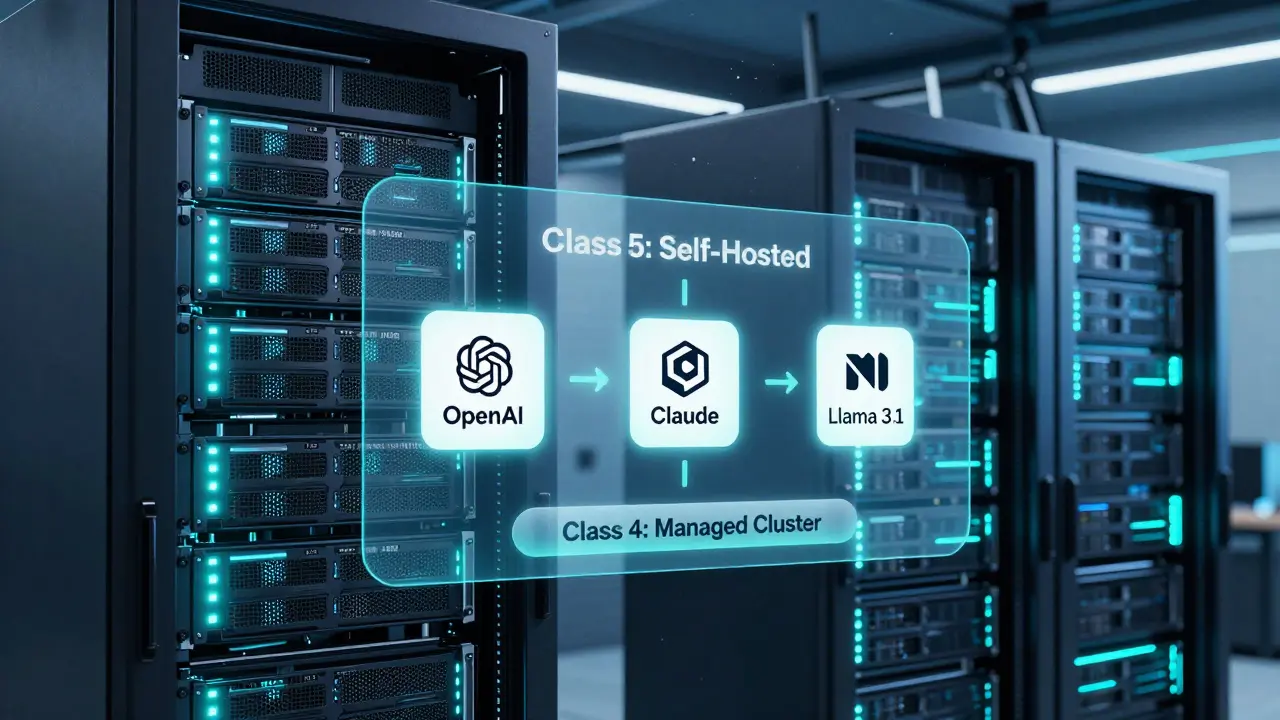
Migrating Between LLM Providers: How to Avoid Vendor Lock-In in 2026
In 2026, avoiding LLM vendor lock-in means building portable AI systems. Learn how to use open-source models, model-agnostic proxies, and self-hosted infrastructure to cut costs, reduce latency, and stay compliant.
Read More
Replit for Vibe Coding: Cloud Dev, Agents, and One-Click Deploys
Replit transforms coding into a seamless, AI-powered experience where you build, collaborate, and deploy apps in minutes-no setup required. Perfect for vibe coding, startups, and educators.
Read More
Marketing the Wins: Telling the Vibe Coding Success Story Internally
Vibe coding lets non-technical teams build real software in weeks-not months-using AI. Learn how internal stories of real wins-from restaurants to marketing teams-are changing how companies think about innovation, speed, and ownership.
Read More